Itchy after a swim: Czech scientists seek ways to detect dangerous parasites in lakes before they strike
USD 21,23
Popular
Scientists at Charles University in Prague, working together with the Czech National Institute of Public Health, are developing new methods for detecting the parasites behind cercarial dermatitis — better known as "swimmer's itch." The condition has been documented in Czechia for more than 60 years and affects people at natural bathing spots every year, yet no one has ever managed to pin down exactly how many cases occur.
Swimmer's itch is caused by cercariae — microscopic larvae of parasites that normally live in waterfowl but occasionally burrow into human skin during a swim. Since humans aren't their natural host, the infection rarely leads to serious complications, but the intense itching and rash it triggers can last for several days, ruining time at the water and making life harder for people like beach lifeguards.
"Cases of swimmer's itch have been recorded in Czechia regularly for more than 60 years now. Yet we still don't know how many people actually suffer from it, because most never see a doctor, so the illness never shows up in any statistics," says parasitologist Tomáš Macháček. Without that data, he notes, it's difficult to identify high-risk waters or introduce effective prevention measures.
That's why researchers, together with the National Institute of Public Health, are building the country's first comprehensive database of swimmer's itch cases — mapping risky locations while also studying the factors that drive the spread of these parasites in water.
To flag dangerous bodies of water early, scientists need fast, reliable diagnostic methods capable of detecting the parasites before they start affecting people. At the Prague lab, researchers are developing new molecular techniques that can pick up parasite DNA directly in water samples. "These highly sensitive methods will make it possible to quickly test bathing waters for prevention purposes, both before the season starts and throughout it. Compared to current methods, they'll be significantly faster," explains parasitologist Jan Procházka, who is leading their development.
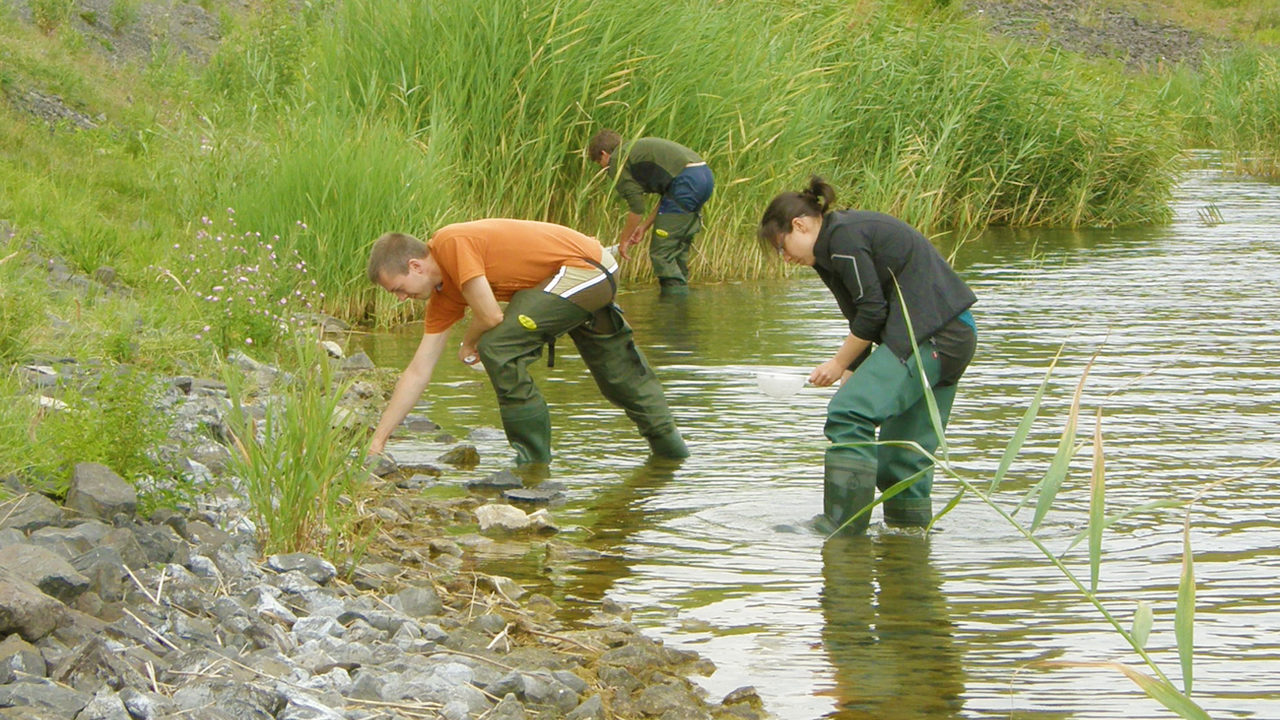
Alongside this, researchers are looking for ways to reduce parasite numbers directly at bathing sites. Aquatic snails play a key role in the parasite's life cycle, since the larvae are released into the water from these mollusks. "We're looking for new ways to reduce snail populations in these waters without disrupting the aquatic ecosystem. Our goal is effective prevention that's also environmentally responsible," says parasitologist Jana Bulantová, who oversees testing of the new measures.
Part of the Prague team's research involves laboratory experiments aimed at explaining why some people barely react after contact with the parasite while others develop the classic intensely itchy rash. "We're interested, for example, in how the parasite penetrates the skin and how the human immune system responds to it. This knowledge will help improve prevention, diagnosis and treatment of the condition," adds Macháček, who heads the experimental side of the research.
The research group from the Faculty of Science at Charles University is one of only a handful of teams worldwide that simultaneously conduct fieldwork, run experiments on avian blood flukes, and develop practical public health measures. The scientists' main goal is to create tools that will help public health officials, the operators of bathing areas, and ordinary people prevent swimmer's itch more effectively — without having to resort to banning swimming in natural waters altogether.
Read also: 8 best places to swim near Prague: lakes, quarries and beaches within an hour of the capital
Source: ekolist.cz