How to Rent an Apartment in Prague in 2026: Neighborhoods, Prices, Websites and Contracts
Renting an apartment in Prague is entirely doable, but the market moves fast and competition is fierce: good listings disappear within hours, and prices have climbed noticeably over the past few years. In this guide, we've gathered what actually works: trusted listing sites, rough rental price ranges by district for 2025–2026, and a breakdown of the deposit (kauce), the lease agreement, and the usual traps to avoid. Market prices shift constantly, so all figures below are ballpark estimates — always double-check them directly in current listings.
Before you start browsing, it helps to understand the local market's shorthand. Apartments are described with formulas like 1+kk or 2+1: the number is the count of living rooms, kk (kuchyňský kout) means a kitchenette built into the room, while +1 means a separate kitchen. So 1+kk is essentially a studio, while 2+kk is a one-bedroom with a kitchen nook. Rent is often listed as two separate figures: the nájem itself (payment to the landlord) and poplatky/energie (utilities and services) — check whether these are included in the quoted price.
Sreality.cz — the main aggregator
Sreality.cz is the largest real estate portal in Czechia by number of listings, making it a logical starting point. It aggregates offers from agencies and some private owners, has handy filters for district, price, size and layout, and the interface switches to English.
The downside is that a large share of listings come from agencies, which means a commission fee may apply (more on that below). Tip: set your filters to match your budget and turn on alerts for new listings — popular apartments can get dozens of inquiries within the first few hours.
Bezrealitky.cz — straight from owners
Bezrealitky.cz is a platform where landlords and tenants connect directly, without a middleman. The name literally translates to without real estate agencies: there's usually no agency commission here, which can save you a full month's rent.
Best suited for: people willing to message owners actively and respond quickly. The interface switches to English, but the listings themselves are usually in Czech — keep a translator handy. A solid choice if you want to deal with the owner directly and skip extra fees.
UlovDomov.cz — a steady stream of fresh listings
UlovDomov.cz is one of the largest dedicated rental platforms in Czechia, with a high daily volume of new listings. The site is built specifically for renting rather than buying, so it's a good place to catch fresh offers.
Practical tip: set up email alerts based on your criteria. In a fast-moving market, speed is everything, and whoever messages the landlord first often gets the viewing.
Reality.iDNES.cz — another major portal
Reality.iDNES.cz is the real estate section of a major Czech media group, with a large catalog of long-term rentals across Prague. It's similar in content to Sreality: plenty of agency listings and detailed filters.
It's worth keeping on your list alongside the others: some offers get posted on several sites at once, but you'll also find exclusives here. Check multiple portals simultaneously so you don't miss the right listing.
Expats.cz Prague Real Estate — for those who need English
Prague Real Estate on Expats.cz is a rental listing hub on an English-language portal aimed at foreigners in Prague. Listings here target an international audience, and owners and agents are typically more willing to communicate and handle paperwork in English.
Prices on these listings tend to run slightly higher than on Czech-language sites, but there's less of a language barrier — handy if you've just moved and haven't gotten comfortable with Czech yet.
Facebook and Telegram groups
A separate but lively channel is the network of Facebook groups and Telegram chats dedicated to renting apartments in Prague for foreigners. You'll often find apartments listed directly by owners, with no commission, as well as room-shares and sublets.
The risk of running into scammers is also higher here (see the pitfalls section below), so approach these offers with caution: never pay anything in advance before viewing the apartment in person and signing a contract. As a quick supplementary source, these groups work well, but you'll need to vet the other party's reliability yourself.
Districts and rough prices
According to market indices, the average rental rate in Prague in 2025 was around 440–460 CZK per m² per month, with central districts comfortably exceeding 490 CZK per m² and more outlying areas closer to 355 CZK per m². Translated into actual apartments, that roughly means: a studio or 1+kk of about 45 m² runs approximately 19,000–26,000 CZK per month, while a one-bedroom 2+kk of about 65 m² costs roughly 27,000–38,000 CZK (excluding utilities; figures vary significantly by district and apartment condition).
The most expensive areas are traditionally the center and prestigious residential districts: Prague 1, Vinohrady (Prague 2), and Letná (Prague 7). A good balance of price and atmosphere can be found in Žižkov (Prague 3), with its bars and young crowd, and Dejvice (Prague 6) — green, calm, and convenient for families and students. Prague 4, Prague 9 and Prague 10 are usually noticeably cheaper: farther from the center, but with good transport links and metro access.
Look not just at the district but also at proximity to the metro: a couple of stations' difference can affect the price more than the district number itself.
Kauce — the security deposit
Almost always, on top of the first month's rent, tenants pay a kauce — a refundable security deposit. Under the Czech Civil Code, a landlord can request a deposit of up to three times the monthly rent; in practice, in 2025 landlords most often ask for two to three months' rent. So for a 25,000 CZK rental, the deposit is typically 50,000–75,000 CZK.
The kauce is refunded when you move out, provided the apartment is in good condition and there are no outstanding rent or utility payments. Important: document the apartment's condition when you move in (a handover report and photos), so you don't end up disputing damage that was already there before you arrived. Make sure the deposit amount and the terms of its return are written into the contract.
Nájemní smlouva — the lease agreement
The relationship between tenant and landlord is formalized through a nájemní smlouva — a written lease agreement. It should include: the parties' details, the apartment's address and description, the lease term and the výpovědní lhůta (notice period for termination, usually around 90 days), the rent and utility amounts, the deposit sum and refund conditions, the payment process, and how repair responsibilities are divided.
Don't agree to verbal arrangements or off-the-books cash payments without a document: an official contract is needed for address registration, visa and residency matters, and simply for your own protection. If anything in the text is unclear, it's worth having the contract reviewed by a lawyer or someone familiar with Czech law before you sign.
Common pitfalls
A few typical traps worth keeping in mind. Agency commission (provize) — when renting through an intermediary, this is often equal to one month's rent; ask about the existence and size of the commission in advance. Scams — never transfer a prepayment or deposit before viewing the apartment in person and signing the contract, especially for listings found on social media; a suspiciously low price combined with pressure to pay urgently is a clear red flag.
Also find out in advance what's included in the price (whether electricity, heating and internet are covered), clarify the terms for rent increases, and check the pet policy. And keep the market's pace in mind: have your documents ready (passport, proof of income) and be prepared to make a decision quickly.
Renting in Prague is a sprint packed into the first few days of active searching: set up alerts on several portals at once, respond quickly, review the contract carefully, and never pay blind. All figures in this guide are estimates for 2025–2026; always verify current rates, deposit terms and commission fees directly in the listing and with the landlord.
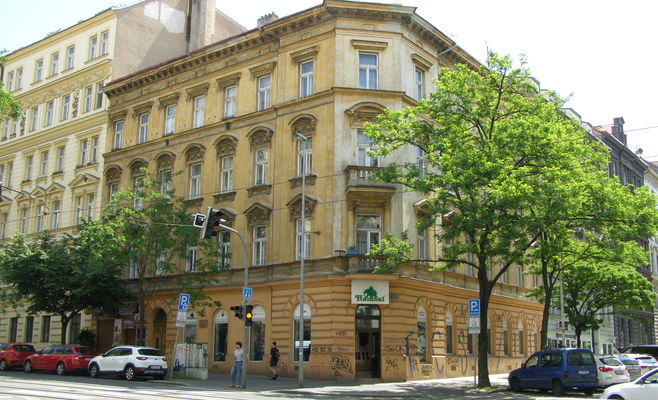
Photo: Mojmir Churavy — Wikimedia Commons (CC BY-SA 4.0)
Comments (0)
Please be polite. Spam and insults will be removed.