Accident Involving Filip Turek in Prague: Driving Instructor Explains Which Road Signs Take Priority
USD 21,04
Popular
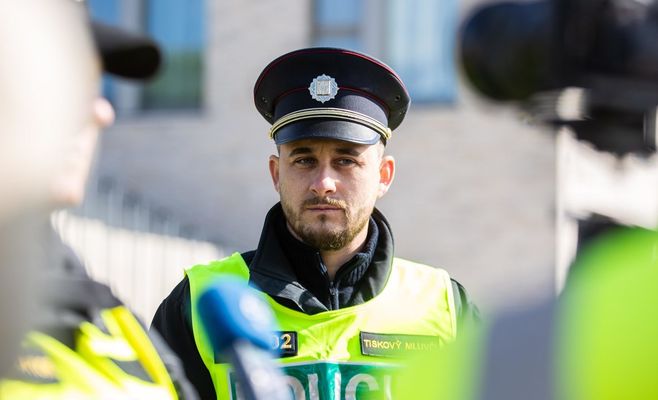
Following a high-profile accident involving politician Filip Turek on Prague's Sokolská street, driving instructor Roman Jakovec has explained how to correctly interpret the temporary and permanent road signage at the accident site, where construction work has temporarily altered the usual driving rules.
As the owner of the "Driving School for the Demanding" explained to Novinky, temporary portable road signs have been installed on the section of Sokolská where the accident occurred, overriding the standard lane configuration. "A portable sign carries more weight — it takes priority over a permanent vertical sign," Jakovec emphasized, adding that at the time of the interview, the permanent sign was crossed out at two points precisely because of the presence of the temporary one.
According to him, the key issue is that the road markings in effect at the time of the accident may have differed from the current setup. The instructor noted that, in his subjective impression, the portable sign is not visible in the footage that spread online immediately after the collision. If the sign truly wasn't there at the time — or had been turned around — the driver would have had to rely on the permanent sign, which allowed both a left turn and going straight from the left lane.
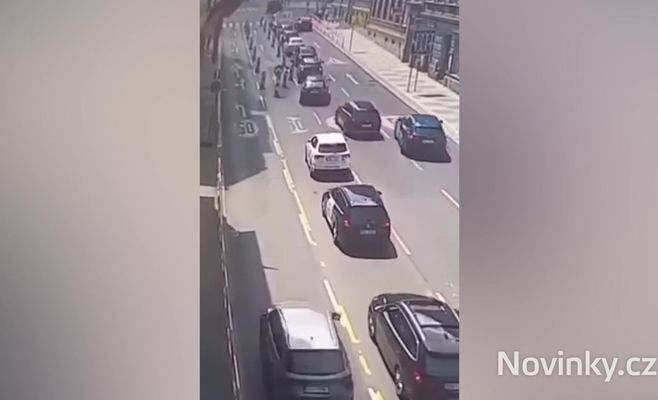
However, some other footage does show that the portable sign was visible at the time of the accident — but only on the right side of the road, not on the left, where Turek was driving. In one video posted on X, the sign on the right side becomes visible at the ten-second mark. Footage from a city camera captures the moment just before the collision: Turek entered the intersection from the turning lane exactly when other cars had stopped to let a vehicle with emergency lights and sirens pass.
Jakovec pointed out that confusion over the hierarchy of road signs is a common mistake among drivers. "If two vertical signs are installed in the same spot — a permanent one and a temporary one — the temporary sign always takes priority," he explained. According to him, people are also frequently mistaken about yellow road markings: they only take precedence over white markings, but are fully subordinate to both permanent and temporary vertical signs.
The instructor also reminded readers of the rules for vehicles using emergency signals. Police, fire, and ambulance vehicles are permitted to exceed the speed limit, run red lights, drive against the flow of traffic, or use tram tracks — but they must still do so in a way that does not endanger or harm other road users.
In Jakovec's view, the specific circumstances of the accident should be established by the competent authorities. "For the sake of fairness, I believe it's time to stop arguing over subjective impressions and leave this to the police, forensic experts, and, if necessary, the courts," the instructor concluded.