ANO and STAN Senate candidates clash over Turek and TV licence fees in debate
USD 21,04
Popular
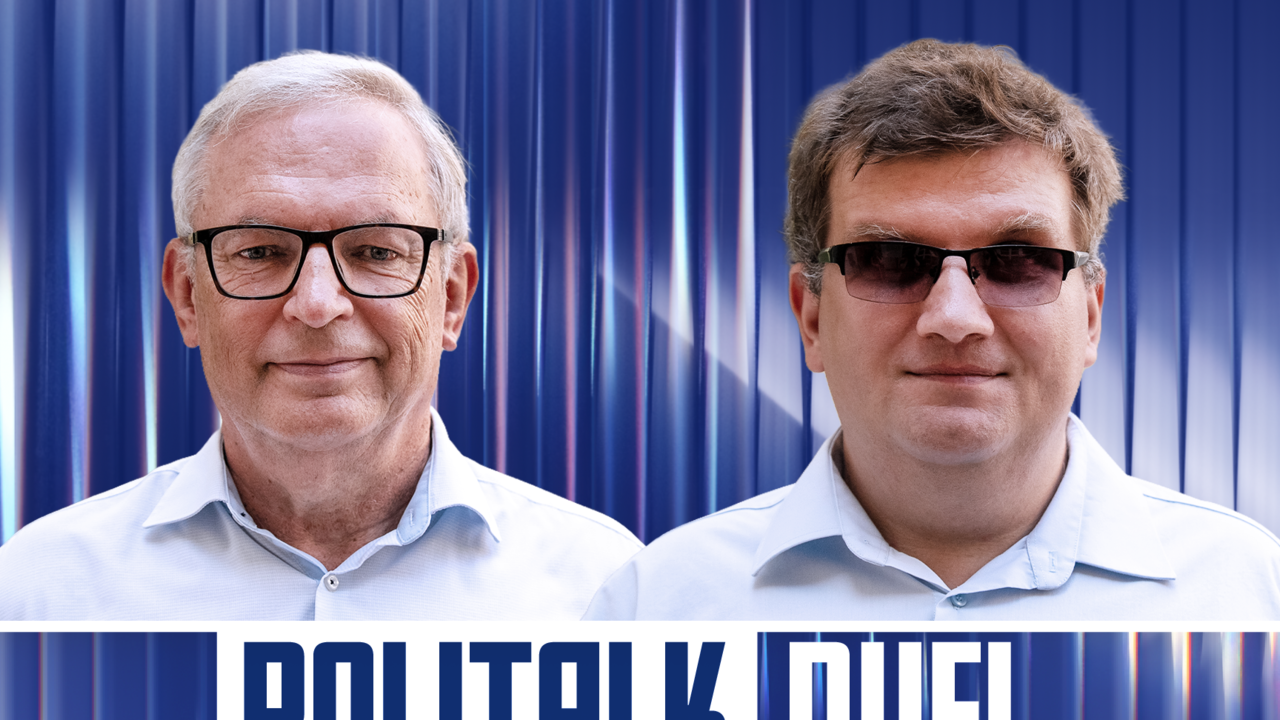
In the latest round of pre-election debates on the PoliTalk podcast, Senate candidates faced off: Žalud, a blind opera singer running for the ANO movement, and Smolák, the incumbent senator for STAN. The two discussed the ongoing conflict surrounding President Petr Pavel, the controversial nomination of Filip Turek for a ministerial post, and the future of TV and radio licence fees. Municipal and Senate elections in Czechia are scheduled for 9–10 October 2026.
Who are the candidates
Žalud is a blind opera singer who has never held political office before. He says it was ANO itself that persuaded him to run for the Senate: "They were the only ones in Prague who asked me what life is like for blind people and people with disabilities in the capital, and what could be improved. There should be someone in the Senate who represents the interests of people with disabilities," he explained.
His rival Smolák has been a senator since 2019. He pointed to his own record in office: under his tenure, the Senate gained a role in electing media councils, ending the lower house's monopoly over the process, and funding for the councils was made automatic, free from political interference. "But I have mixed feelings, because all of this is now under heavy attack from the governing coalition," the senator added.
A dispute over Turek and the Ankara summit
The candidates also touched on July's summit in Ankara, which triggered a prolonged standoff between President Petr Pavel and the current government. Žalud said the president is obliged to represent the state, but he also understands Andrej Babiš's position: if the head of state criticises the government's stance while abroad, trust between them cannot survive. At the same time, he called Minister Petr Macinka's actions "childish," suggesting they were revenge for the president's refusal to appoint Filip Turek.
Žalud didn't spare Turek either: "A politician should be someone who has built something, who has some skill, whose work speaks for itself. Maybe it's just my own shortcoming, but I don't see any real work behind this man at all. Someone who needs to prove his strength by driving a Mercedes and racking up likes on social media has, in my opinion, no place in politics," he said — unexpectedly finding common ground with Smolák.
Smolák, for his part, has no doubt that the whole conflict was provoked by Minister Macinka, who cannot accept that the president refused to appoint his friend to government. In his view, Prime Minister Babiš has also joined in this "adolescent stunt," seeking to weaken the president's position.
Should you pay for television?
The candidates disagreed sharply on TV and radio licence fees. Žalud believes scrapping them would be a fair move: many of his acquaintances face enforcement proceedings despite not even owning a television. "I should be free to decide whether I want to pay for Czech Television or for some other media outlet. I turn on Czech Television maybe once a year, so I see no reason to pay for it," he said.
Smolák countered that the licence fee system has been in place in Czechia for more than 30 years and works well: "Every time a representative of the European Broadcasting Union visits, they confirm that we've managed to build one of the most effective systems in Europe." He also questioned the government's motives for shifting public media funding to the state budget, which is already deeply in debt. "It's simply a tool the government can use to pressure public media and threaten them with funding cuts if they don't become more compliant. Laws shouldn't be passed just to please a segment of voters — they need to be based on clear, factual grounds," the senator concluded.
Source: novinky.cz