Apple sends warning about spyware attacks on iPhones: Czechia among affected countries
USD 21,68
Popular
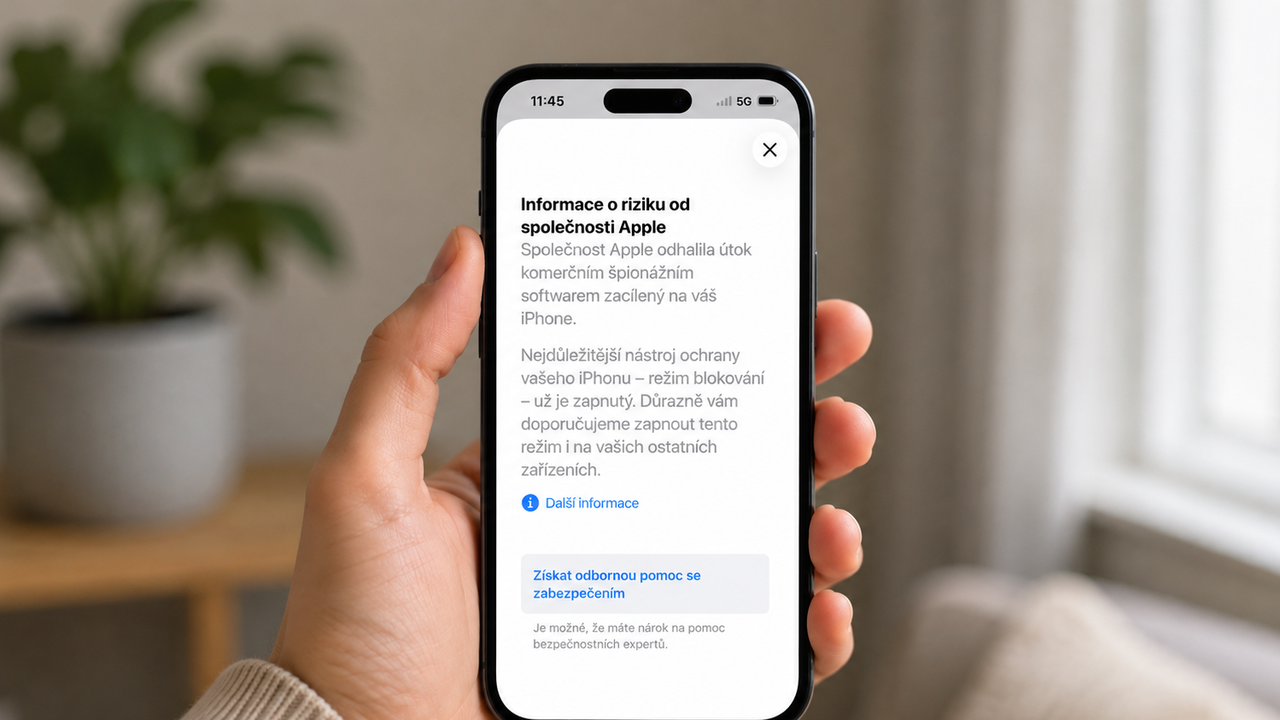
Apple has sent an emergency warning to a select group of iPhone users about attempts to infect their devices with commercial spyware. According to publicly available data, the current wave of attacks has affected users in 110 countries, including Czechia. Apple has not disclosed exactly how many people received the notification.
The message appears directly on the phone's system and reads: "Apple detected a targeted mercenary spyware attack against your iPhone." The company does not send these warnings en masse — only to those its security team has assessed as likely targets of a targeted attack.
What is the threat?
This concerns so-called mercenary spyware — commercial software that differs from ordinary viruses spread through mass phishing emails. Such programs are deployed against specific, pre-selected individuals — journalists, activists, politicians, diplomats. For the vast majority of ordinary users, Apple assesses the risk of such an attack as extremely low.
That's precisely why notifications from Apple itself carry such weight: they're considered highly credible, and recipients are advised to take them seriously. A well-known example of this type of spyware tool is Pegasus, developed by Israel's NSO Group. However, in this case Apple has not confirmed that this particular program is behind the attacks, nor has it named a specific perpetrator or the vulnerability exploited.
Receiving the alert doesn't mean you've been hacked
Getting the warning does not mean attackers have already gained control of the phone or stolen data. What Apple is essentially saying is that it has identified, with a high degree of confidence, the user as a possible target of an attack — but the notification itself doesn't reveal whether the attack actually succeeded.
The company deliberately withholds technical details behind the decision to send the warning: according to Apple, revealing specifics could help spyware operators adjust their methods and evade detection in the future.
A frightened user's first instinct might be to immediately factory-reset the phone. However, experts advise against this, as doing so could hamper any subsequent investigation. It's important to keep the device in its original state and document the warning itself — for example, by taking a screenshot.
Apple also offers what's called Lockdown Mode, which significantly restricts certain device functions, narrowing the avenues available for an attack. The mode is designed primarily for people who could become targets of especially sophisticated, targeted attacks.
Similar warnings have been sent before
The alert system, known as Threat Notifications, has been used by Apple for several years now: the company sends out such warnings as its security teams identify new threats. According to Apple's own data, users in more than 150 countries have received such notifications since 2021.
What's new in the current system is the increased visibility of the warning directly on the device — it can now appear as a system-level notification on the iPhone itself, rather than getting lost among regular emails.
For the vast majority of Apple device owners, the likelihood of such an attack remains very low. But for those who actually receive such a notification, it shouldn't be treated as an ordinary system message: Apple is warning a specific individual that, according to its security systems, they may have become the target of one of the most sophisticated digital threats of our time.
What to do if you receive a warning
Experts recommend: taking the message seriously and not ignoring it; taking a screenshot of the notification and noting the time it appeared; not resetting or wiping the phone to factory settings; enabling Lockdown Mode; installing all available security updates on the iPhone and other devices; contacting cybersecurity specialists; and, if the phone is used for work, notifying the employer's security team as well.
Source: novinky.cz