yesterday at 18:50 News

Artificial Intelligence Learns to Tell Weeds from Crops: How Autonomous Machinery Is Transforming Czech Agriculture
Artificial Intelligence Learns to Tell Weeds from Crops: How Autonomous Machinery Is Transforming Czech Agriculture

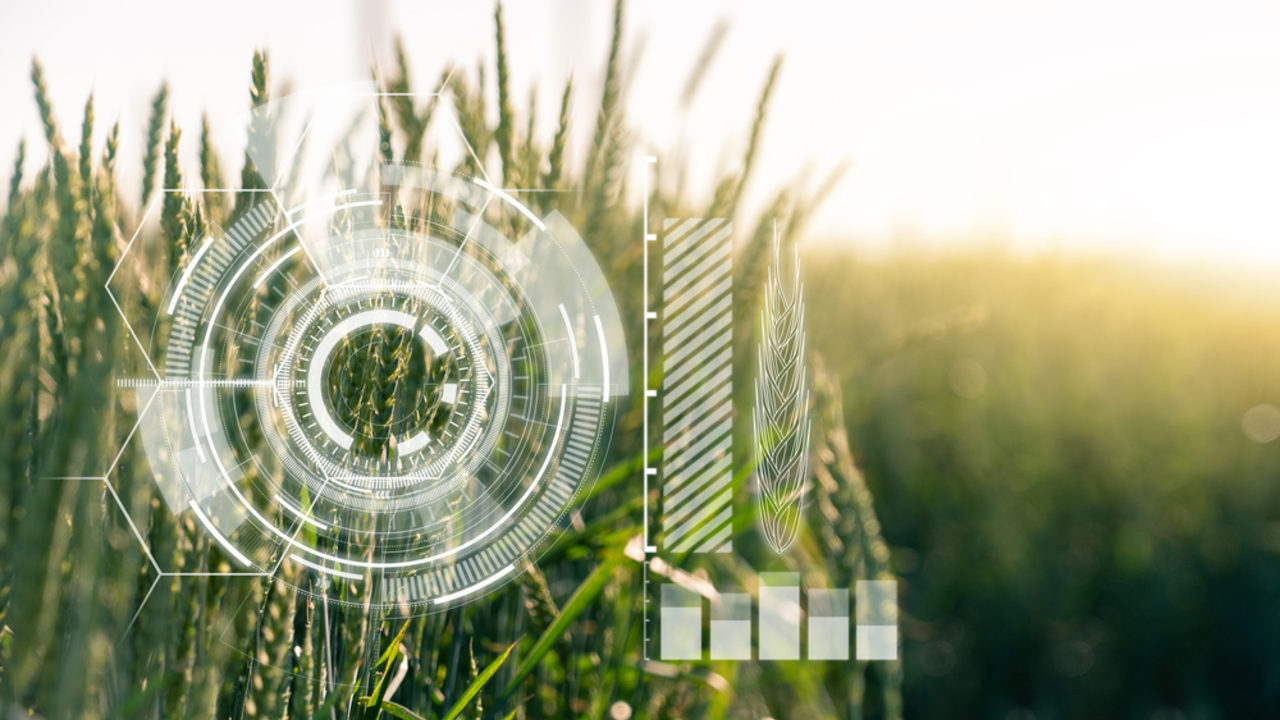
A handful of Czech farms have already begun using machinery that operates without a driver in the cab, though such equipment still remains rare. Far more common is the spread of AI-powered systems for precision field treatment — while the machinery itself is still operated by people, agri-tech expert Kroulík explained.

"This is a relatively new development in the market. It stems from the introduction of artificial intelligence, machine learning and neural networks. These technologies have been paired with cameras capable of recognising individual weed species and, based on that, triggering the nozzles selectively. Fertilisers and herbicides are no longer applied uniformly across the whole field, but only in specific spots," the specialist explained.

Before this kind of equipment could be put into practical use, manufacturers first had to train the systems to distinguish crop plants from weeds. That required an enormous image database: the algorithms learn to recognise various plant species and their growth stages. "First, the system has to be taught to recognise weeds. It's much like teaching a person — on its own, the machine knows nothing. To achieve high reliability, you need thousands, sometimes hundreds of thousands, of images capturing different shapes, colours and growth phases of plants. Today such systems reach an accuracy of roughly 95 to 98 percent," Kroulík noted.

Sponsored

Thanks to modern technology, farmers are cutting fertiliser use and reducing the environmental burden, and as a result can even boost yields. "Any herbicide treatment puts a certain amount of stress on the plant, which can slow its development and growth. By reducing that stress, you can actually achieve higher yields," the expert emphasised.

Not everyone shares this optimism about the new technology, however. In comments on the discussion, practising farmers point out that a large share of herbicides is applied preventively — right after sowing, before the crop even emerges — a stage at which precision spraying simply isn't possible. Sceptics also highlight the difficulty of selectively controlling grass weeds, which often grow very densely, at 20 to 40 plants per square metre, as well as dealing with the numerous shoots of weeds like sow thistle that persist in the soil even after visible treatment. In their view, under such conditions, blanket spraying remains the more reliable method for now.

Source: ekolist.cz
Share: Telegram VK WhatsApp

Related news

SPD party leader Tomio Okamura has said that ahead of his planned trip to China, he held a meeting with the heads of Czech intelligence services to exchange information. He declined to disclose details of the meeting, noting only that the d
Senate Speaker Miloš Vystrčil (ODS) has said that today's opposition parties should field their own candidates in the 2028 presidential election, backing incumbent President Petr Pavel only if he ends up facing a candidate from the ruling c
Czechia has 6,258 municipalities — an absolute European record for the number of settlements per capita — with the average Czech village home to just around 1,700 residents. Three-quarters of Czech "obce" (municipalities) have fewer than a
Czech Prime Minister Andrej Babiš has said he intends to revive the idea of building a government district in Prague's Letňany district — a project he first proposed back in 2015 after a meeting with French President Emmanuel Macron.In a Su
Ahead of his upcoming trip to China, Chamber of Deputies Speaker Tomio Okamura shared new details about a Czech citizen recently detained by Chinese authorities. “This may come as news to you, but he is married to a Chinese woman,” the SPD
Jaroslav Zvěřina, one of the Czech Republic's most prominent psychiatrists and sexologists and chairman of the Sexological Society of the Czech Medical Association, has died at the age of 81. His death was announced by urologist Libor Zámeč
On Sunday morning, Central European time, users began flooding social media with complaints about disruptions to Facebook and Instagram, according to DownDetector, a portal that tracks such outages. The disruption affected only the desktop
On Friday evening, a column of roughly a thousand motorcyclists rode through Prague and brought traffic to a standstill on Wenceslas Square in the city centre, drawing crowds of onlookers.The traditional ride, held annually for several year
Only 77,600 children were born in Czechia in 2025 — the lowest number since 1785, according to demographic data. The average fertility rate (children per woman) has fallen to 1.28, down from 1.83 in 2020–2021, which at the time was one of t
On Saturday, around 1:30 PM, in the Staré Hamry area of the Beskydy Mountains, a 37-year-old cyclist lost control while descending a road leading from a tourist lodge to route I/56, falling to the ground and ending up partly on the roadway.
As of July 1, Czech dentists will, with rare exceptions, no longer be allowed to use amalgam fillings — the temporary exemption granted to Czechia and Slovenia by the European Union has expired, while the ban has already been in force in th
Overnight, Russia launched a massive missile strike on Kyiv, firing what the Ukrainian military says were 41 ballistic missiles, with 23 confirmed hits recorded across the country. The attack sparked fires and caused severe damage in the ca