today at 18:50 News

Artificial Intelligence Learns to Tell Weeds from Crops: How Autonomous Machinery Is Transforming Czech Agriculture
Artificial Intelligence Learns to Tell Weeds from Crops: How Autonomous Machinery Is Transforming Czech Agriculture

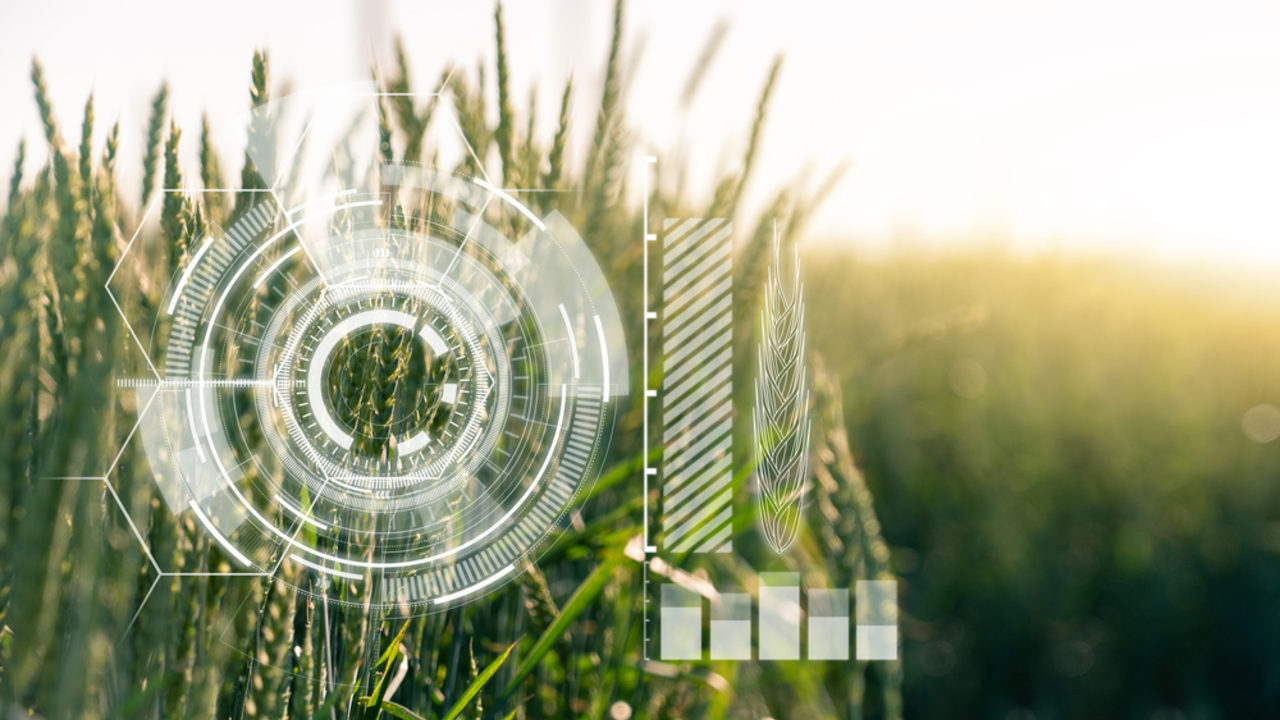
A handful of Czech farms have already begun using machinery that operates without a driver in the cab, though such equipment still remains rare. Far more common is the spread of AI-powered systems for precision field treatment — while the machinery itself is still operated by people, agri-tech expert Kroulík explained.

"This is a relatively new development in the market. It stems from the introduction of artificial intelligence, machine learning and neural networks. These technologies have been paired with cameras capable of recognising individual weed species and, based on that, triggering the nozzles selectively. Fertilisers and herbicides are no longer applied uniformly across the whole field, but only in specific spots," the specialist explained.

Before this kind of equipment could be put into practical use, manufacturers first had to train the systems to distinguish crop plants from weeds. That required an enormous image database: the algorithms learn to recognise various plant species and their growth stages. "First, the system has to be taught to recognise weeds. It's much like teaching a person — on its own, the machine knows nothing. To achieve high reliability, you need thousands, sometimes hundreds of thousands, of images capturing different shapes, colours and growth phases of plants. Today such systems reach an accuracy of roughly 95 to 98 percent," Kroulík noted.

Sponsored

Thanks to modern technology, farmers are cutting fertiliser use and reducing the environmental burden, and as a result can even boost yields. "Any herbicide treatment puts a certain amount of stress on the plant, which can slow its development and growth. By reducing that stress, you can actually achieve higher yields," the expert emphasised.

Not everyone shares this optimism about the new technology, however. In comments on the discussion, practising farmers point out that a large share of herbicides is applied preventively — right after sowing, before the crop even emerges — a stage at which precision spraying simply isn't possible. Sceptics also highlight the difficulty of selectively controlling grass weeds, which often grow very densely, at 20 to 40 plants per square metre, as well as dealing with the numerous shoots of weeds like sow thistle that persist in the soil even after visible treatment. In their view, under such conditions, blanket spraying remains the more reliable method for now.

Source: ekolist.cz

Share: Telegram VK WhatsApp

Related news

The "scandi morning" trend is quietly nudging avocado toast off the menus of Europe's trendiest cafés. In its place, a simpler spread is taking over: soft-boiled eggs, good-quality bread, a slice of cheese, homemade jam, and whipped butter,
Czech climatologist Ladislav Metelka has published a detailed response to criticism from colleagues — associate professors Josef Šeják and Jan Pokorný — who accused the Czech Academy of Sciences' expert opinion AVex 4/2020 of violating the
An international study combining archaeobotanical data with historical sources has revealed how plants from the Americas — potatoes, tomatoes, maize, tobacco and cacao — made their way into Europe after 1492. According to the researchers, t
Scientists at Charles University in Prague, working together with the Czech National Institute of Public Health, are developing new methods for detecting the parasites behind cercarial dermatitis — better known as "swimmer's itch." The cond
Nutritionists and chefs alike point to a simple trick: boiling potatoes whole, in their skins, rather than cut into pieces, preserves far more vitamins and minerals, while also giving the dish noticeably better taste and texture.The secret
A woman in Czechia is raising her son Patrik, who has an extremely rare genetic disorder — ATR-X syndrome. Doctors were able to give her almost no information about the diagnosis, so she had to search for answers herself, eventually finding
On Wednesday, August 12, 2026, shortly before sunset, residents of Czechia will get to witness one of the most striking celestial events in decades — a partial solar eclipse, during which the Moon will cover up to 88.5% of the Sun's disc.A
The open-air Wallachian Wooden Village museum in Rožnov pod Radhoštěm will host two festive events on the weekend of 25–26 July 2026 — a Roma song festival and the traditional regional St Anne's Fair.The festival kicks off on Saturday, 25 J
Wildlife rescue stations across Czechia took in 21% more animals and birds in the first half of 2025 compared to the same period last year, according to the Czech Union for Nature Conservation (ČSOP).The workload traditionally peaks in May
Polish President Karol Nawrocki has for a second time put forward an initiative to hold a nationwide referendum on Poland's participation in the European Union's climate policy, Polish news agency PAP reports.According to Nawrocki, the orig
An outbreak of crayfish plague — a disease that is almost always fatal to native crayfish species — has been confirmed in the Svinенský stream in southern Bohemia. According to the Czech Anglers' Union, infected crayfish lose coordination a
French engineers have developed an autonomous drone called Tornjol that can hunt down and destroy mosquitoes mid-flight while patrolling a designated area. The news was reported by Le Figaro.The device is equipped with an ultrasonic sonar s