USD 21,28
Popular
The Supreme Audit Office of the Czech Republic (NKÚ), which oversees the spending of public funds, could lose its state police protection at its Prague-Holešovice headquarters as early as January 1. According to sources, the relevant proposal was drafted by Interior Minister Lubomír Metnar (for ANO) and submitted to the government for consideration.
At issue is the permanent police detail that guards the building's entrance, monitors the CCTV system and screens visitors for weapons. The same type of protection is provided by police to other state institutions — the Office of the Government, ministries, the Chamber of Deputies, the Senate and a number of other key bodies.
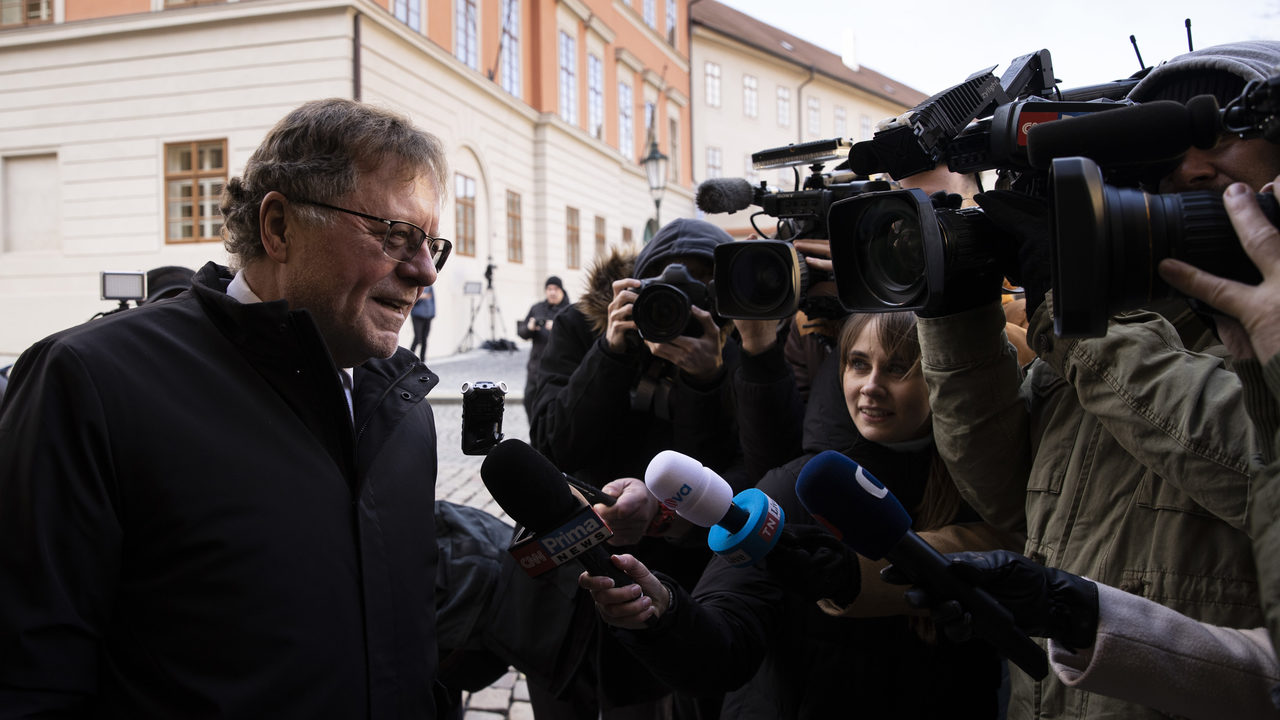
NKÚ President Miloslav Kala said his office was never notified of the impending decision in advance — he learned of the proposal by chance, stumbling upon the document in the government's electronic system for official materials. "I consider this an attack on an independent institution. And yet another attempt to starve us out so that we conduct fewer audits," he said sharply.
NKÚ will now have to hire private security on its own, which, according to preliminary estimates, will cost around 20 million crowns a year. However, these expenses were not included in the office's recently approved budget. It is worth noting that Prime Minister Andrej Babiš and President Kala have had a tense relationship for years, going well beyond the usual friction between ministers and auditors critical of their work.
The auditors' work is inconvenient for other politicians as well. It was previously reported that NKÚ bombarded Labor Minister Aleš Juchelka (ANO) with questions, asking in writing whether he would file a police complaint against his former adviser — whose conflict of interest in the distribution of subsidies means the ministry will now have to find 64 million crowns for projects that were originally supposed to be financed from EU funds.
Minister Metnar's proposal offers no specific justification for stripping NKÚ of its police protection. It merely states that protection duties will be transferred to the Czech National Bank, with the document citing "current needs for ensuring the security of certain facilities" — without further detail. The Interior Ministry did not respond to a request for comment. Notably, the proposal was granted an exemption from the usual review process — other agencies are not required to give their opinion on it, even though such documents typically go through approval by all interested bodies.
NKÚ has had to make cuts and reduce staff at the government's request before. "It's the same old pressure for the sake of pointless savings. At the same time, we're being asked to start auditing, for instance, Czech Television or Czech Radio," Kala said, referring to the government's plans to expand the office's authority to cover public broadcasters.
NKÚ's relationship with the government has long been tense. The first major clash between Babiš and Kala dates back to 2016, when the current prime minister served as finance minister in Bohuslav Sobotka's cabinet. At the time, Kala was preparing construction of a new headquarters for the office in Holešovice, costing 690 million crowns, a third of which the institution had already saved up itself. Babiš claimed, without concrete arguments, that the price was inflated, and delayed the allocation of funds, while also hinting — again without evidence — at Kala's personal interest in the contract. Babiš ultimately lost the fight, and NKÚ moved into its new building in 2023.
Another major dispute arose four years ago, when NKÚ carried out a large-scale audit of 7.5 billion crowns' worth of procurement at the start of the coronavirus pandemic. According to the office's findings, the purchases of masks and respirators were inefficient and lacked transparency — they were bought at inflated prices without any tender procedures. To the argument that the country was unprepared for the pandemic, the auditors pointed to the example of the United Kingdom, where prices dropped by a third within just a month of the outbreak beginning.
Auditors have also harshly criticized the growth of public debt under Babiš's first government, particularly a 2020 amendment that scrapped mandatory oversight and planning for reducing the structural budget deficit. That said, NKÚ has been just as critical of the previous cabinet led by Petr Fiala (ODS): in June, the office published a report noting that Poland builds highways five times faster than Czechia, and that the country, despite investing 50 billion crowns in digitalization in recent years, still lags behind — many "modern" public services in practice amount to filling out an online form that is then processed manually by officials.
Source: seznamzpravy.cz