Babiš Government Submits 80-Page Response to Constitutional Court in Prague Castle's NATO Summit Lawsuit
USD 21,00
Popular
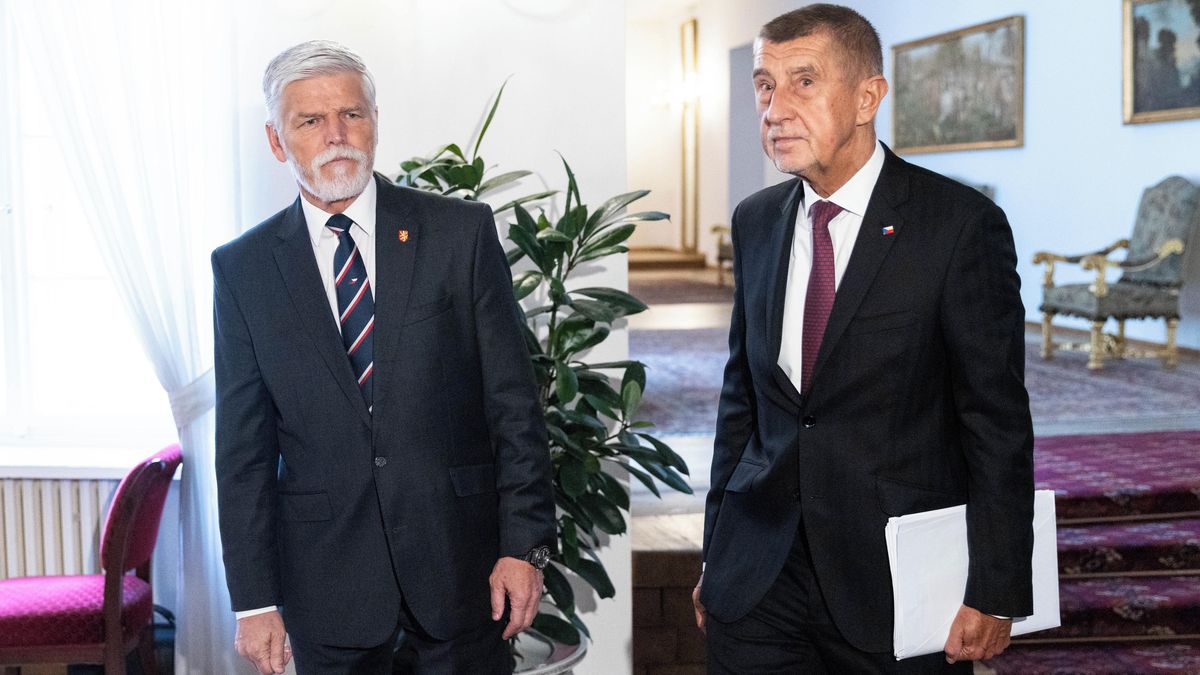
Andrej Babiš's government has submitted a detailed, nearly eighty-page response to the Czech Constitutional Court, addressing the jurisdictional lawsuit filed by President Petr Pavel, who is challenging the cabinet's right to decide who represents the country at the NATO summit in Ankara.
According to the document, prepared under the responsibility of the Government Legislative Council, which reports to Justice Minister Jeroným Tejc, the cabinet views the president's lawsuit as yet another attempt to broaden the interpretation of the head of state's powers. In its conclusion, the government states outright that Pavel's move "undermines constitutional convention," which is based on agreement among all senior constitutional officials regarding the planning of foreign visits.
The cabinet argues that this is not the first time the president has overstepped his authority while representing the country internationally, acting contrary to government decisions and the state's official foreign and defense policy.
The government insists on its right to determine the composition of delegations, describing this power as a kind of "insurance" against possible future "excessive trips" by an unaccountable president that could grossly contradict Czech foreign policy. To illustrate its position, the document's authors offered a hypothetical example: what if a future president decided, say, to pay a visit to North Korea.
"This very argument supports the view that decisions on any high-level visit—from the composition of the delegation to the content of the negotiating mandate—must rest exclusively with the government," the document states.
The cabinet separately addresses the Castle's claim that the government is obligated to actively assist the president in representing Czechia abroad. In response, the government states it is compelled to question not only the constitutionality and legality but also the overall rationality of the president's approach toward other state bodies that are not subordinate to him.
Ultimately, the Babiš cabinet maintains that the decision on delegation participation in the NATO summit must rest with the government, and it asks the Constitutional Court to reject or dismiss all claims in the presidential lawsuit. Should Pavel attempt to withdraw his lawsuit, the government asks the court not to permit such a move—although, as the document notes, the cabinet does not expect the Castle to take such a step.
A separate and notable section of the document addresses grievances against the Constitutional Court itself. The government complains that it was not given sufficient time or opportunity to respond to the lawsuit before the interim measures were issued.
"This procedure, in violation of the law, resulted in a substantial infringement of the government's right to fair proceedings—the cabinet was not given the opportunity to comment on the president's proposal for two interim measures," the text states. Among other things, the government is demanding the recusal of Judge Pavel Šámal from further proceedings in the case.
As for the president's representative role, the government calls it "secondary" compared to its own role in conducting foreign policy, since the president, under the Czech constitution, bears no responsibility for the performance of his functions—a point the document makes repeatedly.
The cabinet draws a distinction between the substantive conduct of foreign policy and its formal representation: the government, by its nature, sets the direction of foreign policy and implements it through binding decisions, measures, and actions, whereas the president's role is largely formal—representing the state before foreign partners and signing or ratifying international treaties that require countersignature.
The government also outlined how it intends to act should the Castle nevertheless decide to disregard its decision. In that case, the organization and administrative support of the trip would have to be handled by the Office of the President of the Republic or the President's Military Office.
Should the president decide to form a parallel "representative and informational" delegation, the government would regard this as a "diplomatic blunder" capable of undermining trust in Czechia on the international stage—something the document stresses would clearly not serve the interests of the Czech people.
At the same time, the cabinet separately notes that a genuinely unconstitutional situation would arise if the president, during an official foreign visit, took a position contradicting the government's official foreign policy line.
The government also criticized the Constitutional Court's stance regarding the president's entourage—under the court's interim measure, cabinet representatives are obliged to secure accreditation for both the head of state and his accompanying delegation. In the coalition's view, it is unacceptable for a court, in a dispute over the competencies of state bodies, to compel parties to the proceedings to take action regarding third parties. Elsewhere in the document, the task of arranging accreditation and air travel for the president's entourage is described as a "disproportionate, unfair, and one-sided" burden on the government.
Source: seznamzpravy.cz