USD 21,08
Popular
Russia is finally losing the European gas market for good — supplies to the EU are set to stop completely from the end of 2027 — while China, which Moscow had counted on as a replacement buyer, is willing to pay only a price close to Russia's own domestic rate, effectively leaving the business barely profitable.
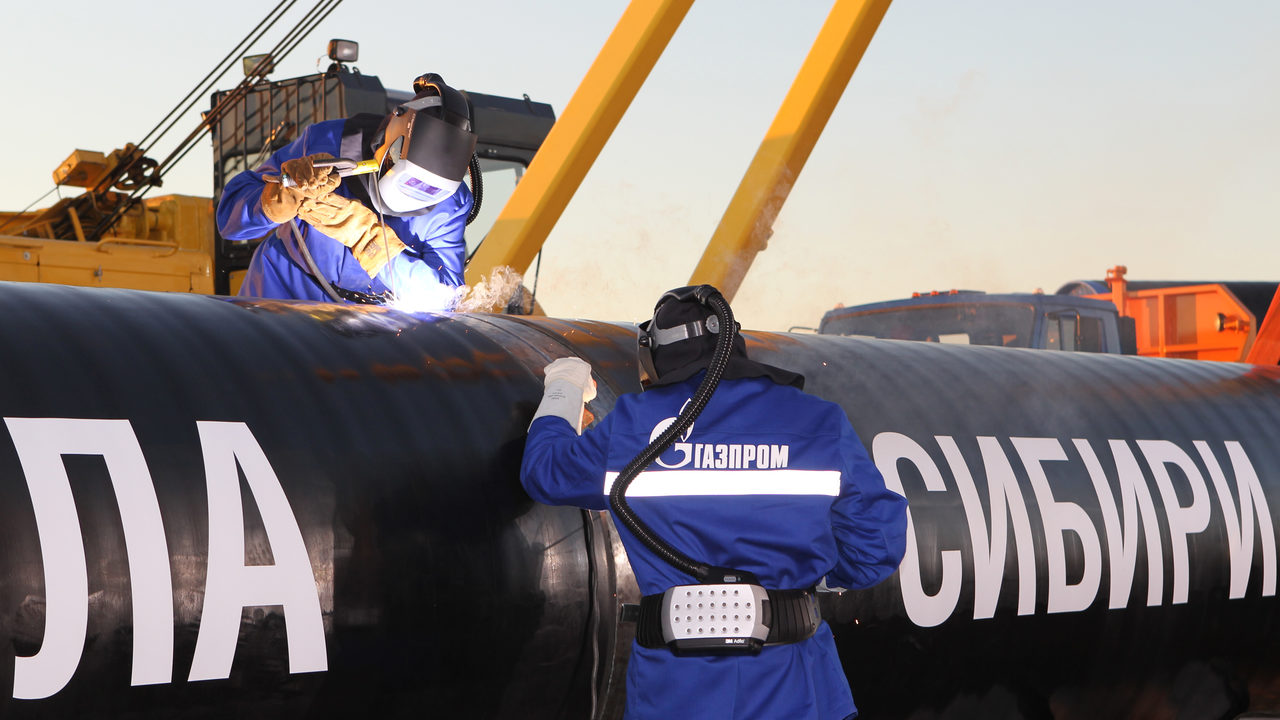
Back in September 2025, at the Shanghai Cooperation Organisation summit, Gazprom and China's CNPC signed a memorandum on building the roughly seven-thousand-kilometre "Power of Siberia 2" pipeline. Moscow presented this as a breakthrough in fulfilling the February 2022 declaration on a Russian-Chinese partnership "without limits." Yet by May 2026, ahead of another visit by Vladimir Putin to Beijing, the Chinese side had informally signalled to the Russian delegation that the new pipeline was a topic best left off the table altogether.
According to available information, negotiations over the project have hit a wall: Beijing is demanding a price of €5–8 per megawatt-hour — just a fraction of what Russia's other foreign buyers pay. By comparison, this year's prices for Europe stand at roughly €45 per MWh, while China itself is already buying Russian gas at €21 per MWh in 2026. The price Beijing is asking for is unacceptable to Moscow, yet Russia cannot afford to walk away from the talks either.
The reason behind Beijing's tough stance runs deeper than simply trying to drive the price down: China is deliberately avoiding dependence on a single supplier of strategic raw materials, wary of being left vulnerable to potential energy blackmail. At the same time, the country is heavily investing in its own renewable generation and building more coal-fired plants than gas ones.
The fields of Western Siberia and the Yamal Peninsula — Urengoy, Yamburg, Bovanenkovo — were developed over decades with the European market and its associated infrastructure in mind. Now this capacity needs to be redirected somewhere else: the experience of 2022–2023 showed that cutting production means real well shutdowns, and restarting them is a long, costly process that can take months or even years.
Meanwhile, Gazprom needs money more than ever: for years the company has subsidised domestic consumption, keeping regulated prices for households artificially low using profits from exports to Europe. Even after a sharp hike in tariffs for Russian households, the system remains costly. For 2026, the company's board has approved a second consecutive annual cut to its investment programme, and the gap between operating and investment cash flow is being covered by profits from its oil subsidiary, Gazprom Neft — but even that isn't enough, as the group's net debt keeps climbing.
It is precisely this triple bind — unsold gas, a blocked pivot to the East, and the need to keep financing the domestic market — that gives rise to an unusual opening for the European Union's negotiating position. The EU could offer to buy a limited volume of gas from Russia at a price comparable to what China is willing to pay — significantly below current market rates for the remaining volumes of Russian gas.
This would mark a fundamental reversal: Europe used to be Gazprom's most lucrative market, effectively co-financing Russia's state budget through premium prices paid for reliability of supply. Russia may well reject such an offer — for political reasons, or because even that price wouldn't cover the cost of restoring mothballed capacity. Current EU rules already explicitly exclude Russian suppliers from procurement mechanisms, and changing that would require a separate political decision.
But the point isn't whether Russia would accept such an offer. The point is that if talks on resuming Russian gas supplies to the EU ever resume, they are unlikely to follow the old playbook, in which Europe was a premium market willing to overpay for guarantees. The new benchmark could instead be a price dictated by Russia's own need — paired with the tougher European stance that has been missing until now.
Source: seznamzpravy.cz