Critical Drought Grips Europe: Little Rain Expected Over the Coming Week
USD 21,04
Popular
In the coming days, the European continent will remain under the influence of powerful high-pressure systems, keeping abnormally warm and dry weather in place almost everywhere. Forecast models suggest that rain will fall only in the form of scattered showers and thunderstorms, bringing relief to a handful of areas at most, while drought conditions continue to intensify across most of the continent.
Meteorologists warn that Europe is likely facing another major heatwave next week. The combination of high temperatures and a lack of rainfall will once again raise the risk of wildfires breaking out and spreading.
Where the situation is worst
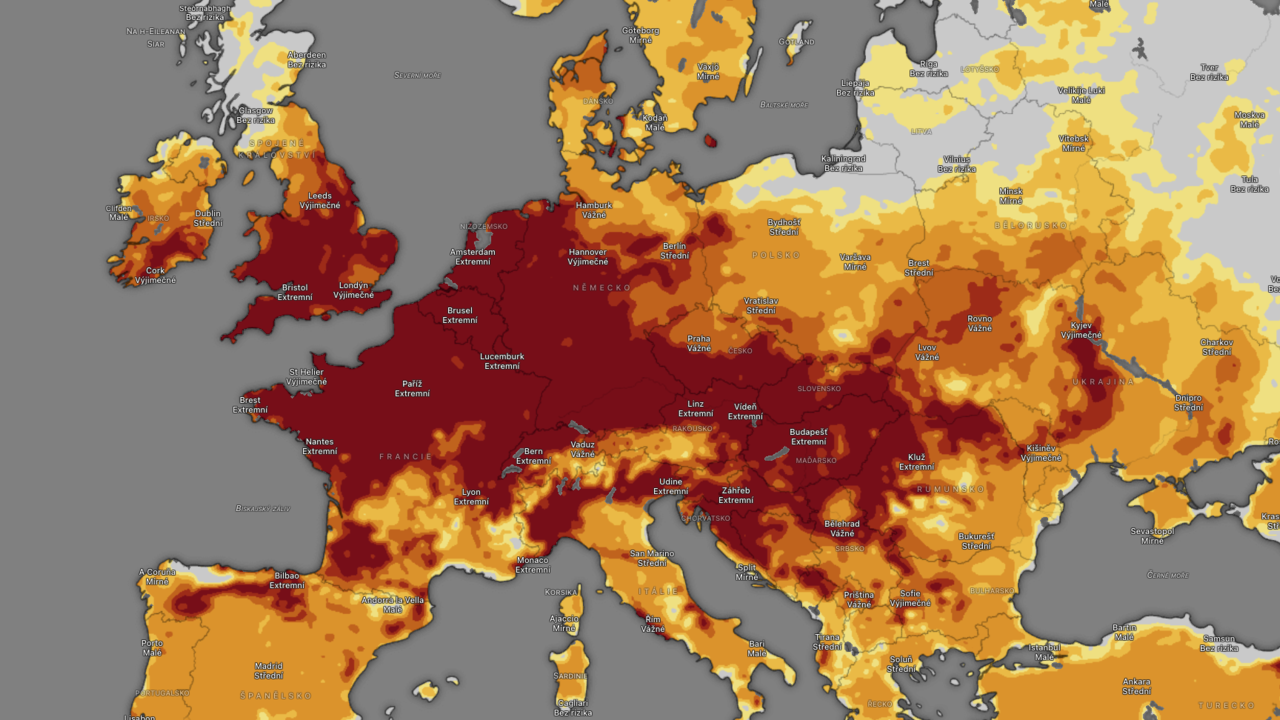
According to data from the global forecasting model CzechGlobe, soil drought now affects nearly all of Europe, with the exception of Scandinavia, the Baltic states and the northern British Isles. The most critical situation has been recorded in Western, Central and Southern Europe, where many areas are experiencing extreme levels of drought.
Occasional rainfall has kept the topsoil in a slightly less dire state, but deeper soil layers are in much worse condition. The prolonged lack of moisture is not only reducing crop yields and killing off vegetation, but also depleting groundwater reserves and lowering water levels in rivers and lakes.
Europe's shrinking rivers
The effects of the prolonged drought are especially visible on Europe's major rivers. Ground, aerial and satellite imagery show that many waterways are recording record-low water levels and flow rates this year. According to the Copernicus EMS service, severe to extreme low water levels have been observed on the Rhine, the Loire, the Danube, the Po, and across most of the Alpine and Carpathian river networks.
Record-low water levels this year have been recorded on the Rhine and the Danube in particular, with a critical situation also unfolding on the Loire and the Po. The water shortage is causing problems for cargo and tourist river transport, hydroelectric power stations, and, in some regions, for supplying nuclear power plants with sufficient cooling water.
No improvement in sight
One of the main causes of the current situation is a prolonged shortfall in rainfall. In the Czech Republic, for example, rainfall deficits have been recorded across the entire country since the start of the year, with most regions receiving only 50–75% of their usual precipitation. There was no improvement even in summer, and a similar pattern is being seen in a number of other European countries.
An additional problem is the recurring bouts of hot weather. High temperatures increase evaporation, causing the landscape to lose moisture even faster. The continent has already endured several heatwaves this year, some of them exceptionally intense.
Read also: 8 best swimming spots near Prague: lakes, quarries and beaches within an hour's drive of the capital
Source: novinky.cz