Egyptian farmer finds giant Ramesses II statues in his field
USD 21,68
Popular
Egyptian farmer Khaled al-Shahat Khalil, while working his plot in the village of Bahbit el-Hagar in the north of the country, discovered a pink stone block covered in hieroglyphs. Archaeologists summoned by the authorities dug up the remains of two huge statues that probably depict the pharaoh Ramesses II.
A hieroglyph-covered block in the ground
The farmer reported the find to officials at once, and specialists went to the site. The pink granite block he first came across is covered in inscriptions: the ruler is called “King of Upper and Lower Egypt” and “son of the god Ra”, the sun deity of ancient Egyptian religion.
The most striking part of the find is the head of a statue about 1.6 metres tall. It wears the double crown, the symbol of rule over Upper and Lower Egypt. Archaeologists estimate that the whole statue, together with its pedestal, could have reached roughly 8.5 metres. The attribution of the sculpture is also supported by a fragment of the back pillar bearing the royal name and titles.
The story comes with a curious detail: a number of foreign outlets report that the find lay in a cucumber field, but this has not been clearly confirmed, and the ministry does not mention it. According to other reports, the man grew cucumbers in a greenhouse. The governor of Gharbia Province, according to these accounts, joked when visiting the farmer’s home: “See? Cucumbers bring archaeological finds.”
The second statue remains a puzzle
Archaeologists also found parts of a second royal statue about 2.4 metres tall. Its facial features are fairly well preserved and resemble those of the first sculpture, and on its head is the traditional royal nemes headdress. However, the figure has no legs or pedestal, and part of the headdress is missing.
It may also depict Ramesses II, but its identity has not yet been confirmed. Researchers are continuing their work to establish the origin of both statues, their relationship to each other and their place in the history of the region. Hisham el-Leithy, secretary-general of the Supreme Council of Antiquities, said the excavations will continue: scientists hope to find further fragments.
A reward for honesty
Egypt’s Minister of Tourism and Antiquities, Sherif Fathy, thanked the farmer for reporting the find immediately. According to the ministry, the cooperation of local residents is important for protecting the country’s historical heritage. As a token of gratitude, the authorities gave the farmer and his wife a trip to Saudi Arabia to perform umrah, the Muslim pilgrimage to Mecca.
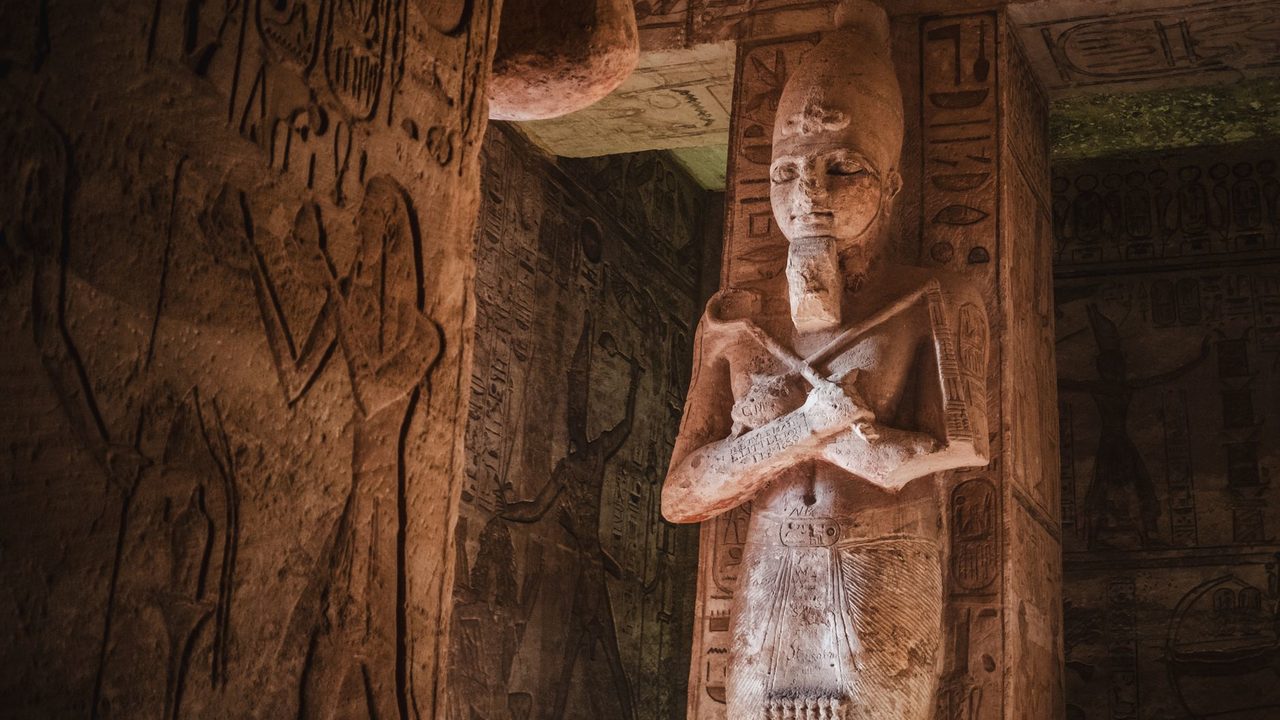
Ramesses II ruled from about 1279 to 1213 BC, more than 60 years, and is considered one of the most significant pharaohs of the New Kingdom. He is known for monumental building: grand temples and statues meant to emphasise the might of the Egyptian king are associated with his name. The most famous monument is the rock temples at Abu Simbel in the south of the country, with giant statues of the ruler at the entrance.
The village of Bahbit el-Hagar lies in the Nile Delta north of Cairo, in Gharbia Governorate. The place is known above all for the remains of a large temple of the goddess Isis. The new finds may help to better understand how this area developed and what buildings were erected here in the time of the ancient rulers.
Source: novinky.cz