Czech Army Still Hasn't Started Informing Young People About Military Duty — Three Years After the Law Took Effect
USD 21,26
Popular
The Czech Army still isn't complying with its own law, which requires it to inform every citizen who turns 18 about their military service obligations. The relevant amendment took effect three years ago, yet no letters or other notifications have ever been sent out — young people are left to dig up the information themselves through the army's website, social media, or recruitment centers.
According to a 2020 survey by the STEM/MARK agency, nearly half of Czechs over the age of 15 had no idea they were subject to military duty. That's precisely why, three years ago, military officials and Defense Ministry staff added a specific clause to the revised law: regional military administrations are required to give every citizen who reaches adulthood "detailed information" about their obligations in this area. Back then, there was talk of sending out letters, but the idea never left the drawing board.
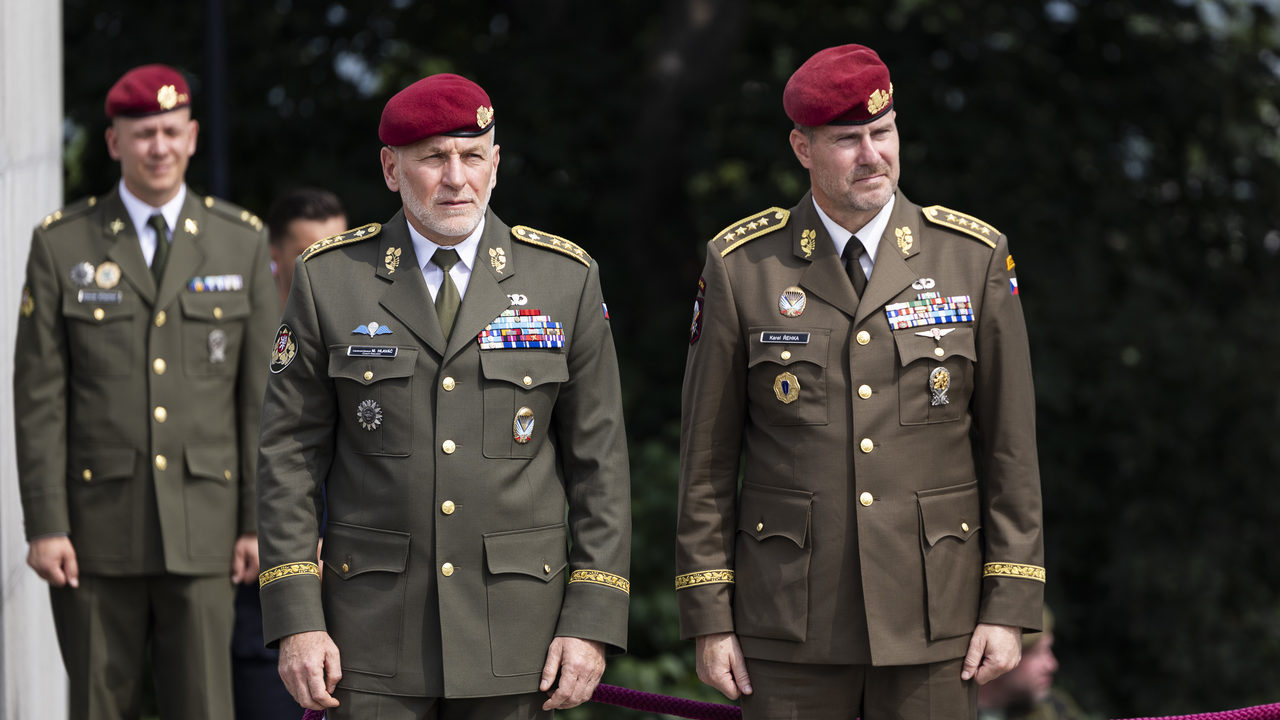
The army's unfulfilled obligation came up again on Tuesday at a Senate committee meeting attended by the new Chief of the General Staff, Miroslav Hlaváč, who took charge of the army earlier this month. "I haven't had a chance to look into this yet, but sending out letters is definitely one option for explaining to young people that they have this obligation," he told senators.
He added that before any mailing campaign begins, its purpose needs to be clearly explained to the public — so that it doesn't look like the army is trying to militarize anyone or stir up a sense of imminent threat to the country.
As a reminder, here's how military service obligations work in Czechia: in peacetime, citizens between the ages of 18 and 60 can voluntarily prepare to defend the country — by becoming professional soldiers, joining the active reserve, taking part in voluntary military training, or signing up as volunteers to reinforce the armed forces if needed. However, if a state of threat to the state or martial law is declared, the authorities gain the right to conscript citizens in this age bracket by order, with the government deciding which groups — by year of birth or professional qualification — must appear before the draft board.
The Defense Ministry redirected the question to the General Staff, saying the matter falls under its purview. Defense Minister Jaroslav Zuna (SPD) did not respond to a request for comment.
Former Chief of the General Staff Karel Řehka, who was in charge of the army when the amendment passed in 2023, said the letter for eighteen-year-olds had been fully prepared and ready to send. "But the then-defense minister, Jana Černochová, was worried about public backlash, so the mailing was ultimately called off. I pointed out repeatedly that we weren't following our own law," he claims.
Current General Staff chief Hlaváč confirmed this account to senators, adding that the decision to scrap the mailing was made shortly after the war in Ukraine began — during a "sensitive period" for both Czechia and the wider region.
Černochová (ODS) herself flatly denies ever blocking the mailing. According to her, the agreement at the time was simply that army leadership would choose an appropriate way to inform young people, and several options were discussed — with the focus on avoiding any impression of mobilization given the tense public mood surrounding the war in Ukraine. She also stressed that, under the law, it's the regional military administrations — not the minister, who has no direct authority over them — that are responsible for informing newly-adult citizens. A source familiar with the negotiations confirmed to our editorial team that Černochová never prohibited the letter campaign.
Formally, responsibility for the army's failure to enforce its own law remains a matter of dispute: under current legislation, the Defense Ministry oversees the armed forces, and the General Staff falls under the ministry's structure. Disagreements over where authority is divided between the minister and the army chief have repeatedly sparked public clashes between Černochová and Řehka in recent years.
Source: seznamzpravy.cz