Czech Government Demands Removal of Constitutional Court Judge Šámal from Case Against President Pavel
USD 21,04
Popular
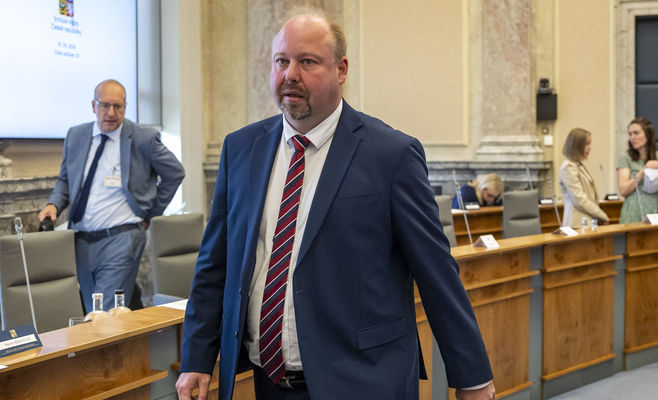
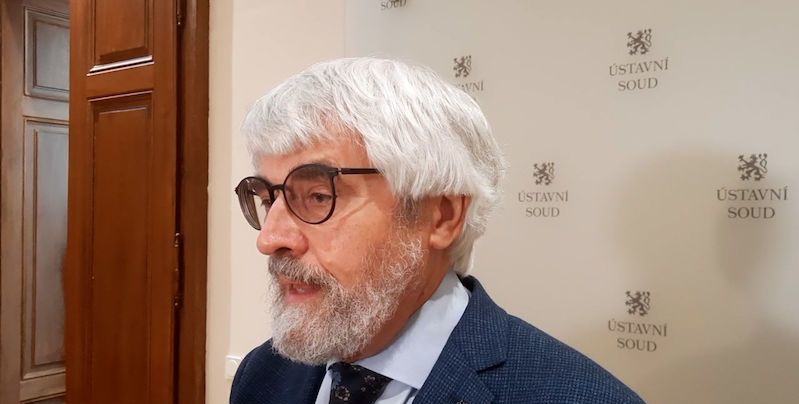
The Czech government has filed its official response to the jurisdictional dispute brought by President Petr Pavel, demanding not only that the complaint itself be rejected but also that judge-rapporteur Pavel Šámal be removed from further proceedings in the case. Government spokesman Josef Tejc announced this at a press conference on Monday.
According to Tejc, the government's right to a fair process was violated during the handling of the complaint: the draft ruling was never sent to the cabinet before it was issued, leaving the government no chance to respond. Moreover, the government argues that the Constitutional Court had no authority whatsoever to issue a preliminary ruling on a jurisdictional dispute of this kind.
"Because the constitutional standing of the government was interfered with and the aforementioned rights were violated, we believe this constitutes an unprecedented case of judicial activism, and we have therefore filed a motion to have judge-rapporteur Pavel Šámal excluded from any further proceedings in this case," Tejc said.
He stressed that the government was never given a hearing and had no opportunity at all to present its position. "Even if we had been given just a few hours, we were ready to present it," the cabinet spokesman added.
Tejc also insisted that, under the Czech constitutional order, it is the government — not the president — that determines foreign policy and its substance. Article 63 of the Constitution, which Pavel invoked ahead of the summit, he said, assigns the president a purely representative role and does not grant him the authority to independently shape the country's foreign policy course.
"It must be understood that the Czech Republic can only have one foreign policy, and it cannot be conducted simultaneously by both the government and the president," Tejc said at Monday's press conference. He noted that the working version of the government's response ran to 81 pages, a fact he had already mentioned last week.
President Petr Pavel filed the jurisdictional complaint shortly before the summit. In his view, the government's attempt to exclude him from the delegation being prepared violated the powers granted to him by the Constitution. The president cited Article 63, paragraph 1a, under which "the president of the republic also represents the state abroad." Whether this provision automatically entitles the president to take part in every foreign summit is now for the Constitutional Court to decide.
The court has yet to begin examining the case on its merits, but due to time pressure ahead of the approaching summit it had already issued a preliminary ruling obliging the government to include the president in the delegation. In the end, both the president and the prime minister flew to the summit, though their delegations operated separately once there.
Source: novinky.cz