Czechia Has No Ballistic Missile Defence Systems of Its Own — the Country Relies on Its NATO Allies
USD 21,00
Popular
Czechia does not possess its own systems for intercepting ballistic missiles and, in the event of a threat, would have to rely on neighbouring countries and NATO's collective defence. This was explained by security expert Vlastislav Bříza in an interview with Novinky.
"We have a huge advantage: we are not a border state on NATO's eastern flank. Czechia's position in the centre of Europe is very favourable, because neighbouring countries can protect us," the expert explained.
The backbone of Czech airspace protection is the alliance's NATINAMDS (NATO Integrated Air and Missile Defence System). It links together radars, command posts, fighter jets and ground-based systems belonging to NATO member states, defending against every type of aerial threat — from aircraft and helicopters to drones, cruise missiles and ballistic missiles. Command of the system is based in Ramstein, Germany, and it operates continuously, both in peacetime and during conflict.
Protection against ballistic missiles is primarily provided by American Patriot systems deployed in Germany, Poland, Romania and Sweden, a radar in Kürecik, Turkey, Aegis-equipped destroyers operating out of Spain, and Aegis Ashore ground bases in Romania and Poland. "These countries can intervene if necessary and thereby protect us," Bříza noted.
According to security expert Jakub Drmola of Masaryk University, collective defence is also justified by the specifics of ballistic missile flight paths. "If Czechia were faced with a ballistic attack from Russia or the Far East, it would be impossible to determine precisely where the missile would land. For smaller states in particular, it's unclear which side of the border it would hit — say, Czechia, Poland or Germany," he explained.
The American Aegis system uses, among other interceptors, SM-3 missiles capable of destroying targets during the mid-course phase of their trajectory, outside the atmosphere. "Since we're talking about destroying targets like these, it makes sense that missile defence should be organised at a level above what individual states are capable of," Drmola stressed.
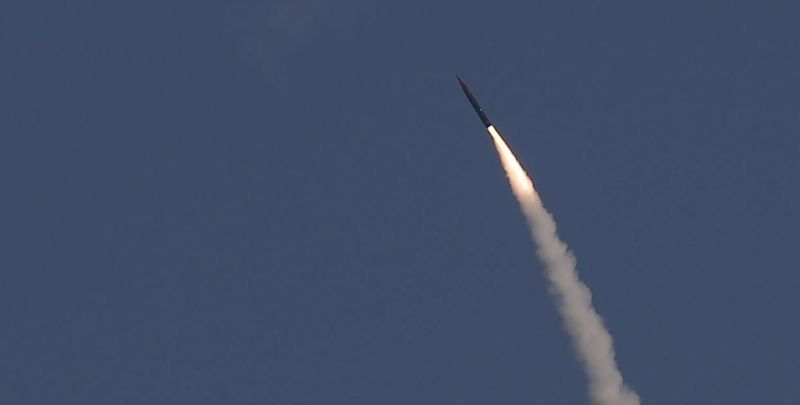
Building a comparable system of its own would be extremely costly for Czechia. "The Czech Republic cannot afford to buy a Patriot system, the Israeli Arrow 2 [which destroys missiles tens of kilometres up], or the Israeli David's Sling [for hitting mid-range targets] on its own," warned retired General František Míčánek, who now heads the Centre for Security Studies at CEVRO University. Drmola added that, given current planned defence spending, Czechia simply isn't among the countries that can afford their own missile defence.
Besides NATINAMDS, Czechia is among the founders of the European Sky Shield initiative, which Germany unveiled in 2022 following Russia's attack on Ukraine. The project's goal is the joint procurement of compatible systems and munitions for different levels of defence. Unlike NATINAMDS, which is an operational network linking national air defence systems, European Sky Shield is meant to help European countries jointly acquire new defence systems, standardise their maintenance, and fill capability gaps — with the new systems then integrated into NATO's broader defence architecture.
"European Sky Shield already includes some working elements to a certain degree. Full operational readiness is expected in about five years," Bříza said. The initiative also draws on the Israeli Arrow 3 system, designed to destroy long-range missiles outside the atmosphere — Germany put its first elements into service at the end of last year.
In addition, a new European Union project called EU-FIAMD (Federated Integrated Air and Missile Defence) is taking shape, which the European Commission presented on 3 July 2026. The project is meant to link national radars, early-warning systems, command centres and air defence systems into a single European network, and to support their joint development, production and procurement.
Source: novinky.cz