Czechia prepares to automatically link public-sector wages to the minimum wage
USD 21,01
Popular
The Czech government is considering a reform of public-sector pay that would tie the tariff wages of hospital orderlies, cleaners, teachers, police officers and civil servants to the country's minimum wage. This was reported by the Ministry of Labour and Social Affairs, which confirmed it is working on a systemic solution to the problem.
At present, tariff wage tables for public-sector employees are in most cases set below the level of the minimum wage and the so-called guaranteed wage. Formally, this does not mean people receive less than the required minimum — institutions are obliged to top up the difference. But it is precisely this top-up that creates the problem: a base tariff starting below the minimum wage makes public-sector vacancies unattractive.
A top-up instead of a bonus
According to Dagmar Žitníková, chair of the healthcare and social protection trade union, the top-up to the guaranteed level effectively eats away the possibility of properly rewarding employees with bonuses. "When your base tariff is, say, 19,000 [crowns], and the minimum wage is 22,500, you get a personal allowance covering that gap — but that's not recognition of your work, it's a legal requirement," she explains.
Jiří Horecký, president of the Union of Employers' Associations, who is taking part in the negotiations, adds that the personal allowance is meant to reward good work, but in practice it is used to fill the gap between the tariff and the minimum wage: part of the bonus is simply "eaten up" by the top-up.
Wages will rise automatically
According to Seznam Zprávy, the option gaining the most support in the talks is one where tariff tables would contain a formula instead of fixed sums — specifying by how many percent the wage exceeds the minimum wage. For example, an entry in the table might read "minimum wage plus 3 percent."
"Finally, public-sector wages will rise not depending on which government is in power or which trade unions have the loudest voice. Wages will rise depending on the state of the national economy and overall wage levels," Horecký says.
Žitníková stresses that no final decision has been made yet: "Everything is still open. But there really is an intention for tariffs to start from the minimum wage level and increase by pay grade." She warns that a lot depends on how the coefficients are distributed between grades and steps — "the devil is in the details." Horecký adds that when raising wages at the lower end, the entire scale needs to be carefully structured to avoid excessive increases in the highest-paid positions.
How much will it cost
The Czech Ministry of Labour confirmed it is working on the issue and looking for a systemic solution that would better link the growth of the minimum wage, the guaranteed wage and tariff rates. According to ministry spokesperson Anna Vacková, the gap between tariffs and the guaranteed wage is negatively affecting public-sector pay, and the problem has intensified since the 2025 introduction of a mechanism for automatically adjusting the minimum wage — the minimum and guaranteed wages are now rising faster than tariffs.
According to Seznam Zprávy, the reform could cost the budget several billion crowns. In total, according to wage statistics, 683,900 people in Czechia receive a tariff wage. This year the minimum wage stands at 22,400 crowns, and it is expected to rise to 25,000 crowns next year. The guaranteed wage is linked to the minimum wage and depends on education level — for employees with a university degree, it should amount to 35,840 crowns.
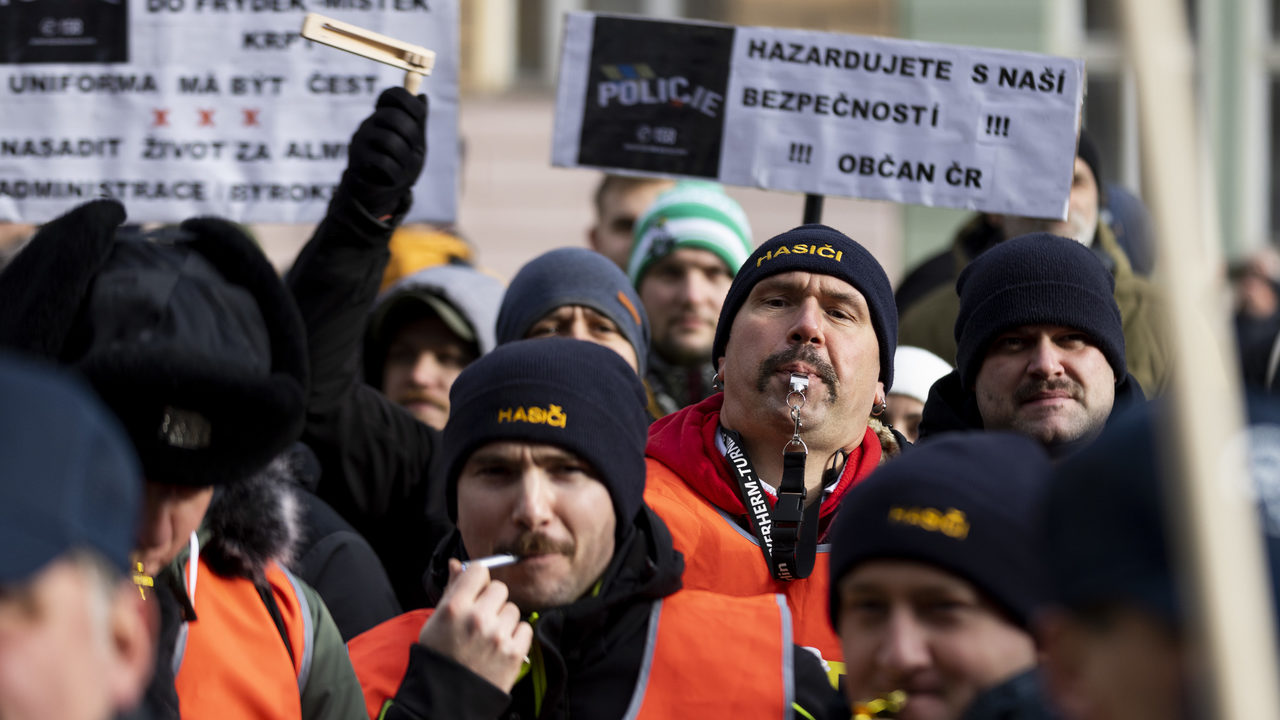
Until now, governments have most often raised public-sector wages under pressure from trade union protests and strikes — in recent years, court staff, teachers, firefighters and police officers have gone on strike, among others.
Source: seznamzpravy.cz