Danube Hits Record Low: Hungary Braces to Shut Down Reactors at Paks Nuclear Plant
USD 21,08
Popular
Hungary is facing the threat of shutting down its only nuclear power plant, Paks, after the Danube's water level plunged to a record low. According to Hungarian Prime Minister Péter Magyar, all four operating reactor units at the plant could be taken offline as early as this weekend.
The issue isn't a shortage of water itself, but the fact that the river level has dropped below the intake pipes of the pumps that cool the reactors. "While there is enough water for cooling, the pumps' intake pipes are positioned above the current — and, according to forecasts, still falling — water level. That means they can no longer do their job," MVM, the company that operates the plant, said on Friday.
Márk Radányi, deputy chairman of the ruling Tisza party, said the crisis could cost Hungary between 315 and 630 million forints because of the high price of imported electricity. Magyar said emergency measures would require limiting power supplies to major industrial consumers, and that blackouts for households could not be ruled out, though they are being treated as a last resort. Authorities have already urged residents to conserve water and avoid filling swimming pools.
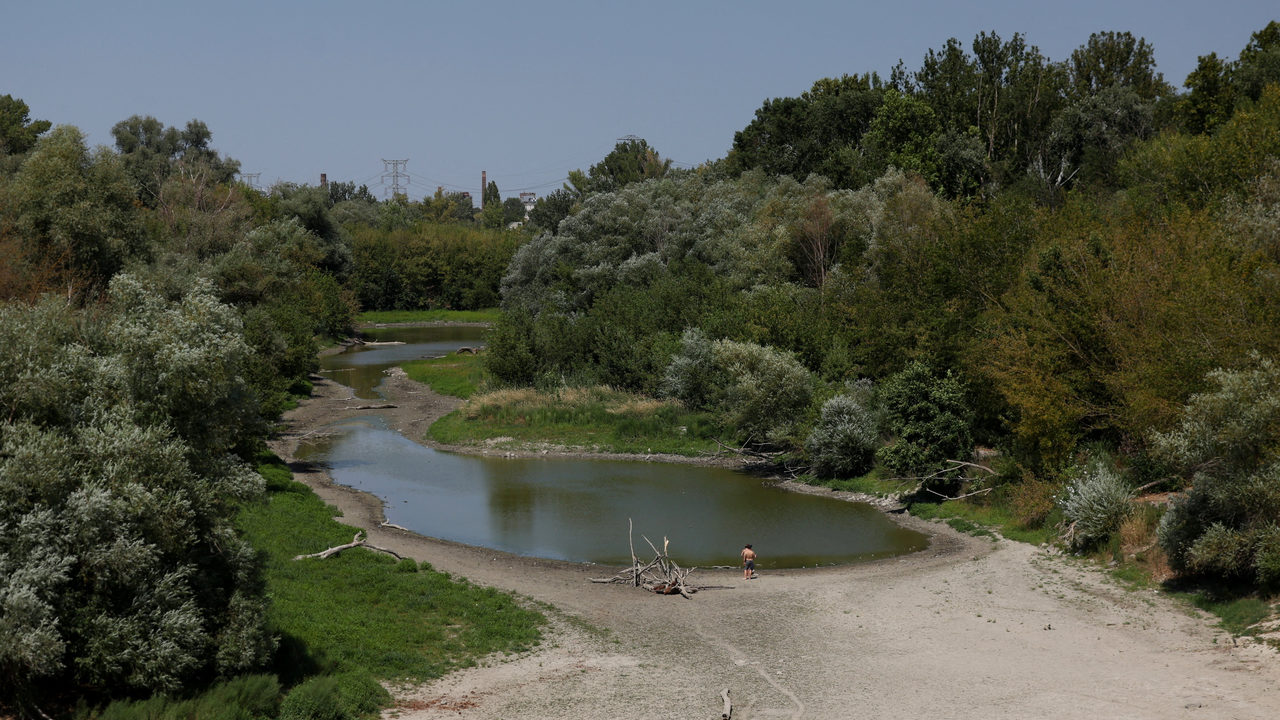
Shipping on the Danube has ground to a halt because of the low water, and in some stretches the river now resembles a dried-up channel. Meteorologists warn that with the heat and scarce rainfall, conditions are unlikely to improve next week — if anything, they may get worse. The retreating waters have also uncovered some curious finds: unexploded World War II-era ordnance surfaced from the riverbed in Budapest, while a military boat from the same era emerged near the village of Ásványráró.
The Paks plant, located 120 km south of Budapest, has been a contentious topic in Hungarian politics for over a decade due to plans to expand it. In early 2014, Russia's Rosatom was awarded the expansion contract without a competitive tender — the deal was signed in Moscow by then-Prime Minister Viktor Orbán and Russian President Vladimir Putin, even though authorities had originally promised a tender with four or five bidders.
Once the two new units are completed, nuclear power's share of Hungary's energy mix is expected to rise from 40% to 60%, and the country has no plans to build any additional power plants. Paks currently operates four Soviet-designed VVER-440/V213 reactors, the first of which came online back in 1982.
Two years ago, the European Union placed Rosatom under sanctions over Russia's aggression against Ukraine, but Orbán secured an exemption for the Paks expansion project. Before the election, Magyar promised to review all of the previous government's agreements with Rosatom, though that has yet to happen. On Friday, he said Hungary would invest in wind power to reduce its dependence on the Danube.
Romania's Cernavodă nuclear plant, near the Black Sea port of Constanța, is facing similar difficulties — one of its two reactors has already been shut down, and the second is likely to follow suit next week.
Czechia faces no such risk: as ČEZ spokesman Ladislav Kříž told the ČTK news agency, the nuclear plants at Dukovany and Temelín use cooling towers for their condensers, which consume far less water than the once-through cooling systems used at plants like Hungary's Paks.
Read also: 8 best swimming spots near Prague: lakes, quarries and beaches an hour from the capital
Source: seznamzpravy.cz