EET 2.0 from January: who must register sales in Czechia
USD 22,01
Popular
Sales registration is returning to Czechia in January: some businesses will once again have to report their sales to the financial administration. The new version, EET 2.0, covers not only cash but also payments by card, QR code or app, if the transaction takes place in personal contact with the customer.
The Ministry of Finance presents EET 2.0 as a simpler system: there is no need to print receipts, and the range of registered data is narrower. For small businesses, the state will offer a free browser-based solution, with no need to buy a device or software.
Who will have to register sales
The obligation applies to those who accept contact payments and cash. A contact payment is a payment made in personal contact with the customer on your premises or, for example, in a vehicle when goods or services are handed over. It does not matter how the customer pays: cash, card, QR code, a payment app, a voucher, a cheque or a virtual asset. Registration also applies to dart machines, table football and billiards.
The main difference from 2016, according to tax expert Vladimír Hejduk, is that what matters is not the form of payment but the way of selling: if the customer is standing at the till, the sale must be registered even when they pay by card. That is why venues that hardly ever took cash will also be drawn into the system. Jan Mašek, director of a tax consultancy in Liberec, notes that the share of cash is falling and the new EET responds to that.
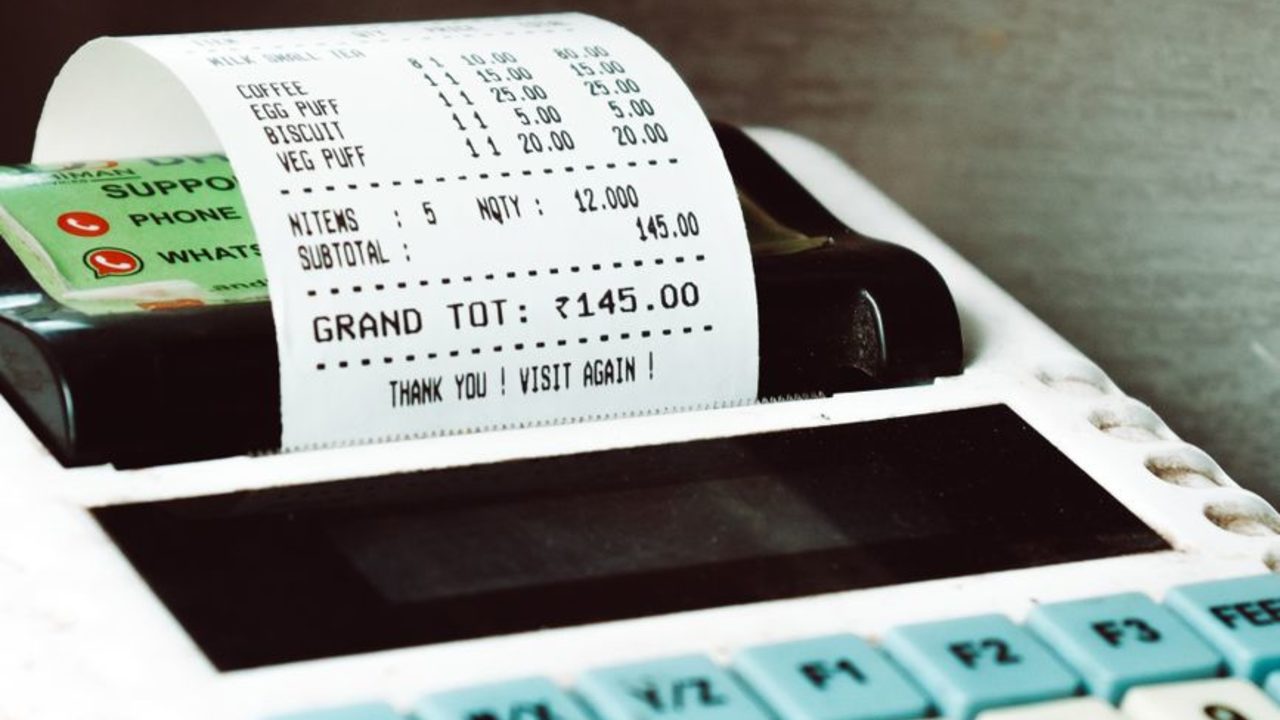
For each sale, the following is recorded: the business's details, the date and time, the amount, the accounting unit (for example, the premises), the identifier of the cash register device and the sequential number of the sale.
Who is not affected by EET
Payments that the customer makes remotely, without being physically present at the business, do not have to be registered: a bank transfer, a payment through a payment gateway or a QR code in an online shop, made from home. An exception is also made for cash on delivery that is subsequently transferred to an account. The obligation also does not apply to income that does not come from business activity, such as rent.
The Sales Registration Act names the exceptions explicitly in sections 11-13. They include self-employed people (OSVČ) on the flat-rate tax who have chosen the EET OFF regime and, under certain conditions, holders of ZTP and ZTP/P cards issued in connection with severe visual impairment, blindness or deafblindness.
How much the EET OFF regime costs
Only self-employed people in the first tier of the flat-rate tax whose income in the previous period did not exceed 1 million crowns a year can enter the EET OFF regime. To do so, they must submit an application for the surcharge that exempts them from registration no later than the tenth day of the period from which the business joins it. The regime then stays unchanged for a year, and it can be left only for the following year: the application is submitted by the tenth day after the end of the year. If income exceeds 1 million crowns, the period in this regime must end, and sales registration will begin from the new year.
The exemption is not cheap. Currently, a business in the first tier of the flat-rate tax pays the state 9,162 crowns a month. Next year, because of the rise in the average wage, the payment will increase to 9,662 crowns: 6,074 crowns for pension insurance, 3,488 crowns for health insurance and 100 crowns of income tax. The EET OFF regime will add another 1,400 crowns a month in tax, so instead of 9,662 crowns you will have to pay 11,062. Just for not registering sales, that comes to 16,800 crowns a year on top.
How to prepare and when it starts
You can apply for registration from this November through the Tax Information Mailbox Plus (DIS+) on the MOJE daně portal, in the “Online Financial Office” section. That is also where you create the backing certificate and the accounting unit, and there is a video guide as well. The financial administration's infoline at 953 109 109 can also help.
Registration requires a cash register device or at least an app on a phone, tablet or computer with internet access. Sales data is sent as a message when payment is received, and EET does not require you to issue a receipt. Cash registers bought for the previous system can also be used if they meet the current requirements: a software update may be enough, but it is worth checking in advance. The response time in the certificate settings cannot be less than two seconds. Businesses will be able to claim a one-off tax discount of up to 5,000 crowns.
In December, the financial administration will launch the free MOJE eet web app for small businesses, connected to DIS+. It can be used by those with no more than two accounting units.
Registration starts in January. The first month will be more of a trial, and the financial administration should not demand compliance for it, but sales in January must already be registered. The full regime will start in February.
What this means for foreigners
This applies to all businesses that accept payments in personal contact with the customer, including foreigners. Sales must be registered from January. You can apply from November through DIS+ on the MOJE daně portal, and the free MOJE eet app will launch in December.
Around Prague guide on the topic: Цены аренды квартир в Праге 2026 по кварталам и районам: 1+kk, 2+kk и 3+kk
Around Prague, based on reporting by mesec.cz