Expert: Czechia will never build reservoirs like Slapy again — the climate demands a different approach
USD 21,01
Popular
Czechia is facing increasingly severe droughts, with southern Moravia and the Elbe basin (Polabí) at risk of desertification, according to Vojtěch Kotecký of Charles University's Environment Centre, who spoke to the Seznam Zprávy podcast. He noted that climatologists warned of these consequences 20–30 years ago, and those forecasts are now becoming everyday reality.
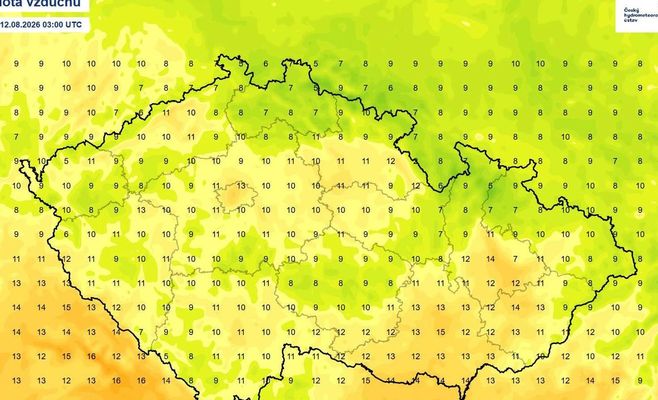
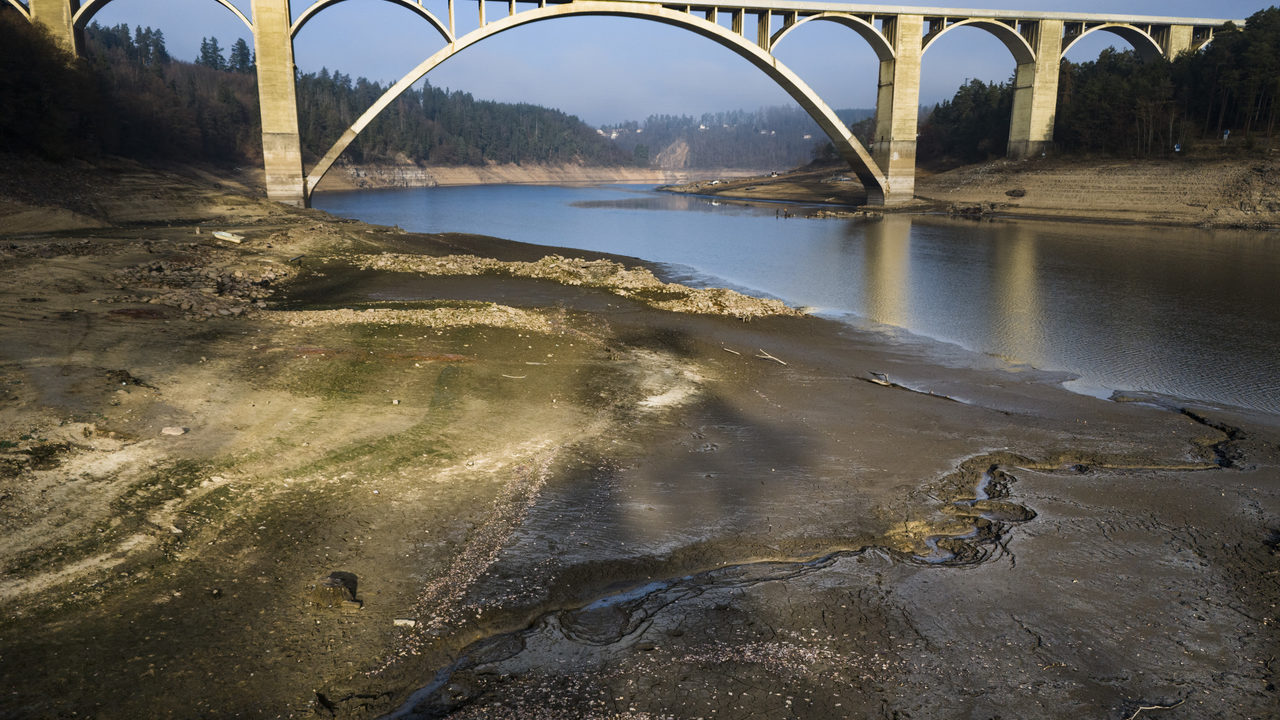
Since the start of the year, Czechia has received on average 34% less rainfall than the long-term norm, according to meteorologists. The situation is worse than last year, which was itself one of the driest since 1961. Water management company Povodí Moravy is recording drought at half of its measuring points, with some showing zero water levels. More than 50% of the area served by Povodí Labe is also experiencing extreme drought, and Povodí Odry is beginning to see problems as well. As a result, farmers finished this year's harvest unusually early, with yields on some farms down by as much as 20%.
Southern Moravia and Polabí at risk of desertification
The European Commission's Joint Research Centre (JRC) has reported that by 2040, desertification risk zones will expand specifically in Czechia — primarily in southern Moravia and the Elbe basin. According to Kotecký, this isn't about sand dunes, but rather a combination of soil degradation and intensifying drought in a specific region. "We're used to thinking of desertification as a problem for Africa, or at most Spain. Now it turns out it applies to southern Moravia too — and, over the coming decades, to parts of Polabí as well," the expert said.
In his assessment, a significant share of farmland in these regions could become unsuitable for cultivation and turn into pastures or meadows. The process can no longer be stopped entirely, but it can be slowed — through systematic work on landscape resilience.
Why there won't be another Slapy
Speaking about reservoirs, Kotecký was blunt: "We are certainly not going to build anything like Slapy again." If new reservoirs are built, they will be far smaller in scale — orders of magnitude more modest than the famous Vltava Cascade. He argued it would be more effective to restore rivers' natural channels, making them wider and shallower so water can seep into the ground more easily, as well as creating safe flood-overflow zones and restoring networks of small wetlands.
The expert identified soil itself as the key area of focus: improving its water-retention capacity through living organisms and proper structure. Healthy soil is about one-fifth air and can absorb substantial volumes of water — but decades of intensive farming focused on large fields and heavy use of agrochemicals have weakened that capacity.
Forests and farming face change
According to Kotecký, Czech forests have gotten off relatively lightly so far — new mass bark-beetle damage is expected in western Bohemia, where large areas of old spruce forest remain. Meanwhile, the state enterprise Lesy České republiky, which manages a sixth of the country's territory, has already begun gradually shifting its forestry approach, sending foresters for training at Mendel University's teaching forest estate in Brno.
In agriculture, the expert believes salvation lies not in copying Israel's drip-irrigation model (only about 4% of Czech farmland is currently irrigated), but in large-scale investment in robotics, digitalisation and artificial intelligence — tools that can help maintain competitiveness while treating the soil more gently. Kotecký also noted that some regions of Czechia are already reporting problems with wells and falling groundwater levels, a trend that is set to intensify.
Read also: Brno: what to see and where to go
Source: seznamzpravy.cz