ČEZ to Keep Temelín and Dukovany Nuclear Plants Running Until Age 80 — Czech Nuclear Power Outlives Politicians
USD 21,04
Popular
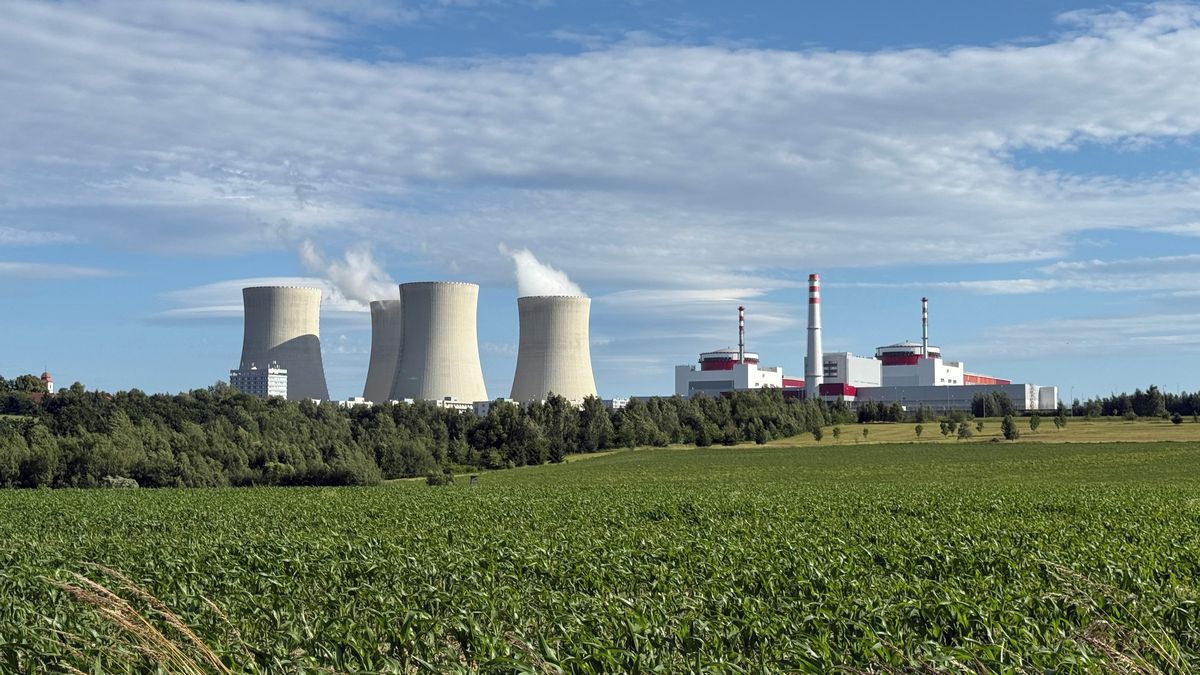
Energy company ČEZ has announced that the two units of the Temelín nuclear power plant will be able to generate electricity until 2080 and 2082 respectively — 20 years longer than originally planned. That would give the plant a total service life of 80 years.
The company made a similar decision back in April regarding the older Dukovany plant: its units are now expected to operate until 2065 and 2067. ČEZ had originally planned for a 50-year lifespan at Dukovany and 60 years at Temelín.
According to the company, Czech law does not set a fixed limit on how long a nuclear plant may operate. However, every extension must be approved by the State Office for Nuclear Safety, which conducts a rigorous review every ten years in addition to its regular ongoing inspections.
Decisions to extend reactor operation are never made hastily — ČEZ spent the past five years analysing whether Temelín and Dukovany could safely run longer. Industry experts note that an extension is only granted once the operator proves its equipment meets current safety standards and that it has enough qualified staff on hand.
Keeping a single plant running longer requires annual investment of 5–6 billion crowns, said ČEZ CEO Daniel Beneš — a figure that applies to both Temelín and Dukovany. The original construction costs of both plants, meanwhile, were paid off long ago — in both cases, within 15 years.
By comparison, building two new units at Dukovany is estimated to cost 407 billion crowns — considerably more than the cost of extending the life of the existing plants. According to Petr Závodský, head of the Dukovany II project, the new unit is expected to pay for itself within 30 years — the same period over which the state plans to repay the construction loan. "With an 80-year operating life and a 30-year loan repayment period, the new units will then generate profit for the following 50 years," he said.
Extending the lifespan of nuclear plants is standard practice worldwide. Across Europe, planned reactor lifetimes range from 60 to 80 years. Britain's Sizewell B, for instance, recently received approval to keep running for another 20 years, until 2055; France is targeting a 60-year lifespan for its plants; and the largest nuclear power plant in the US, Palo Verde, could operate for up to 80 years — its operator has already applied for another license extension.
Industry experts note that support for nuclear power in Czechia remains steady regardless of which political parties are in charge. "Nuclear is one of the few topics nearly the entire political spectrum agrees on, with the possible exception of the Greens. Some support it more, some less, but there's a shared understanding across the political spectrum that without new nuclear plants, it's impossible to phase out coal, decarbonize the economy, and avoid serious economic losses," says Petr Závodský.
Germany offers the opposite example, where abandoning nuclear power has already been called a strategic mistake. Chancellor Friedrich Merz put it bluntly: "The decision is irreversible. I regret it, but that's the way it is." The shutdown of Germany's nuclear plants has contributed to rising energy prices and weakened the country's competitiveness, while restarting old reactors or building new ones would be prohibitively expensive. Germany is now focusing instead on strengthening cross-border power grids so it can import electricity — including nuclear power — from neighbours such as France and Czechia, where nuclear remains the leading source of energy.
Source: seznamzpravy.cz