Forgotten American Super-Gun Gets a New Life as a Hypersonic Test Bed
USD 20,94
Popular
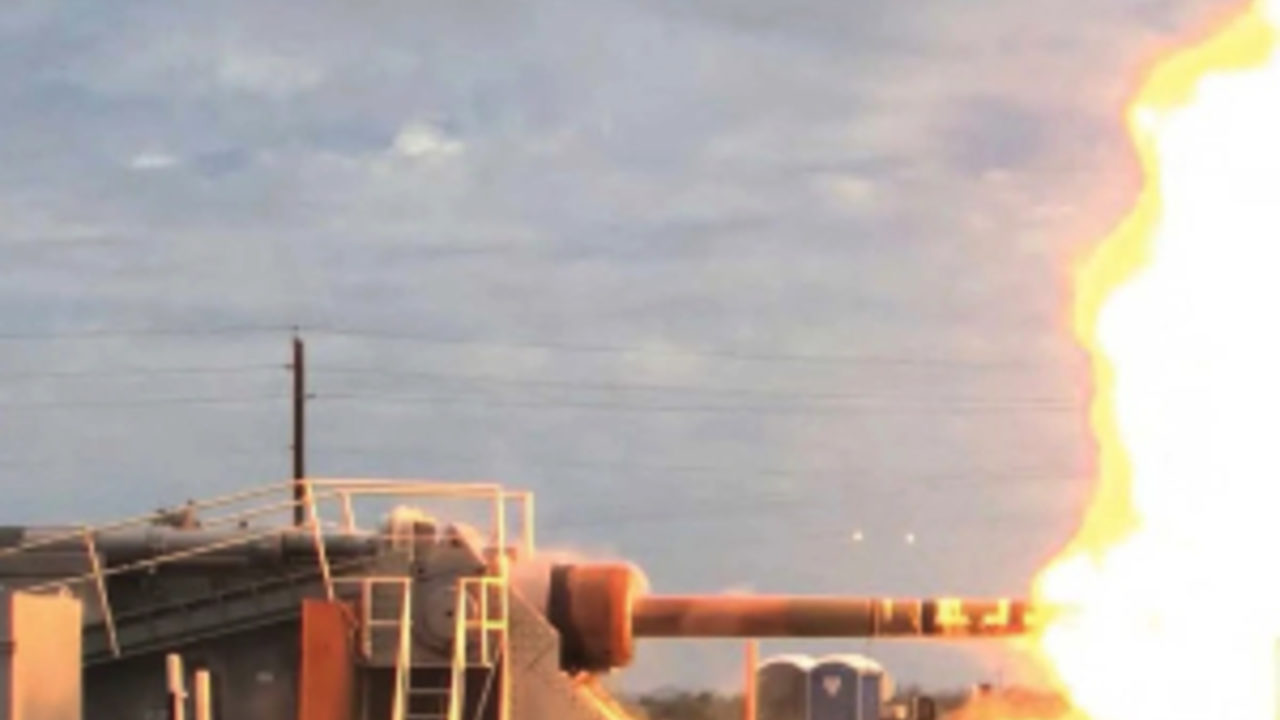
The US Army has carried out an unusual experiment: on July 30, 2026, at the Yuma Proving Ground in Arizona, a hypersonic warhead was fired for the first time from the HATS (Heavy Artillery Test System) cannon — the successor to a now-cancelled super-gun project that was originally conceived as a weapon for a potential conflict with China.
What's left of the super-gun
Back in 2019, the US Army was developing a mobile long-range artillery piece under the Strategic Long Range Cannon program. The plan was for it to strike targets more than 1,600 km away using rocket-assisted guided projectiles — a range dozens of times greater than that of standard 155mm artillery. The concept promised the ability to hit deep targets with a much larger ammunition supply than aircraft could offer, at a lower cost than missile systems.
However, the project ran into a whole host of problems: difficulties transporting and positioning the gun, targeting issues, barrel wear, the challenge of producing specialized shells, rate of fire, and the system's vulnerability once its position was detected by the enemy. In 2022, the US Congress cut funding for the program entirely.
A new role for an old gun
Now the former super-gun is making a comeback — but in an entirely different capacity. The test at Yuma Proving Ground was conducted jointly by the Army's DEVCOM Armaments Center, the Lawrence Livermore National Laboratory, and Yuma Proving Ground itself. Instead of launching a full, costly hypersonic missile, engineers used a large-caliber gun to fire a specially modified carrier module containing a warhead at extremely high speed.
This approach makes it possible to study how a warhead behaves at the moment of impact without having to launch a complete hypersonic missile every time, making the tests significantly cheaper.
What the test doesn't check
According to the US Army, the experiment doesn't replace a full hypersonic missile flight: it doesn't simulate rocket motor ignition, sustained hypersonic flight, aerodynamic heating, trajectory correction, or maneuvering. The point of the test is to strip away all those variables and answer one specific engineering question: does the warhead detonate correctly after extreme acceleration, and does it deliver the expected damage on impact?
Turning the HATS system into a test platform allows engineers to exploit its ability to accelerate a warhead to extreme speeds without having to solve the mobility or battlefield-survivability problems — precisely the weaknesses that ultimately doomed the original super-gun project.
Source: osel.cz