Former Austrian Minister Who Once Admired Putin Grows Disillusioned with Russian Village Life: Alcoholic Mothers and Rumors She's a "Walking ATM"
USD 20,99
Popular
Former Austrian Foreign Minister Karin Kneissl, who relocated to live in the Russian hinterland, has sharply shifted the tone of her once-glowing accounts of life in Russia. In a candid interview with the regional Russian outlet YA62, she spoke about alcoholism among local mothers, poverty, and the fact that neighbors see her as a "walking ATM."
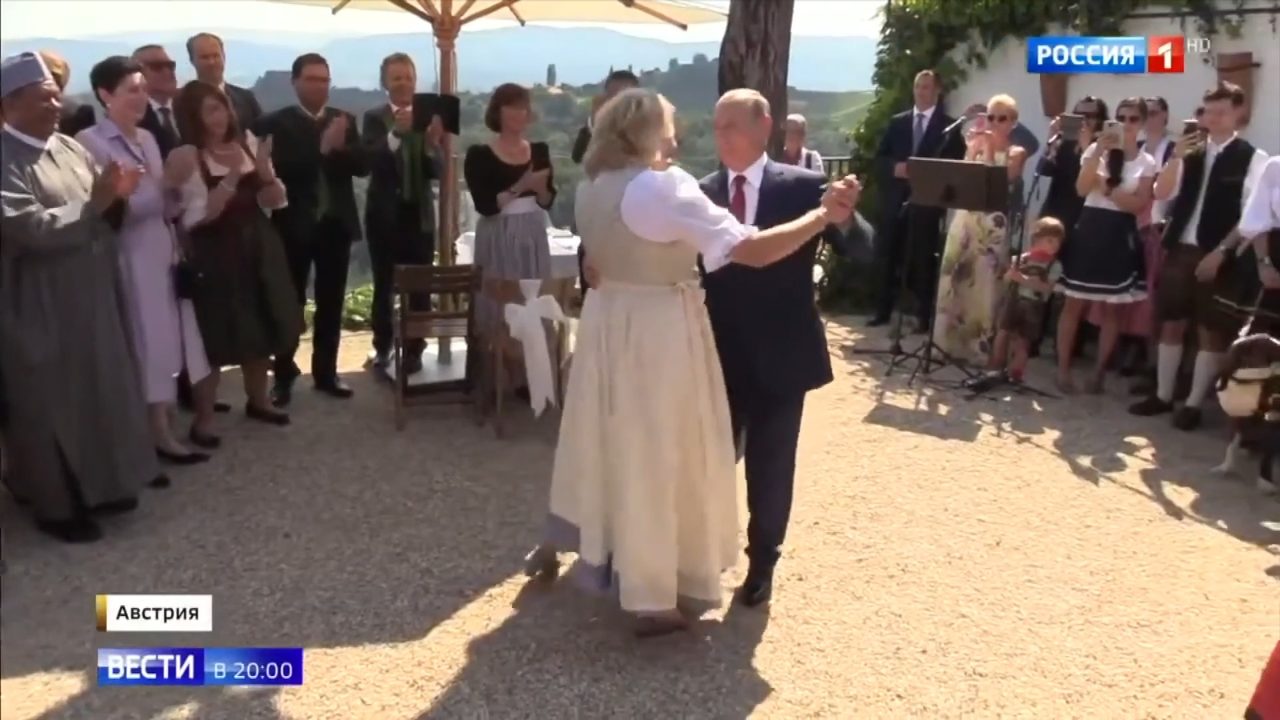
Kneissl, who served as Austria's foreign minister from 2017 to 2019 under Chancellor Sebastian Kurz's government, became known worldwide after her wedding in August 2018 in the town of Gamlitz. Vladimir Putin personally attended the celebration, bringing along a Cossack choir and gifts — a samovar and a painting — and even danced a waltz with the bride. After the dance, the former minister gave the Russian president a deep curtsy, an image that became a symbol of debates over Austrian-Russian relations.
After leaving government, the former nominee of the far-right FPÖ party lived in France and Lebanon before eventually moving to Russia. She had been searching for housing in a village from the very start, since, according to her, the only options near Moscow were closed, gated compounds.
She ultimately settled in the village of Giblitsy in the Ryazan region, about 250 km southeast of Moscow. There, Kneissl is renovating an old village house and keeps two ponies, which she flew in from Lebanon on a military aircraft. The village is home to about 300 people and has a single small shop; for regular groceries or a restaurant meal, residents must travel 20 km to the town of Kasimov. The journey to St. Petersburg — home to the GORKI university center, which produces geopolitical analysis and which she visits regularly — takes 12 to 15 hours by train.
As recently as the summer of 2023, Kneissl was enthusiastic about the "authentic Russian village" and praised its "remarkable atmosphere." Three years later, her assessments have become far more restrained: she now speaks of mothers struggling with alcohol dependency, child poverty, and language barriers. "The hardest thing for me is seeing mothers who are dependent on alcohol. My own life isn't easy either, but I don't solve my problems with alcohol," she said.
According to her, the worst part is when children suffer — when a mother spends money on alcohol instead of food. "It's a huge social problem. What breaks my heart most is the children growing up in alcoholic families. I don't understand how a mother can feel no responsibility for her own children," the former minister said. According to the World Health Organization, alcohol consumption in Russia has for years exceeded 10 liters of pure alcohol per person annually — well above the global average — and remains one of the leading causes of premature death, especially among men.
Kneissl also pointed to a demographic problem plaguing Russian villages: working-age residents — those between 15 and 50 — are almost entirely absent, leaving behind only small children, sometimes raised by their grandmothers, along with the grandmothers themselves and other elderly residents. Despite maintaining good relations with her neighbors, she admits she has never truly become one of them: "For many, I'll always remain an outsider. People make up stories about me and gossip. Unfortunately, many think I walk around with money like an ATM machine — that's something I've had to accept as well."
She said she started "from scratch" in Russia and handles everything herself: there's no money to hire a major construction company, so she buys building materials gradually, as funds allow — even though many assume she is quite wealthy, which, she says, is far from the truth.
Despite the criticism, Kneissl has no plans to leave Russia. She says she feels more personal freedom there than in Western Europe: she can walk her dog anywhere, sit alone at a train station late at night, and feel completely safe. Just days after the interview was published, Kneissl announced she was shutting down her Telegram channel, where she had regularly commented on international events and her own life in Russia, without explaining why.
Read also: Fuze at Masaryčka: Prague's new brewery restaurant that opened under Zaha Hadid's roof
Source: seznamzpravy.cz