Gallery of European Art in Bucharest: How the Royal Palace Became Home to Masterpieces by Rembrandt and El Greco
USD 21,26
Popular
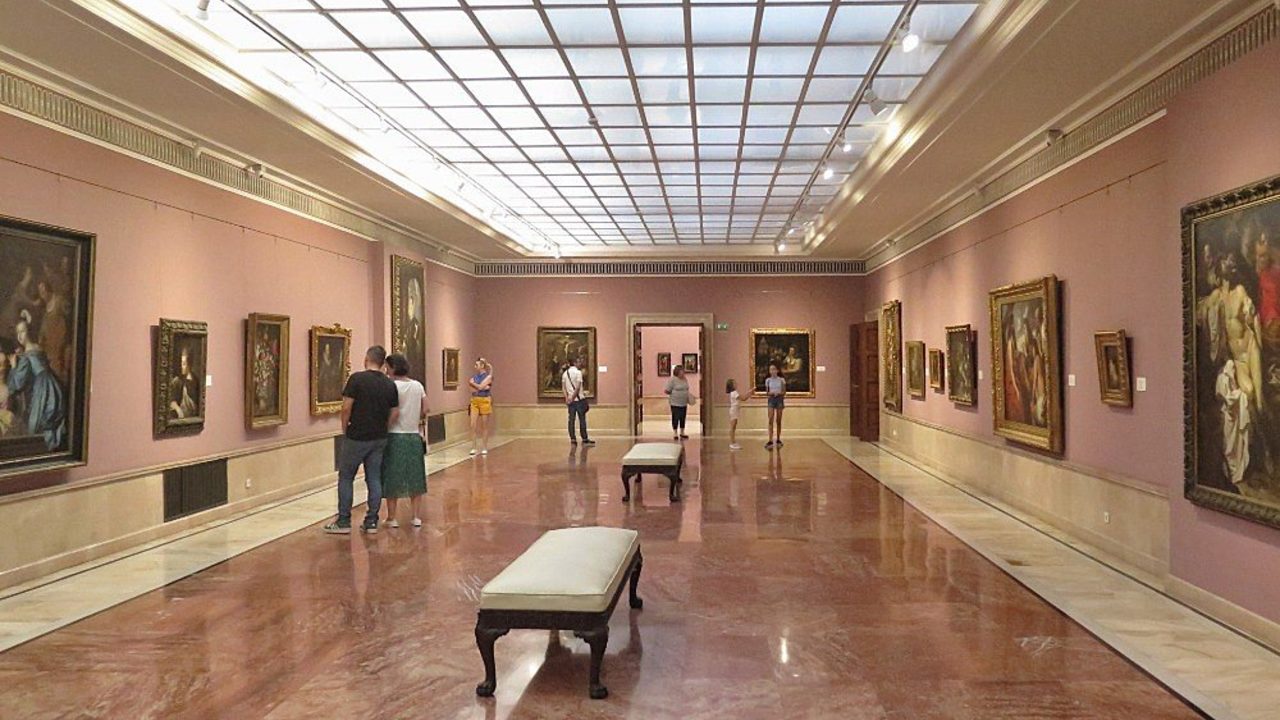
The National Museum of Art of Romania, housed in Bucharest's Royal Palace at Calea Victoriei 49-53, is home to the Gallery of European Art — one of the departments of the country's largest art museum, whose collection numbers more than 70,000 items.
The museum was founded in 1948 and operates under Romania's Ministry of Culture. It is open Wednesday through Sunday: on weekdays from 10:00 to 18:00, and on weekends from 11:00 to 19:00. Admission costs 32 lei, with reduced tickets of 16 lei for pensioners and 8 lei for schoolchildren, students and people with mild to moderate disabilities. Entry is free on the first Wednesday of every month. According to available data, tickets still cost 24 lei as of August 2025, but by September the museum's website already listed new, higher prices.
The National Museum of Art's painting collection is among the largest in Romania. It was originally kept at Peleș Castle in Sinaia and other royal residences, with part of the collection coming from the Brukenthal Museum in Sibiu, as well as from other Bucharest museums and private collections.
The Gallery of European Art opened in June 1951 and presents visitors not only with paintings but also sculpture and decorative art — carpets, tapestries, furniture, ceramics and embroidery. The exhibits span the 14th to the 20th century. In 2007, the gallery underwent a complete renovation.
The halls are arranged according to the works' origin. Italian painting is represented mainly by Renaissance masterpieces: "Crucifixion" by Antonello da Messina, "Madonna and Child" by Domenico Veneziano, "Saint Jerome in the Desert" by Lorenzo Lotto, and "Annunciation" by Tintoretto. The Spanish school is represented by three works by El Greco — "Saint Maurice," "Adoration of the Shepherds" and "Betrothal of the Virgin Mary."
Dutch painting is embodied in "The Four Seasons" by Pieter Brueghel the Younger and "Woman Praying" by Hans Memling, along with works by Rembrandt and Peter Paul Rubens. The German school is fittingly represented by Lucas Cranach the Elder and Hans von Aachen. French painting is dominated by the Impressionists — Camille Pissarro, Claude Monet, Auguste Renoir and Paul Signac — alongside Gustave Courbet and Élisabeth Vigée Le Brun.
The building housing the museum has a rich history of its own. The Royal Palace still symbolizes monarchical power in Romania and served as the main royal residence in Bucharest until August 1944, when it was damaged during the bombing of the city. Just three years later, the National Museum of Romanian Art began moving into the building.
The site was previously occupied by the neoclassical Golescu House, built in 1812–1815, which became the royal court in 1837 and was later known as the Old Royal Palace. In 1926 the building partially burned down, and a year later it was restored by Czech architect Karel Liman, though in 1935–1936 the palace was completely demolished. The so-called New Royal Palace, which still stands today, was completed in 1937, built to a design by architect Nicolae Nenciulescu and a team of architects personally led by Queen Marie of Romania. In August 1944, the palace suffered serious damage from Luftwaffe bombing, including its Throne Room, but was gradually restored afterward.
Read also: Prague Castle from the inside: 9 spots within the fortress you can't miss
Source: turistika.cz