USD 21,22
Popular
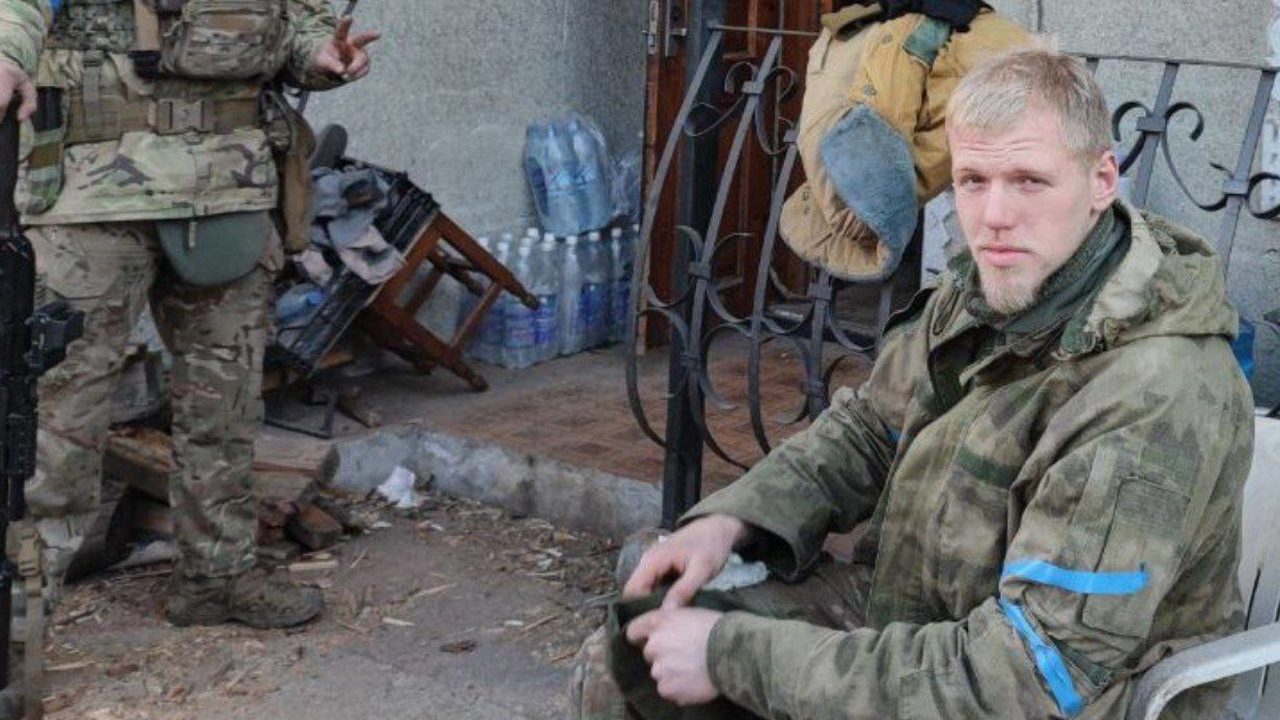
A Ukrainian soldier from the Azov Regiment, who defended Mariupol and the Azovstal steel plant, spent two and a half years in Russian captivity. After a prisoner exchange, he recovered physically and, five months later, voluntarily returned to service. He was recently wounded while carrying out a combat mission and is now awaiting surgery in Kyiv.
He has written a book about the 889 days he spent in Russian captivity, titled "Okraiets" ("The Crust"), which is being released in Ukraine. He says the one thought that kept him alive during his imprisonment was the thought of revenge: "Those Siberians kept beating me — guys with slanted eyes — burning me with electric shocks, branding a swastika into my back... I thought: God willing, I'll meet you on the front line or somewhere else, and I'll pay you back for everything."
The soldier recalled that shortly before Russia's full-scale invasion, he attended a performance of "The Master and Margarita" at the Mariupol drama theatre — the very building that Russian forces later flattened, knowing that hundreds of women and children were sheltering inside.
According to him, his unit knew Mariupol well, which gave them an edge over the enemy, but it was agonizing to watch the city's residents die. Within two months, Ukrainian fighters were pushed back to Azovstal, the city was surrounded by land, sea and air, and the nearest friendly positions were 120 kilometers away. To reach Azovstal from the right bank of the river, where no bridges remained, the fighters had to swim across under fire — he himself already wounded, with six shrapnel fragments lodged in his shoulder blade. According to the veteran, hundreds of soldiers died in a single day on the way to the plant.
Having broken through to the plant's territory, the unit found itself completely cut off from supplies and reinforcements, even though the enemy's heavy equipment could not get through either. The soldier admits he made peace with the idea of death at that point, sleeping in the bunker with a gas mask on — since the Russians were using toxic gas against the defenders — and keeping a grenade and a pistol close at hand in case he needed to break out or defend himself in a hopeless situation. He says enemy aircraft carried out up to a hundred airstrikes a day on Azovstal.
About a month into the plant's defense, the commander informed the fighters that President Volodymyr Zelensky had ordered them to surrender, and that the Russian side had allegedly promised humane treatment, food, and a prisoner exchange within three to four months. Some of the men refused to surrender, ready to fight to the end, but the decision was ultimately made to save their severely wounded comrades, who were dying a slow death on the plant's grounds without medical care.
The soldiers understood that the promised terms would not be honored and that, for the Russians, belonging to the Azov Regiment and having taken part in the defense of Mariupol was reason enough for reprisals. After surrendering their weapons, the prisoners were first sent to a penal colony in Olenivka — the very site where, three months later, a mass killing of Ukrainian prisoners of war took place as a result of a terrorist attack. Conditions there were brutal: a barrack built for 70 people held more than 330 prisoners, food was scarce, sanitary conditions were appalling, and rats infested the premises. Even so, the prisoners were largely spared physical abuse — by the narrator's estimate, only about one in fifty was beaten.
After the attack in Olenivka, prisoners began to be transferred to other locations — some to Donetsk, others to Siberia. On September 26, 2022, the soldier, along with other Azov Regiment comrades, was moved to Taganrog in Russia's Rostov region, where, he says, the harshest phase of his imprisonment began: investigators tried to force him to confess to killing three civilians in Mariupol, using torture, electric shocks, beatings with iron rods, and hooks. He insists he never signed a confession, despite the constant torment.
Source: novinky.cz