USD 21,28
Popular
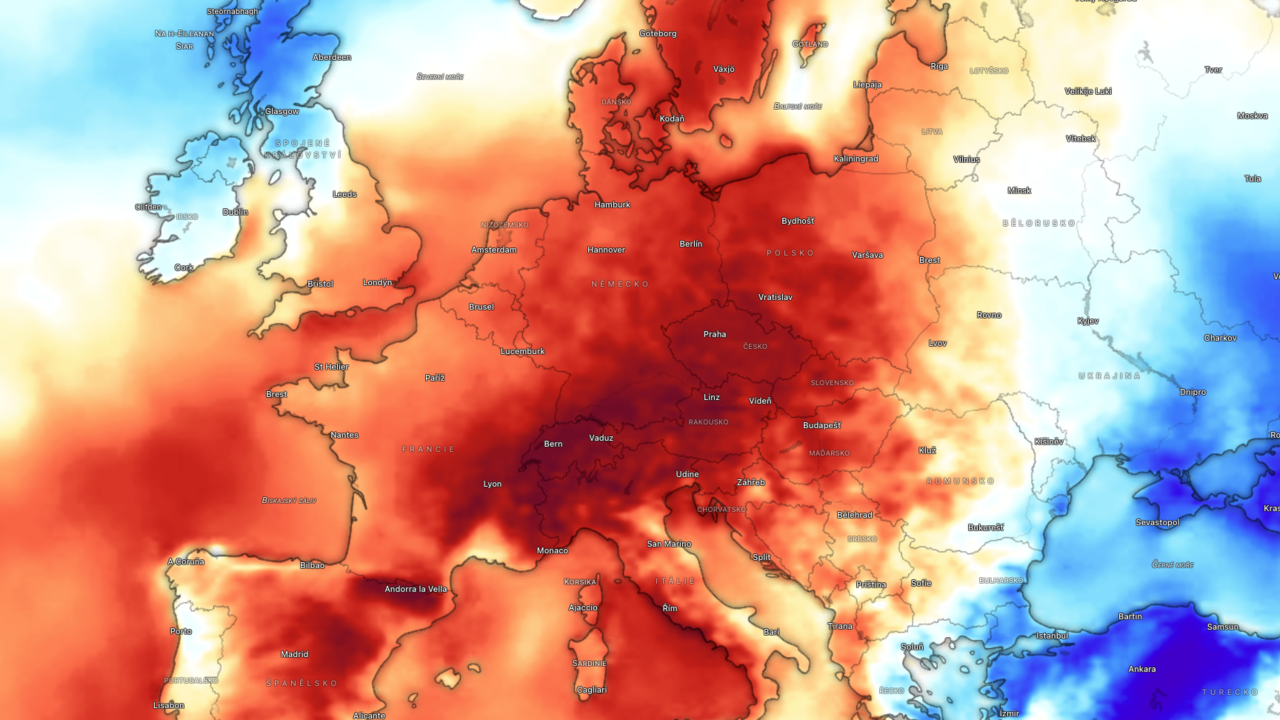
A powerful heatwave that began building over the eastern Atlantic earlier this week will reach Central Europe, including Czechia, on Thursday, with daytime temperatures topping 35°C in many areas and potentially hitting 40°C in some spots.
According to meteorologists, Western Europe was the first to feel the heat — in France, which is experiencing its fourth record-breaking heatwave this year, temperatures have already exceeded 40°C in places, while Spain is bracing for highs of up to 45°C by the end of the working week. The high-pressure system driving this extreme heat is moving relatively quickly eastward, and it is Central Europe where the sharpest deviations from long-term averages are expected — in some places up to 15°C above normal.
Nights will also be unusually warm, with many parts of Czechia likely to experience so-called tropical nights, when temperatures fail to drop below 20°C.
According to the Severe Weather Europe portal, the main culprit behind the heat — much like during the historic wave at the end of June and start of July — will once again be a so-called heat dome. This time, however, the dome will sit directly over Central Europe. A classic "omega" blocking pattern is forming in the atmosphere, in which a high-pressure system becomes wedged between two areas of low pressure and stalls over one region for an extended period. This traps a continuous inflow of very warm air, while the dome itself prevents air masses from mixing, keeping heat trapped near the ground and allowing it to build further.
It remains unclear exactly how long the heat will last or how intense it will become in the coming days. Some regions may get partial relief from a cold front expected to stall over Central Europe this weekend. Experts stress that it's not just thermometer readings that matter, but the actual strain on the human body — according to the UTCI bioclimatic index, the perceived heat load could exceed 41°C.
On Saturday, temperatures in Czechia will ease slightly, though most of the country will remain in tropical territory. Conditions will be cooler in the northwest, while in southern Moravia thermometers could still climb past 35°C.
Most forecast models suggest the heat dome will not break down significantly, meaning the inflow of abnormally warm air is likely to resume by the end of the weekend. As a result, the heatwave could persist into the first half of next week, intensifying heat stress on the population, worsening drought conditions, and raising the risk of wildfires breaking out and spreading.
Source: novinky.cz