Historian slams Zelensky's "archive declassification" on Volyn massacre: "It's not serious"
USD 21,04
Popular
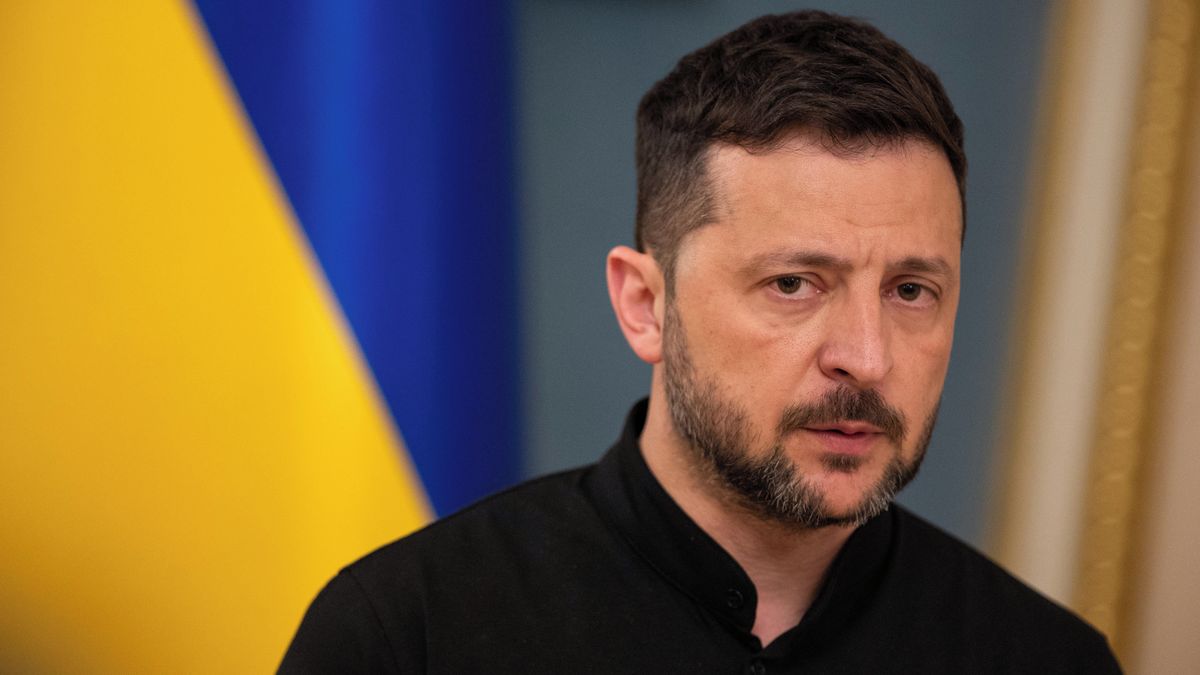
Ukrainian President Volodymyr Zelensky announced on Friday that Kyiv will declassify all intelligence service archive materials related to the Volyn massacre of 1943–1944, whose victims were mostly Poles and, to a lesser extent, local Czechs. Ukrainian studies historian David Svoboda of the Museum of the 20th Century has called the move utterly pointless and disconnected from reality.
According to the expert, Ukrainian archives have long been accessible to researchers, and the president's gesture itself looks like a sign of insufficient education and a poor grasp of history. "First he solemnly declares that no one will dictate to Ukraine who its heroes are, and a week later he says he'll open archives that have already been open for a long time. That's not convincing, either at home or abroad," Svoboda noted.
The historian stressed that Poland doesn't actually need this relationship settled — quite the opposite, there's an interest in keeping the historical conflict unresolved. In his view, the Ukrainian issue mobilizes voters and fuels the rhetoric of both President Karol Nawrocki and the right-wing Confederation party ahead of the elections.
The current crisis in relations began after Zelensky, by decree, awarded one of Ukraine's special forces units the honorary title "Heroes of the UPA." In Ukraine, the Ukrainian Insurgent Army is often seen as a symbol of the fight for independence, whereas in Poland it is associated above all with the Volyn massacre, whose victims, according to historians' estimates, numbered between 50,000 and 100,000 people, mostly Polish civilians. The climax of the violence is considered to be the so-called Bloody Sunday of July 11, 1943, when dozens of Polish villages and churches were attacked in a coordinated assault.
At the time, a sizeable Czech community also lived in Volyn. The Czechs were not the main target of the killings, but several hundred were nonetheless killed — the burning of the Czech village of Malín by German forces in July 1943 became a symbol of the tragedy.
Svoboda is convinced that Russia is intervening in the conflict as an active player, stoking historical tensions. He recalled that last week the FSB published a forged document on its website concerning the events in Volyn, something Ukrainian authorities had warned about in advance. He also pointed to the wave of hostility that swept through Czechia in May, and to the fact that Germany's AfD party is once again raising the issue of the Beneš decrees — in his words, part of a coordinated information operation.
According to the expert, Ukrainian archives are among the most open in the entire former Eastern Bloc, unlike, for example, the archives in Moscow, which are practically inaccessible. He noted that Ukrainian historians have long cooperated with their Polish colleagues, publishing collections of documents, and that the Ukrainian Catholic University in Lviv is running a project to record the names of victims of the ethnic cleansing.
Svoboda also pointed out that Czech archives contain documents that refute the widespread narrative portraying the Ukrainian resistance movement as a force bent on exterminating the Volyn Czechs as a "foreign element." According to him, there is evidence that the Ukrainian resistance, on the contrary, viewed the Volyn Czechs as allies, and that the violence against the Czech community, which claimed around 400 documented victims, was carried out by various perpetrators — including criminal gangs and Nazi collaborators.
Wrapping up the conversation, the historian addressed those who today are actively "fighting" the UPA of decades past, posing a rhetorical question: aren't they ashamed, looking at Ukraine's own tragedy, now in its fourth year?
Read also: 8 strange Prague museums you won't find in ordinary guidebooks: from alchemy to a Cold War bunker
Source: seznamzpravy.cz