"I'll Drain My Own Pond": Senate Candidates Who Actually Want to Abolish the Chamber
USD 21,04
Popular
In this autumn's Czech Senate elections, several candidates running for seats in the upper house have spent years publicly campaigning against the very existence of the institution. Their argument: the only way to get rid of the Senate is to get elected to it first — and then dismantle it from within.
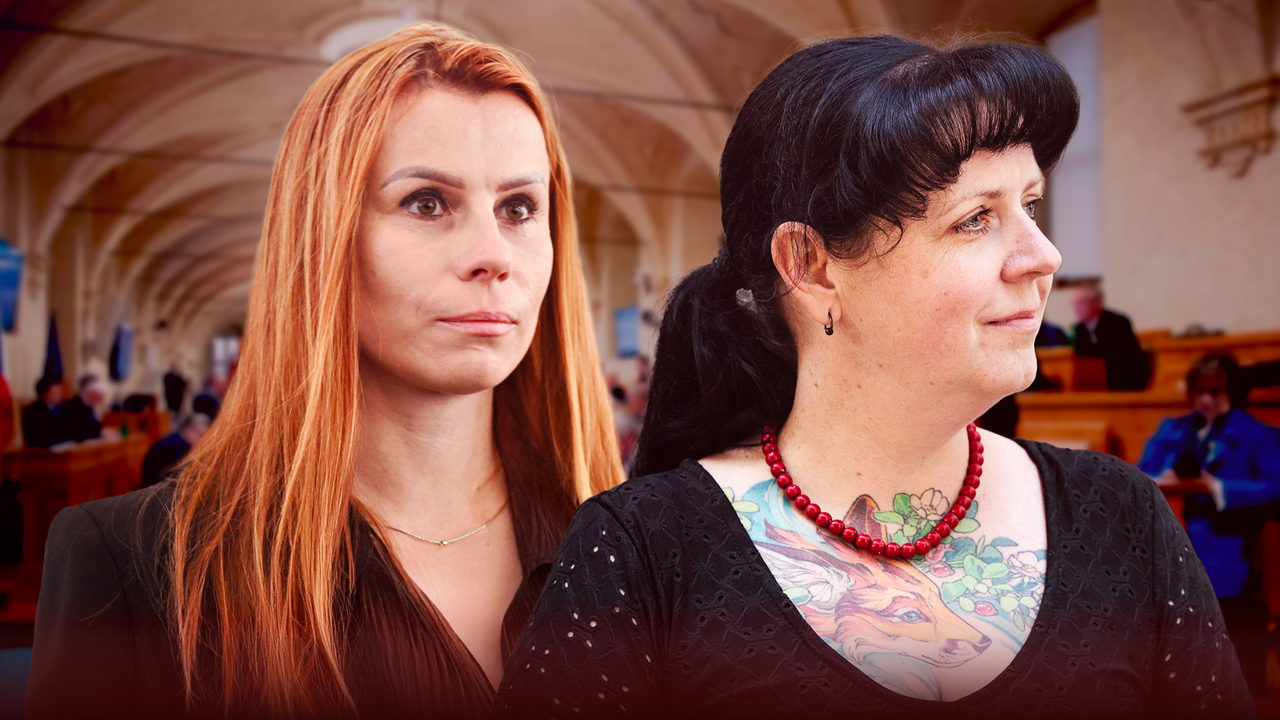
Petra Prokšanová, the Communist Party of Bohemia and Moravia's (KSČM) candidate for Prague 5, doesn't mince words, calling the Senate "a dumping ground for politicians and a black hole for money." She says she's running so that at least one voice inside the chamber will be pushing for its abolition. If elected, she has pledged to take only the minimum wage and donate the rest of her salary to charity. A prominent figure in Prague's KSČM, Prokšanová cites Lenin, opposes Czech membership in the EU and NATO — which she calls "an aggressive pact" — and wants the Institute for the Study of Totalitarian Regimes shut down.
A Fish Ready to Drain Its Own Pond
A well-known figure on the disinformation scene, Petra Rödová, running for the "Stačilo!" coalition in the Znojmo district, is taking a similar approach. She told our editors that changing the constitutional order requires the Senate's own consent — and she's ready to vote for its dissolution from the inside. "Metaphorically speaking, I'm a fish willing to drain its own pond," Rödová said.
She currently sits on the South Moravian Regional Assembly and is simultaneously running for Brno's city council on the "Restart for Brno" ticket, a coalition that includes "Stačilo!", KSČM and the "Czech Sovereignty of Social Democracy" party. She frames her Senate bid as a fight against the former ruling coalition, in particular criticizing former Chief of the General Staff Karel Řehka, who is running for the STAN movement. Rödová first drew attention in 2021 for spreading COVID-19 and vaccine disinformation, and later for sharing a video featuring American actor Mel Gibson claiming ivermectin can treat cancer — a claim with no scientific backing whatsoever. Her election poster from last year, which referenced Jan Palach, drew sharp criticism from the Memory of the Nation organization and the Institute for the Study of Totalitarian Regimes.
Home Guard Members and Anti-Vaxxers on the Ballot
In the Frýdek-Místek district, Nela Lisková is on the ballot — a candidate previously fined by a court for hateful and manipulative statements about the Czech Pirate Party, MP Olga Richterová, and Ukrainians. In 2019, she spread a fabricated claim that the Pirates planned to hand out starter housing to migrants, and called for the "de-Ukrainization" and "denazification" of Czechia — a statement that made it into the Interior Ministry's 2023 extremism report.
Running alongside her is her colleague from the National Home Guard, Marek Obrtel, currently a member of the Olomouc Regional Assembly for "Stačilo!" and now a Senate candidate for the Czech National Social Party. As far back as 2019, the Interior Ministry noted that home-guard groups, including this one, had for years expressed support for Russia, with some members spreading conspiracy theories. Obrtel, a former military doctor who commanded a field hospital in Afghanistan, demanded in 2014 to be stripped of his medals and called NATO "a criminal organization." His subordinates at the ambulance service in Kroměříž have previously complained that he sent them vaccine disinformation. In 2025, Obrtel took part in filing a police complaint demanding an investigation into the composition of COVID-19 vaccines, citing claims by Slovak government envoy Peter Kotlár that vaccines allegedly alter human DNA — a claim scientists have thoroughly debunked. Czech police, for their part, have charged Kotlár with spreading alarming false information.
Why the Senate Is an Easier Target
Political scientist Jan Harvát, who specializes in political extremism, explains the paradox by pointing out that mainstream politicians have failed for years to convince the public why the upper house matters. According to him, a Senate run is appealing to non-parliamentary parties and figures from the disinformation scene precisely because in some districts, just a few thousand votes are enough to win — a far lower bar than getting into the Chamber of Deputies.
That said, Harvát doesn't believe a handful of anti-Senate candidates winning seats would meaningfully change the system. It would only become a real problem if their numbers in the chamber grew significantly.
Read also: Brno: what to see and where to go
Source: seznamzpravy.cz