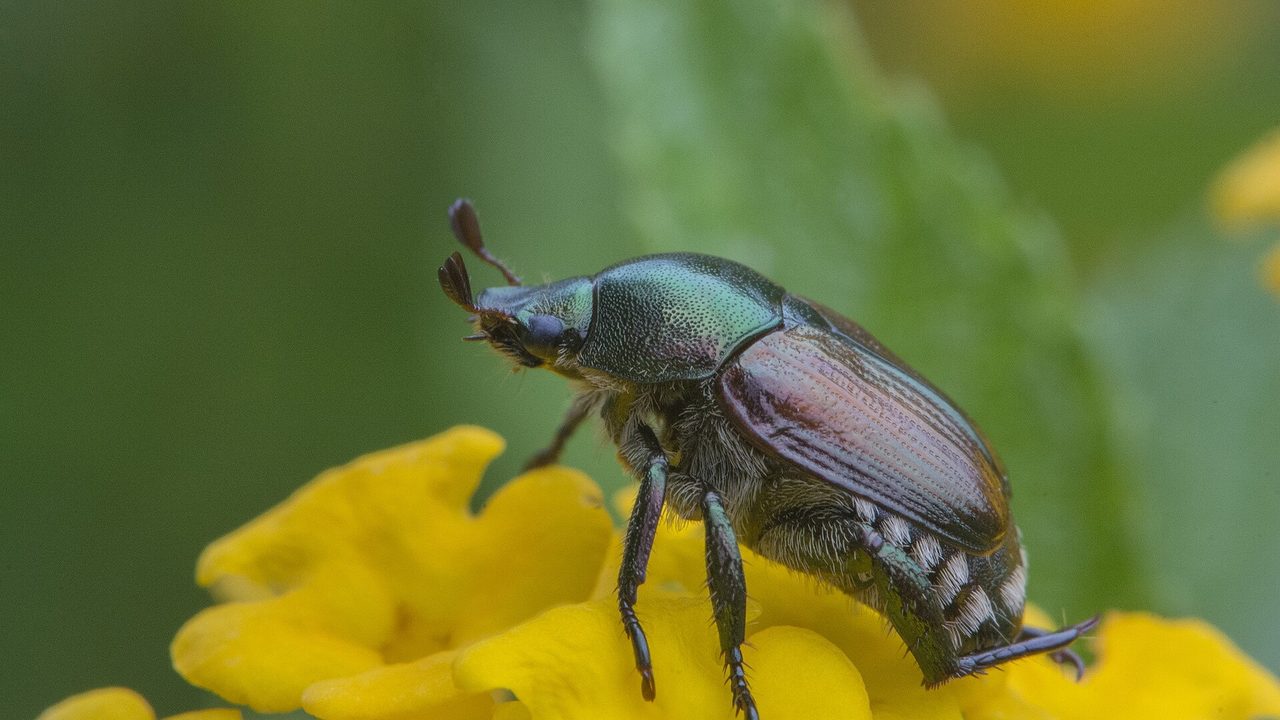
Japanese Beetle Attacks Vineyards and Gardens in Northern Italy
USD 21,02
Popular
Farmers in northern Italy's Lombardy, Piedmont and Aosta Valley regions are sounding the alarm over the rapid spread of the Japanese beetle, which is devouring vineyards, orchards, lawns and sports fields. The insect was first spotted in Europe in 2014 near Milan's Malpensa Airport, and last year it reached the terraced vineyards above the town of Donnas.
According to winemaker Luciano Zoppo Ronzero, who grows Nebbiolo grapes on mountain terraces, the beetle is steadily working its way up the slope. "We're watching the beetles move from terrace to terrace through our historic vineyards," he said. By his estimate, the insect has already reached the tenth terrace from the bottom.
A dangerous pest with no natural enemies
The Japanese beetle has no natural predators in Europe, and its diet includes more than 300 plant and tree species. Because of this, the European Union has placed it on its list of priority pests, requiring member states to take measures to contain and eradicate it.
According to Daniela Lupi, an entomologist at the University of Milan, the beetle has already firmly established itself in Italy, Switzerland and Germany, where efforts are now focused solely on limiting its spread. In France and Spain, by contrast, populations remain small, and there is still hope of eliminating them entirely.
Adult beetles travel in large swarms and can also hitch rides on trains, cars and planes. After a summer of heavy feeding, they breed, and their larvae feed on grass roots, damaging lawns and sports fields, including golf courses.
A threat to Italy's "breadbasket"
Agricultural lobby group Coldiretti warns that the pest is spreading through the Po Valley, the country's main agricultural heartland. Assessing the exact damage is difficult, since the beetle doesn't kill plants outright but weakens them over time, reducing yields by eating away at leaf tissue.
"In some areas, the beetle has completely destroyed the harvest," said Lorenzo Bazzana, head of Coldiretti's economic department. Winemaker Zoppo Ronzero is most worried about the ancient terraced vineyards carved into the mountainside and reinforced with centuries-old stone walls. Once the beetles strip the foliage, the grape clusters are left unprotected from the sun, and the plants' ability to photosynthesize drops sharply.
"What scares me is that the grapes might not ripen properly. And if that happens, we won't bring home the excellent harvest we were hoping for — just something completely useless," the winemaker admitted.
Betting on biological control
According to Bazzana, the best hope for getting rid of the pest lies in fighting its larvae. Beetles were recently found near Verona's Valerio Catullo Airport, where specialists are already testing the introduction of a microscopic parasite that targets the larvae.
Pheromone traps are also widely used, and winemakers in Donnas rely on pesticides, although their effect is short-lived and treating the steep mountain terraces is labor-intensive.
"If nothing is done to stop them, the beetle population will keep growing, causing serious damage to fruit trees, grasses and ornamental plants," warned entomologist Lupi. "The beetles aren't dangerous to humans, but they significantly reduce crop yields."
Source: ekolist.cz