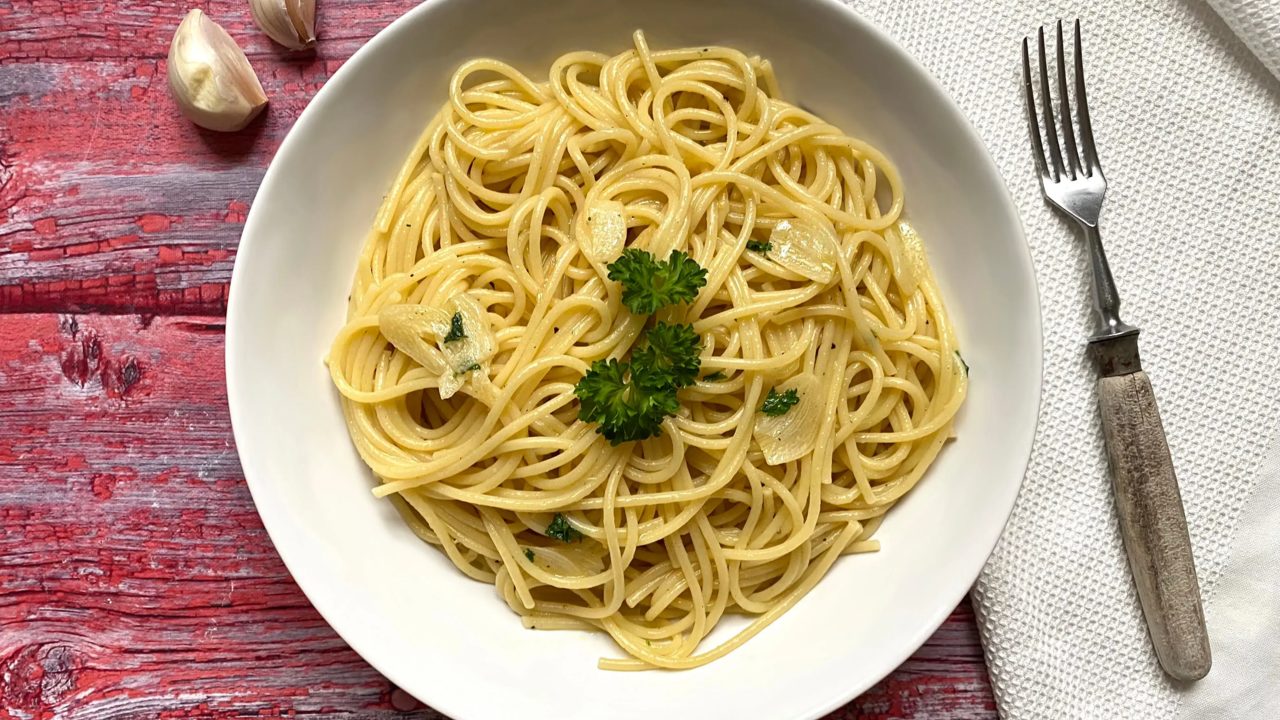
Just three ingredients and 20 minutes — yet almost everyone gets aglio e olio wrong
USD 21,23
Popular
A simple Italian dish made of garlic, olive oil and spaghetti — aglio e olio — has won over food lovers around the world, yet it's precisely this simplicity that hides the biggest cooking mistakes. According to culinary experts, every single step affects whether you end up with a harmonious dish or bland, greasy noodles.
Aglio e olio is a classic of Neapolitan cuisine, proving that you don't need a long shopping list for a delicious dinner. Historically, it was made from whatever happened to be in the pantry — a quick, cheap option for an evening meal. Today it's served not only in modest Italian households but also in fine-dining restaurants across the globe.
From Italian, aglio e olio translates literally as "garlic and oil" — which is exactly why skimping on ingredient quality is pointless. Extra virgin olive oil gives the sauce richness and a smooth flavour, while fresh garlic provides its signature aroma. Many Italian cooks also add dried chili flakes (peperoncino), which don't overpower the taste but rather gently enhance it.
The pasta itself matters just as much. Spaghetti is the traditional choice, since its surface holds the oily sauce well. The Italian rule is simple: cook the pasta in well-salted water and drain it slightly before it's fully done, while the centre is still firm — the famous al dente stage.
The most common mistake is frying the garlic at too high a heat. It needs time, not an intense flame: get distracted for even a second, and instead of a pleasant aroma you'll be left with unpleasant bitterness.
The second typical error is draining all the pasta water. Italians always save a little of it to bind the oil with the pasta into a silky sauce. Without it, the oil stays separate and simply pools at the bottom of the plate.
Some cooks add too much cheese or cream, yet the classic recipe contains neither at all. Modern variations do exist, but the traditional Neapolitan version relies on just a handful of ingredients that don't compete with one another.
Alongside the classic, there's a popular version called aglio olio e peperoncino, with a stronger chili kick, as well as a variant with fresh parsley. In some regions of southern Italy, the dish is finished with toasted breadcrumbs (pangrattato), nicknamed "poor man's cheese" — they add a pleasant crunch and an interesting contrast to the tender pasta.
Modern cooking increasingly values recipes that combine quality ingredients with quick, simple preparation. Aglio e olio perfectly embodies this philosophy: dinner is ready in about twenty minutes, and the result is a surprisingly well-balanced dish.
Source: apetitonline.cz