Leading Czech economists warn government: changes to budget rules jeopardize responsible fiscal management
USD 21,26
Popular
A group of prominent Czech economists — including former Czech National Bank governors Jiří Rusnok and Zdeněk Tůma, National Budget Council chairman Mojmír Hampl, and former members of the government's National Economic Council Helena Horská, Daniel Münich, Dominik Stroukal and Petr Zahradník — has published an open letter opposing the loosening of Czechia's budget rules.
According to the signatories, government representatives publicly pledge to keep the public-sector deficit below three percent of GDP, yet at the same time are pushing for legal provisions that would allow this threshold to be significantly exceeded in several ways — through an exemption clause for infrastructure investments and PPP projects, as well as the possibility of increasing spending by 10% at the decision of the State Security Council.
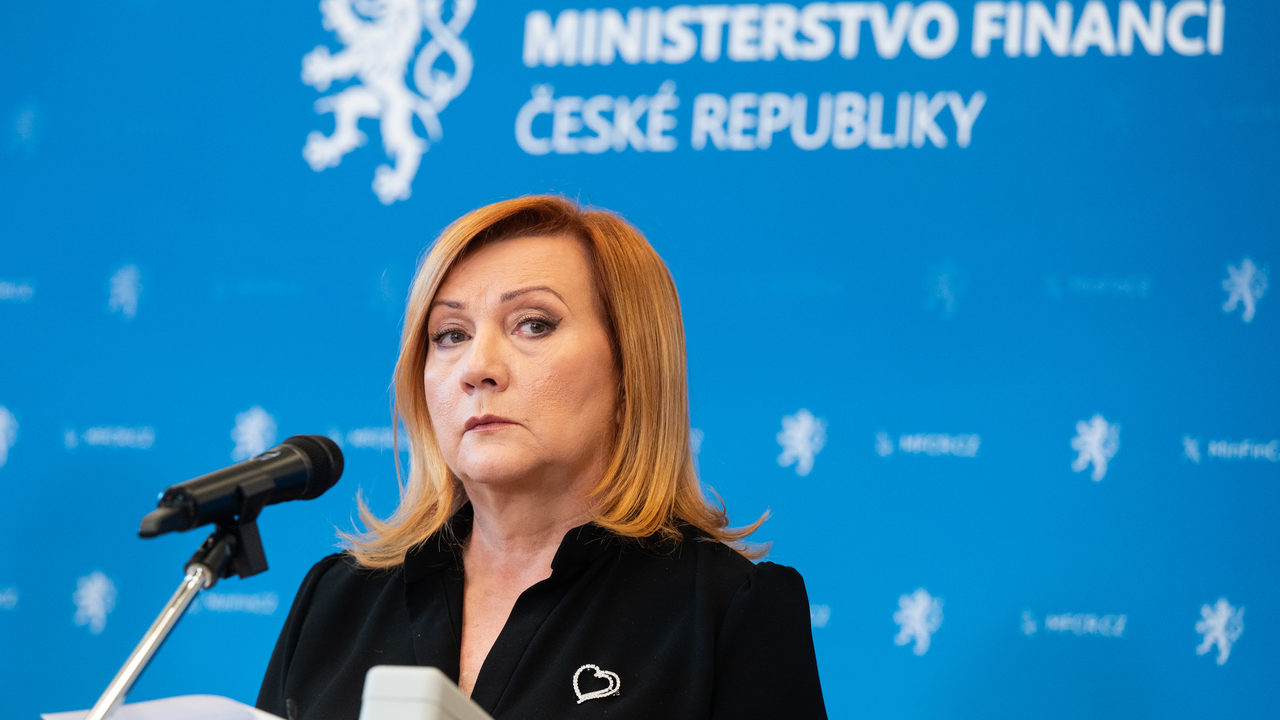
Finance Minister Alena Schillerová (ANO) responded by saying there is no alternative to amending the budget rules. Members of the ruling coalition have already indicated they are prepared to override the president's veto at the Chamber of Deputies' August session.
The economists have called on lawmakers to limit the provisions of the law that undermine the principles of fiscal responsibility. "Budget rules are a standard and important element of legislation in developed countries. They do not threaten economic development, nor do they call into question the importance of defense, education, healthcare or social welfare. On the contrary, they help ensure all these public needs are met in a stable and sustainable way, so that today's irresponsible management does not create a burden for future generations," the letter states.
On 28 July 2026, the government, backed by its parliamentary majority, pushed through amendments to the budget laws despite criticism from experts and the Senate's return of the bill, without taking into account the risks associated with the changes. On 22 July 2026, the president vetoed the law.
The economists consider the president's move justified and are urging the Chamber of Deputies to consider the reasons behind the bill's return. They stress that they fully respect the government's right to set budget priorities, but note that these are rules meant to constrain all governments — past, present and future — in the interest of society as a whole and of future generations, who will bear the burden of the debt.
Schillerová rejected the criticism, pointing out that the cabinet has committed to keeping the state budget deficit below three percent of GDP throughout its term. "The government complies with the budget rules, and that is precisely why it has made partial adjustments regarding investment and security spending. The current form of budgetary constraints was not a sensible safeguard but a stranglehold on the Czech economy," the minister said.
She also recalled that Czechia achieved its best budgetary results in the years before legal debt rules existed, when the finance ministry was led by Andrej Babiš and herself. According to her, fiscal responsibility is not based on formal limits but on responsible, active and realistic policy on both the revenue and expenditure sides of the budget. The minister stressed that the proposed amendments have no alternative.
In justifying his veto, the president stated that the law substantially changes how public money is managed and, in his view, jeopardizes the long-term sustainability of public finances while also weakening the Chamber of Deputies' oversight of government spending in favor of the executive.
The amendments introduced by Schillerová during the second reading drew the sharpest criticism. Among other things, they would allow the government to increase defense spending beyond the limits approved by lawmakers until as late as 2036 — three years longer than currently allowed. Spending above 2% of GDP would not be counted within the approved budget framework. Similarly, the government would be able to increase spending on strategic infrastructure projects.
Members of the ruling coalition have already signaled they are ready to override the veto, calling the bill's return an irresponsible move. In their view, without loosening the budget rules, next year's budget deficit could not exceed 150 billion crowns, compared with the 310 billion crowns planned for this year. The government argues that such a sharp reduction in the deficit would jeopardize the normal functioning of the economy.
Source: seznamzpravy.cz