Legionnaire record: nearly 200 foreign footballers now playing in the Czech league
USD 21,00
Popular
The Czech Chance Liga has hit a record number of foreign players — according to Transfermarkt, as of Tuesday the squads of all 16 top-flight clubs list a combined total of 197 foreign footballers. That's up from last season and edging close to the round figure of 200.
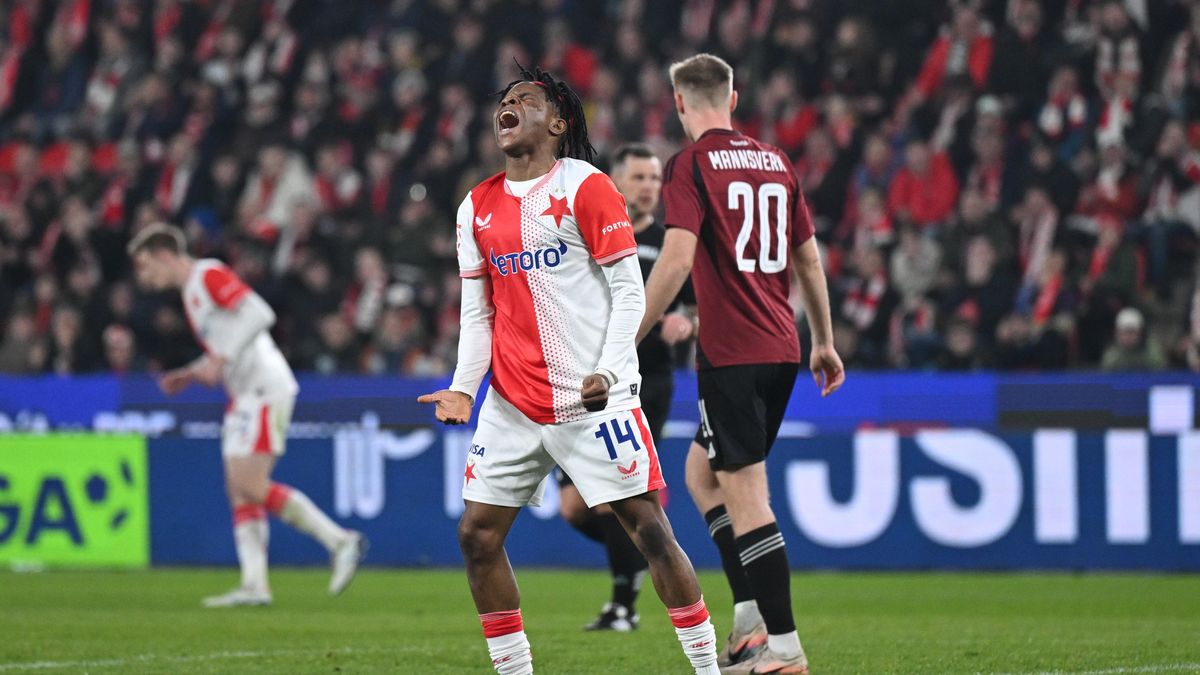
The reigning champions, Prague's Slavia, have the most legionnaires of all: 23 foreigners out of a bloated 41-man squad. The club is nevertheless planning to trim its roster significantly — one of the first to leave is Slovak defender Dominik Javorček, who is moving to Vršovice neighbours Bohemians.
When building their squads, clubs must respect a key rule: no more than five players without citizenship of an EU country, the European Economic Area, or an EU candidate country may appear for a team in a single match. That restriction also applies to Slavia's main rival, Prague's Sparta, which currently has 20 legionnaires. Olomouc have 18, and Jablonec 14.
The fewest foreigners can be found at Hradec Králové (7), Bohemians (5) and Mladá Boleslav, with just 4 legionnaires.
The season, including the play-off/play-out stage, runs for 35 rounds and stretches across ten months — plenty of time for squads to change significantly. The rise in the number of legionnaires is likely to continue: at the start of last season, 195 foreigners were registered, but according to analytics firm Opta, 208 actually saw playing time by the season's end. A year before that the figure was 167, the year before that 152, and before that, 118.
A simple headcount of legionnaires, however, doesn't tell the whole story — what matters more is how much playing time they actually get. Slavia's reliance on a Czech core, for instance, has brought the club its last two titles, and last November the team fielded an entirely Czech line-up against Slovan Hušerske Hradiště — an extremely rare occurrence.
According to Opta data tracking minutes played by Czech versus foreign footballers, last season the clubs that trusted local players most were Mladá Boleslav (87% of minutes), Hradec Králové (79.4%) and Teplice (78.1%). Meanwhile, the largest share of minutes went to legionnaires at Viktoria Plzeň (47.9%), Slovan Dukla ("Sloni", 47.3%) and Sparta (37.3%), which continues its push toward a more international squad.
"Prices for Czech players are inflated, and it's cheaper for smaller clubs to look abroad, where similar quality can be found for less money. Everyone has to play by market rules — everyone has a board they answer to," former Czech national team player Tomáš Rosický explained in an earlier interview, commenting on the growing number of foreigners in the league.
Opta analysts and experts generally point to an unwelcome trend: the share of minutes played by Czech footballers in the league is shrinking. Two seasons ago, Czechs accounted for 69.2% of all minutes played; by the middle of last season that had fallen to 62.9%, and by the spring stretch it dropped further still, to 61.6%.
"The decline is worrying," warned former Czech league goalkeeper and pundit Jakub Diviš. "I think the situation will only get worse, because it's simpler for Czech clubs to buy players abroad," added another expert, Pavel Karoch.
Until recently, the Czech league topped the ranking of Europe's ten strongest championships in terms of the share of minutes coaches entrust to local players. But in recent months Spain's La Liga has drawn almost level (56.7% versus the Czech league's 61.6%). By comparison, local players account for 49.4% of minutes in the Eredivisie, 38.3% in the Bundesliga, 35% in Ligue 1, and just 24.7% in the English Premier League.
The development of young talent is clearly faltering, while scouting at Czech clubs is becoming ever more effective, and gathering data has grown easier thanks to modern technology. Signing legionnaires is often justified both economically and competitively. All signs suggest the role of foreign players in the Czech league will only keep growing — and this season proves the point.
Source: sport.cz