USD 21,08
Popular
Morocco's Interior Ministry said the mass influx of migrants into the Spanish enclave of Ceuta on Thursday was the result of smuggling and human-trafficking networks, disinformation spread on social media, and a misreading of a court ruling. According to the Moroccan ministry, this combination of factors convinced thousands of Moroccans that they could enter EU territory easily and without legal consequences.
Back on Friday, Spanish Prime Minister Pedro Sánchez had already blamed smuggling mafias for the crisis. He said criminal groups had exploited a ruling by Spain's Supreme Court, which in early July decided that border guards could not immediately deport those who had reached Ceuta by swimming. Under the ruling, only those who had crossed the border fence could be returned immediately. It was this decision that prompted Spanish border guards to install a buoy barrier in the sea off Ceuta on Saturday.
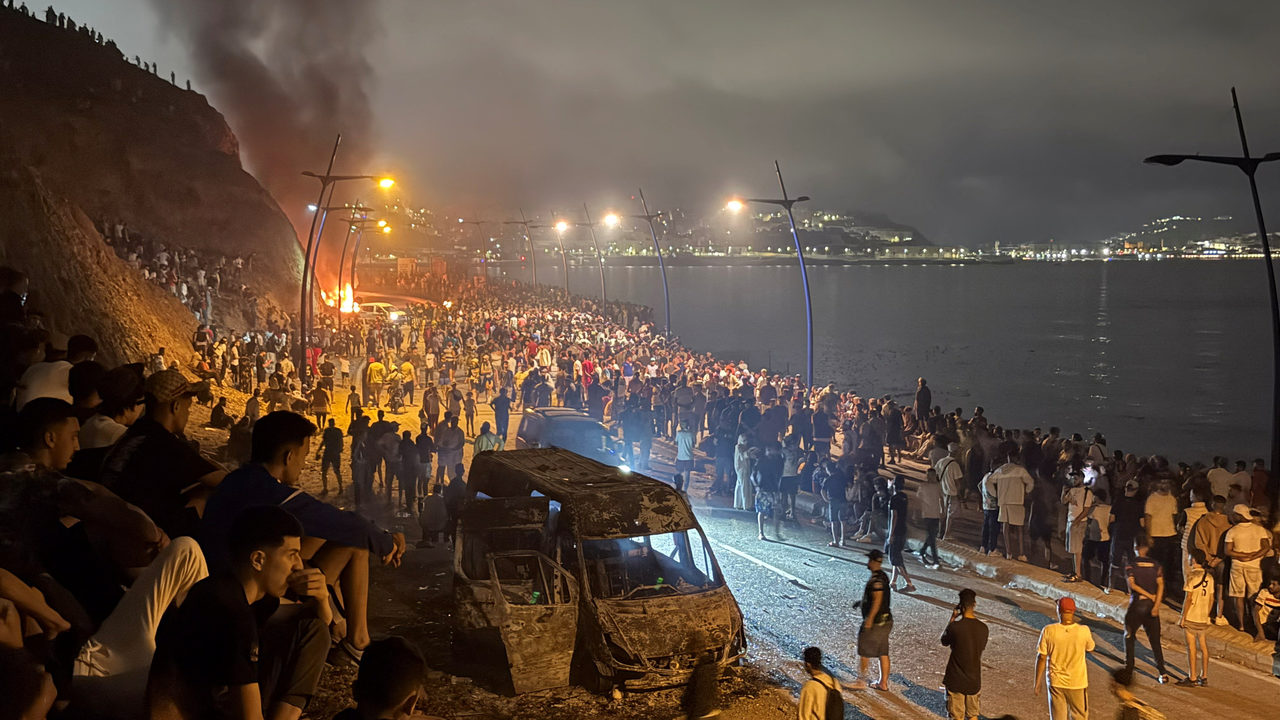
On Thursday, tens of thousands of people — mostly young Moroccans — illegally swam or crossed into the Spanish autonomous city of Ceuta after rumors of an "open border" spread on social media. Almost all 50,000 people had already returned to Morocco by Friday — the city, with a population of around 84,000, simply had no way to accommodate such a huge number of people. Migrants slept in the streets, and many suffered from hunger and thirst after shopkeepers closed their stores for fear of looting. Some of the Moroccans arrived, on foot or by sea, wearing nothing but shorts and with no money at all.
Attempts to reach Ceuta this week have already claimed dozens of lives. The Spanish coast guard has recovered 72 bodies from the sea, though it remains unclear whether all of them drowned specifically on Thursday. According to Ceuta's mayor, Juan Vivas, the death toll may be as high as 88. According to the newspaper El País, the city's makeshift morgue has been prepared to receive up to 200 bodies. Moroccan authorities have so far confirmed 11 deaths.
Source: novinky.cz