New Wolf Packs Discovered in the Jizera Mountains — But Signs of Poaching Also Found
USD 21,23
Popular
Another wolf pack has settled on the northwestern edge of the Jizera Mountains Protected Landscape Area (CHKO), with territory partly overlapping the surroundings of the village of Lipová-lázně but extending mainly further north, around Vápenná. According to monitoring data from the Society of Friends of the Jizera Mountains, this pack was founded by a wolf that travelled all the way from Austria, covering hundreds of kilometres to find a home in the Czech mountains.
A similar case has been recorded near the town of Krnov, where another "Austrian" wolf has taken up residence. It also cannot be ruled out that a new pack has emerged in the Šumperk area, near Sobotín — wolves have repeatedly attacked sheep flocks near the village of Maršíkov this year, flocks that, unfortunately, had no protection whatsoever.
Experts estimate that across the entire Jizera Mountains region — from Králický Sněžník to Krnov — there were 7 to 8 wolf territories last year, with a total population of 30 to 40 animals. The most successful pack was found in the Králický Sněžník nature reserve, numbering 12 individuals.
The wolves' return to the region is happening naturally, without any artificial reintroduction. The turning point came in 1998, when Poland introduced strict wolf protection measures, after which the animals began spreading into Germany and eventually into Czechia. The first confirmed wolf reproduction and pack formation in the country was recorded in 2014 in the Kokořínsko–Máchův kraj protected area. In the Jizera Mountains, the first traces of wolf presence were noted in February 2018, with the first breeding pair confirmed in April 2023.
Genetic analysis conducted by the Department of Zoology at the Faculty of Science, Charles University, revealed that Czechia has become a true crossroads of wolf populations: animals from the Central European lowland population arrive from the north, from the Alpine population from the south, and from the Carpathian population from the east. Scientists managed to identify a male from the Central European lowland population near the Praděd nature reserve — new to research — as well as a female previously recorded only in Poland, marking her first genetic registration in Czechia. In the Medvědí (Bear) mountain range, two more "new" wolves were found with no close relation to existing Czech packs, likely arrivals from Poland.
Ecologists emphasize the crucial role wolves play in the local ecosystem: as predators, they help control overpopulated roe deer, red deer and wild boar, whose overgrazing hampers the regeneration of mountain forests (fir, maple, rowan and beech suffer the most). Telemetry data from the Šumava and Beskydy mountains show that a single wolf pack catches between 70 and 88 deer per year, and 156 to 175 ungulates in total — while the average territory of one pack spans 213 square kilometres, meaning there is little meaningful competition with hunters. Wolves also act as "forest sanitation workers," primarily targeting weak and sick animals, while also helping to reduce populations of foxes and the invasive raccoon dog. Studies show that livestock makes up only about 1% of a wolf's diet.
Experts stress that wolves pose no serious threat to humans — encounters are rare, and attacks on people are exceptional. Still, during mushroom- and berry-picking season the risk of accidental contact rises, so people are advised not to approach a wolf's kill or a den with pups, to remain calm if they do encounter a wolf, and to keep dogs on a leash.
Cases of poaching deserve special attention. In spring 2025, four dead young wolves from the pack founded by the Austrian-born animal were found near Horní Lipová. A necropsy revealed traces of carbofuran — likely secondary poisoning, meaning the wolves had fed on the carcass of another animal killed by the poison. Czech police investigated the case but closed it at the end of January.
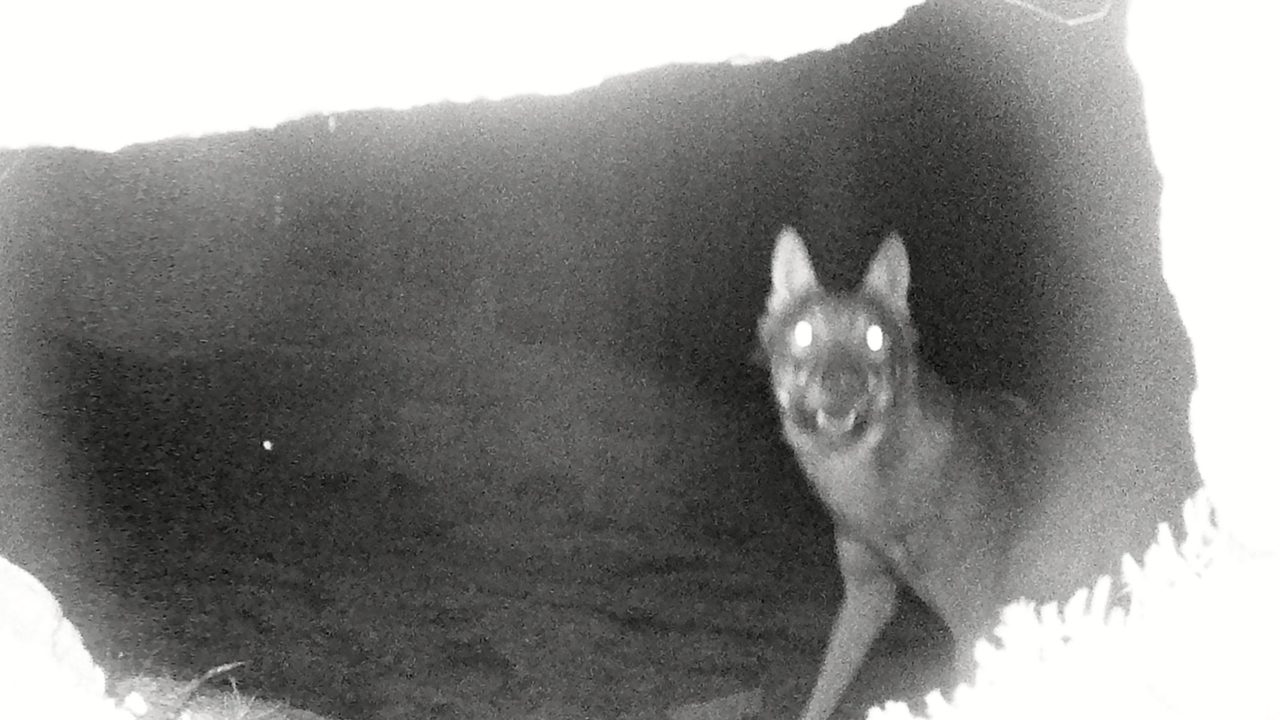
An even more shocking case was documented by monitoring cameras between October and November 2025 in the Medvědí mountain range: a severely injured wolf was repeatedly spotted moving on just three legs — its right front leg had apparently been shot off by a poacher. Despite having minimal chances of surviving the harsh mountain conditions, the animal made it through the winter and was caught on camera again in spring.
Environmental organizations warn that if further cases of wolf poaching occur in the region, they are prepared to file a police report and offer a substantial cash reward for information leading to those responsible.
"We are publishing unique wolf monitoring results from a protected area where mountain forests cover more than 80% of the territory, while built-up areas make up only about 3%. Wolves play a key role in maintaining nature's balance, helping us create healthy forests," said Ondřej Bačík, chairman of the Society of Friends of the Jizera Mountains.
According to him, a wolf family closely resembles a human one in many ways: a male and female wolf stay together for life and carefully raise their offspring until, at around three years of age, the young set off to live independently. "I want to stress that poaching is an evil that destroys wolf families, and we must not tolerate it," Bačík emphasized.
According to scientist Pavel Hulva from the Department of Zoology at Charles University, around 1,500 genetic samples from wolves are now collected in the country every year — mostly droppings found in the snow and swabs taken from livestock carcasses. Only one case of wolf-dog hybridization has been recorded in Czechia, in the north of the country, but the pair left no offspring, so the hybrid line did not spread further. According to the Nature and Landscape Protection Agency of the Czech Republic, the country's total wolf population does not exceed 400 animals.
Source: ekolist.cz