On August 12, 2026, a partial solar eclipse will cross Czechia — the Moon will cover nearly 90% of the Sun
USD 21,01
Popular
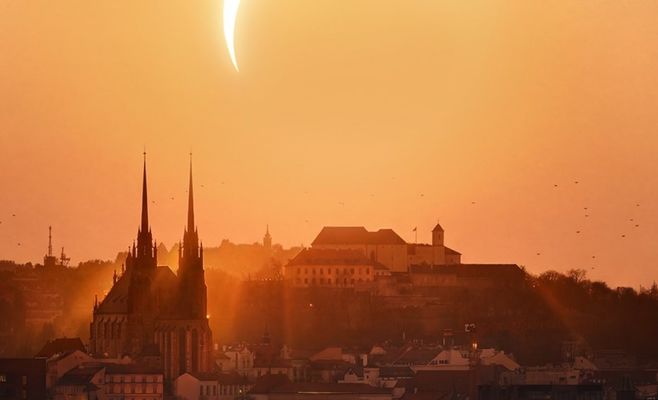
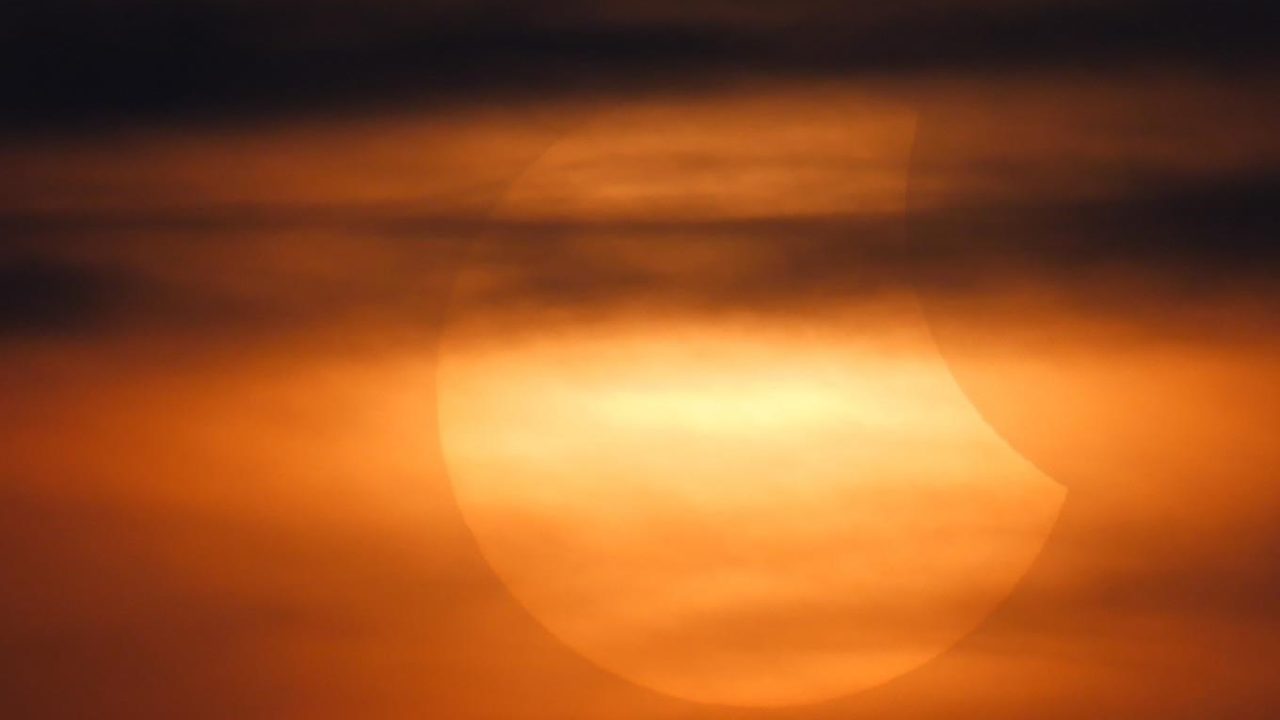
On Wednesday, August 12, 2026, shortly before sunset, residents of Czechia will get to witness one of the most striking celestial events in decades — a partial solar eclipse, during which the Moon will cover up to 88.5% of the Sun's disc.
A solar eclipse occurs when the Moon, in its new moon phase, passes between the Earth and the Sun, partially or fully blocking it from view. The eclipse won't be total over Czech territory, but the spectacle promises to be dramatic nonetheless.
The best viewing conditions will be in the evening: the maximum phase is expected around 7:00 PM, shortly before sunset. In the west of the country, the peak of the eclipse will occur before sundown, while in the east the Sun will already be setting during the eclipse's final phase. As always, how much of the show can actually be enjoyed will depend on the weather.
Looking directly at the Sun without proper protection is dangerous — ordinary sunglasses won't do; special solar filters or eclipse glasses are required. Viewing through a telescope is even riskier and demands specialized equipment, the kind found at observatories and planetariums.
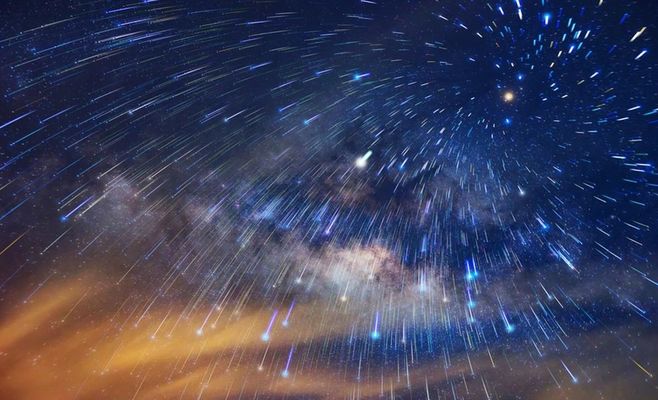
According to organizers, several Czech observatories will open their doors to the public on the day of the eclipse. The Štefánik Observatory in Prague will welcome visitors from 7:00 PM to 9:00 PM, offering safe viewing through special telescopes. The Astronomical Institute of the Czech Academy of Sciences in Ondřejov will host a free viewing session starting at 7:00 PM, complete with expert commentary, followed by observation of the Perseid meteor shower once the eclipse ends. If the weather is cloudy, the institute will also stream a live feed from its solar patrol service.
For those unable to visit an observatory, or if the weather doesn't cooperate, online broadcasts will be available. The Ostrava Planetarium is preparing a special program featuring eclipse viewing, lectures, and a live broadcast of the total eclipse from Spain. Safe viewing sessions will also be organized by the observatory and planetarium in Brno, the observatory in Turnov, iQLANDIA in Liberec, the Jaroslav Trnka Observatory in Slaný, the Vysočina Museum in Jihlava together with the Jihlava Astronomical Society, observatories in Plzeň and Rokycany, as well as in Žebrák, Pardubice, Jičín, Teplice's Písečný Hill, and the Silesian University Observatory in Opava. Detailed programs for each venue will be published on their official websites.
Read also: From Dinosaurs to Kafka: 7 Must-See Museums in Prague
Source: kudyznudy.cz