Owners of Czechia's early solar power plants face a sharp drop in income after 2030
USD 21,28
Popular
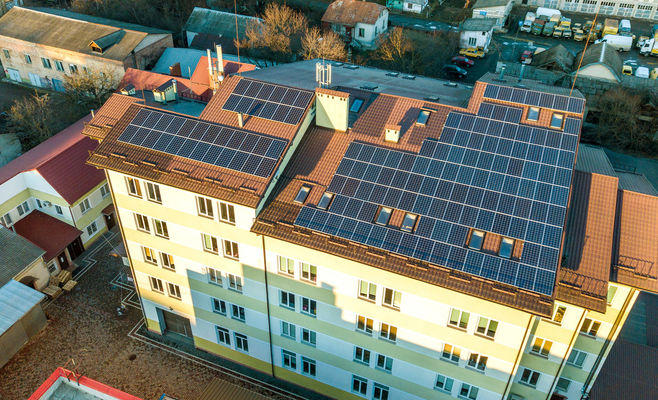
By the end of this decade, the Czech state will end its guaranteed support for photovoltaic power plants built during the country's first solar boom in 2008–2010. Twenty years after launch, these plants will lose their fixed feed-in tariffs, forcing owners either to modernise their equipment or sell their businesses.
According to Jan Krčmář, executive director of the Solar Association, today's feed-in tariff, after deducting the solar tax, stands at around CZK 14 per kilowatt-hour — but after 2030 that figure could fall to just CZK 2.5. "That's a completely different level of income," he notes.
This is precisely why owners of older plants are starting to invest in so-called repowering — replacing outdated panels with new ones that offer higher output and greater efficiency. As long as the guaranteed feed-in tariff remains in place, banks are more willing to finance such investments, Krčmář explains.
Solar Global, whose portfolio includes plants built in 2009–2010 with now-outdated technology, is already preparing repowering projects for all of its original sites. According to the company's executive director, Tomáš Buzrla, the goal is to maintain the plants' capacity while boosting electricity generation efficiency and reducing the land area used.
Modern panels can generate significantly more electricity from the same surface area — in some cases twice as much as panels from twenty years ago. Krčmář notes that this frees up part of the land currently in use, and that new panels also perform better in poor weather, cloudy conditions, and during the morning and evening hours, when electricity prices tend to be especially high.
Other operators are also considering boosting the output of their plants. Karel Hanzelka, spokesperson for Pražská energetika, says that full repowering in 2028–2030 is still under consideration, although partial investments as part of routine maintenance are already under way.
Some owners of older plants, built mostly in 2008–2010, are already selling off assets — or weighing the possibility — due to uncertainty over future feed-in prices. Solar Global has confirmed it has already sold several of its own sites and does not rule out further deals, saying "it all comes down to price and reaching an agreement with a potential buyer."
More than 120 MW of solar capacity belonging to the ČEZ group also still benefits from the guaranteed feed-in tariff. Company spokesperson Ladislav Kříž says decisions will be made on a case-by-case basis for each plant, taking into account the technical condition of the equipment, operating economics, and the legislative framework.
Krčmář urges plant owners to act sooner rather than later and replace their panels as early as possible: as long as the guaranteed feed-in tariff is still in effect, such investments remain more profitable. "By 2030, when the support scheme ends, new panels could already be financed and the plant ready to keep operating," the expert explains. Postponing modernisation until electricity prices become uncertain, significantly lower, or even negative would mean far worse conditions than today.
In recent years, few owners invested in upgrading their solar plants: former Finance Minister Zbyněk Stanjura had planned to abolish or significantly tighten the terms of state support, prompting many producers to fear losing subsidies altogether and hold back from investing amid the uncertainty.
The situation is now changing, as companies build larger portfolios by buying up small projects from owners unwilling to continue running their businesses. Some operators have decided to wait until 2030 to see whether operations remain profitable — and if not, they will try to sell their plants. Experts warn, however, that by 2031 there may be no buyers left willing to purchase such plants, since the equipment will by then be hopelessly outdated.
According to available data, maintenance costs for a power plant and rent for the land it stands on can run into millions of crowns a year, depending on the scale of the project. Even decommissioning a plant isn't free — dismantling and disposing of the equipment can cost tens of millions of crowns.
Read also: Lease agreements in Czechia 2026: nájem vs podnájem, kauce
Source: seznamzpravy.cz