Poland braces for a false-flag attack: alarm grows across NATO's eastern flank
USD 21,22
Popular
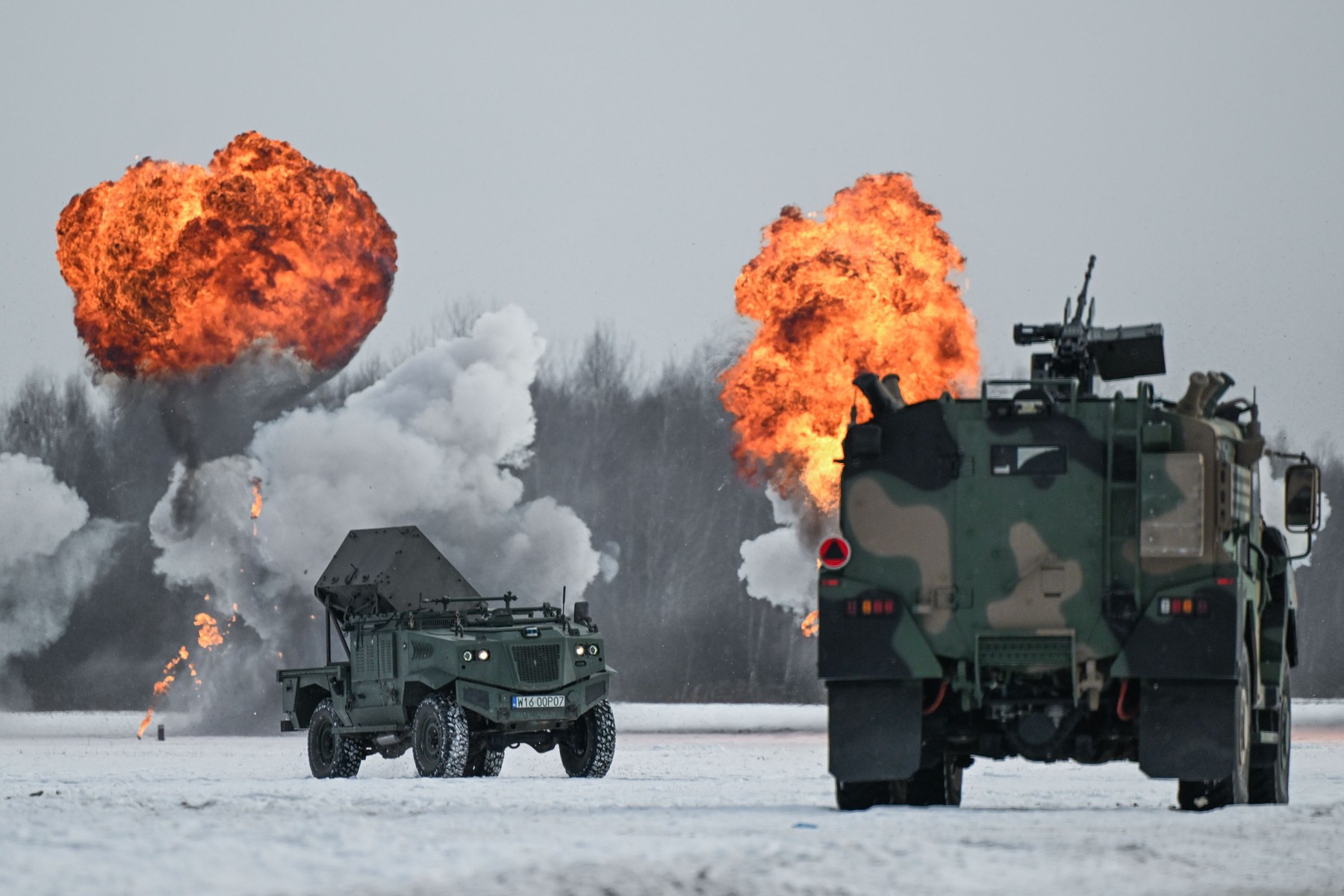
On Tuesday, air-raid sirens sounded across Warsaw, Kraków and hundreds of other Polish cities and towns — a three-minute wavering signal repeated several times throughout the day. It wasn't a real threat, but a large-scale nationwide exercise, ALARM 2026, which authorities had announced to the public in advance.
While siren tests on the first Wednesday of every month are routine in Czechia, an exercise of this scale in Poland drew particular attention: the country was testing its readiness for scenarios that seemed unlikely just a few years ago but have now become part of the security agenda on NATO's eastern flank.
In recent weeks, warnings about a possible Russian operation against Poland or the Baltic states have multiplied. Initially reported unofficially by intelligence services and diplomats, the information has since been confirmed by top officials of NATO's eastern-flank countries.
Back in the second half of June, Latvian military intelligence pointed to signs that Russia might be preparing limited military provocations against Poland or the Baltic states — not a full-scale invasion, but a hybrid operation designed to test NATO's response. According to Britain's The Guardian, similar information was shared by sources in other alliance countries.
In late June, Polish Prime Minister Donald Tusk said the security situation was extremely unstable and that various forms of escalation could be expected in the coming weeks and months. In early July, Polish media, citing sources in security services, reported that the United States had repeatedly warned Warsaw about the possibility of a limited armed provocation on Polish territory.
Polish Foreign Minister Radosław Sikorski pointed to the possibility of a so-called false-flag operation, in which Russia would attempt to disguise its own attack as an action carried out by Ukraine. In mid-July, Lithuania joined the chorus of warnings — President Gitanas Nausėda and representatives of the country's defense ministry cited intelligence suggesting Moscow could target critical infrastructure in the Baltic states or Poland, with the goal not being territorial seizure but testing the resolve of allies and NATO's unity.
The most specific warning came from Polish Defense Minister Władysław Kosiniak-Kamysz. Following a meeting of the government's national security committee, he listed possible types of Russian operations: GPS signal jamming, sabotage, and drone-related provocations.
Poland has already experienced a Russian drone incursion in September of last year, when more than twenty drones violated the country's airspace during a massive attack on western Ukraine. At the time, the Polish military put its air defenses and fighter jets on alert; there were no casualties, though some drones flew deep into the country's territory and crashed only after running out of fuel. The incident accelerated the deployment of the American Patriot system and continued work on the multi-layered Wisła and Narew air defense systems.
Now Minister Kosiniak-Kamysz says Russia could use drones of Ukrainian origin to stage a provocation against Poland and other NATO countries in the east. "Russia could use drones and unmanned aircraft intercepted in recent weeks during Ukraine's intensive campaign aimed at destroying Russian critical infrastructure," the minister said. The warning applies to Poland, the Baltic states, Finland and Romania.
Polish military analyst Jarosław Wolski notes that the scenario is technically quite plausible: over the years of war, thousands of Ukrainian drones have likely crashed on Russian territory, and some of them may have remained nearly intact. According to him, repairing such devices, replacing available components, or reprogramming navigation systems would pose no serious problem for Russia; an alternative would be intercepting Ukrainian drones using electronic warfare tools.
The analyst recalls that similar public warnings were issued around the turn of 2021–2022, when Western intelligence services repeatedly flagged Russian provocations designed to create a pretext for the invasion of Ukraine — many of the planned scenarios were exposed before they could be carried out. In Wolski's view, today's open communication could be the same strategy: if Russia is indeed preparing a false-flag operation, publicly warning about it could significantly weaken its effect. "Let's not ignore these warnings. They tell us what the near future may bring," he wrote.
The newspaper Rzeczpospolita notes that such operations fit the long-standing pattern of Russian intelligence services, whose goal is usually not territorial conquest but sowing chaos, dividing societies, and weakening support for Ukraine. This is compounded by the current chill in relations between Poland and Ukraine: a dispute over historical memory has flared up again after Kyiv decided to name a military unit in honor of "heroes of the Ukrainian Insurgent Army," while in Poland the number of attacks on Ukrainians is rising and far-right groups are intensifying anti-Ukrainian rhetoric.
According to Polish experts, hybrid warfare includes sabotage, information operations, disinformation campaigns, cyberattacks, and provocations that stay below the threshold of open armed conflict. In previous years, Polish authorities have uncovered groups preparing to set fire to warehouses, logistics centers and railway infrastructure, and have investigated attempts to damage energy and telecommunications networks. Tools used include prolonged GPS jamming over the Baltic Sea and exploitation of the migration crisis on the Polish-Belarusian border.
Particular attention is now focused on the possibility of a false-flag operation. As former commander of Poland's elite GROM unit Roman Polko noted in an earlier interview, because of the war in Ukraine, Russia will not seek direct confrontation with NATO but will look for other paths — provocations, sabotage, false-flag operations or other hybrid actions aimed at undermining unity, sowing uncertainty, and intimidating European societies. According to him, the current debate about the possible use of captured Ukrainian drones fits precisely into this logic. "Information is the foundation. Morale is the foundation. That's where today's wars begin," he told TVN24 after the security committee meeting.
Source: seznamzpravy.cz