USD 20,99
Popular
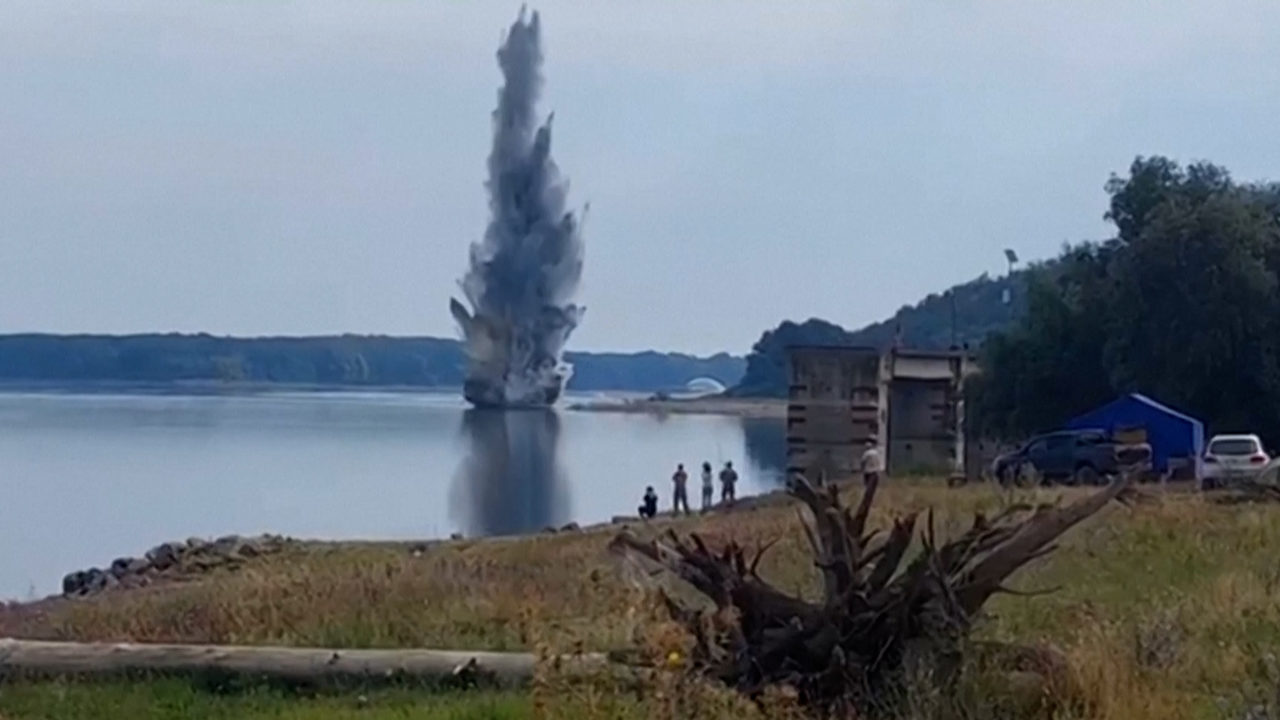
In Romania, record-low water levels in the Danube have forced the army to carry out controlled explosions along the riverbank in an effort to redirect part of the flow toward the nuclear power plant in Cernavodă, where river water is used to cool the reactor.
The problem stems from the fact that most of the Danube's flow is being diverted through the Bala branch into the Borcea branch, leaving critically little water in the Old Danube channel that feeds the plant. Locals have nicknamed Bala the "evil branch" because of its powerful currents, whirlpools, and deep waters near its mouth.
To partially block the Bala channel and keep more water flowing through the old riverbed, soldiers detonated 180 kilograms of explosives. According to the Romanian newspaper Adevărul, part of the flow has already been successfully redirected in the desired direction.
The blasting operations are set to continue over the coming days, and by Wednesday morning the army plans to sink four barges loaded with rocks and other materials to create an artificial barrier that will hold back the water. Officials expect the water level in the Old Danube to rise by 10–12 centimeters — enough to ensure the necessary flow reaches the nuclear plant.
Earlier, Romanian authorities declared a state of emergency for the entire month of August due to a drop in electricity production caused by the shutdown of a nuclear reactor amid the Danube's record low water levels. Along most of its course, the river is currently at historic lows, a consequence of extreme summer heat and drought affecting large parts of Europe.
Source: novinky.cz