Russia's State Duma Passes Laws Allowing the Kremlin to Punish Emigrants Even Abroad
USD 21,08
Popular
Russia's State Duma has passed a package of laws that could seriously complicate life for Russians who have left the country. According to independent outlets Meduza and Mediazona, the new rules allow authorities to cut emigrants off from bank accounts, government services and the ability to manage property in Russia, while also restricting how Russian consulates abroad can deal with them.
Human rights advocates describe the new measures as a de facto tool for stripping citizenship-like rights from the Kremlin's political opponents — most emigrants who could be affected (those convicted of crimes or with unpaid fines) have previously faced politically motivated cases.
These include cases tied to the "foreign agent" label, involvement with "undesirable organizations," or "discrediting" the Russian army. Those who refuse to recognize Russia's territorial claims or who support sanctions against the country could also fall under the restrictions.
Formally, the new laws are not aimed exclusively at the Kremlin's political opponents, but in practice, as Meduza notes, they will hit precisely this group hardest. The new system could make emigrants' lives so difficult that returning to Russia becomes the only way to avoid the restrictions.
The Ministry of Justice will decide who ends up on the special registry. The FSB, the Interior Ministry, the tax service, the bailiff service or the Prosecutor General's Office will all be able to initiate someone's inclusion on the list.
In practice, this could create problems even with something as mundane as renewing a passport. People placed on the registry risk losing access to most consular services — for instance, they may be unable to notarize documents or issue a power of attorney.
Powers of attorney could become a key control mechanism. If someone lives abroad but still owns an apartment, a car or other property in Russia, they can normally authorize a relative or lawyer to handle matters on their behalf. The new rules significantly restrict this option.
Russians affected by the new rules will no longer be able to freely dispose of real estate and other assets in the country — selling them or transferring ownership. As Mediazona warns, for someone who left behind an apartment or savings, this could mean their property becomes essentially inaccessible.
A similar logic applies to banks: accounts could be frozen and access to online banking restricted. Income still arriving from Russia — such as pensions or other state payments — would reportedly be redirected to a special account.
In this way, the Kremlin gains yet another tool for controlling those who have left — not through borders or police, but through their property, money and documents. The new laws come amid increasingly harsh rhetoric from authorities toward those who left the country after the full-scale invasion of Ukraine began — officials have branded some of them "traitors," claiming they work against their own country from abroad.
Many emigrants nevertheless remain closely tied to Russia: they still have families, property, bank accounts or entitlements to state benefits there. Critics believe it is precisely these ties that the new system intends to exploit — to remind political emigrants that leaving the country doesn't automatically mean escaping the Kremlin's reach.
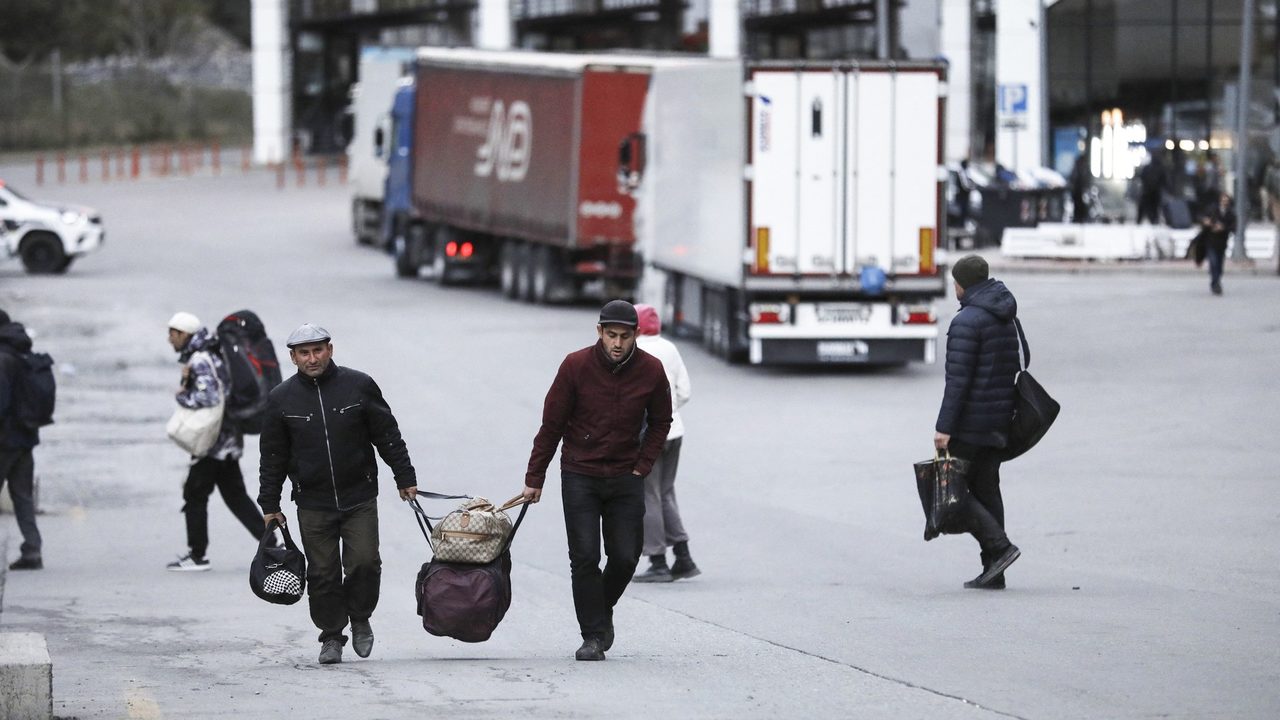
Since the war against Ukraine began, and especially after the announcement of partial mobilization in autumn 2022, several hundred thousand people, by various estimates, have left the country. This has been a serious blow for the regime amid a deepening demographic crisis that President Vladimir Putin has openly fought — including by artificially boosting the population through annexed territories.
The outflow of people has also meant a brain drain, since most of those who left belonged to the middle or upper class. At the same time, rules are tightening in Europe as well: since June, new EU asylum regulations have made it even harder for Russians to obtain refugee status. Whereas applicants could previously enter on any Schengen or national visa and file their application later, they can now be sent to closed camps once reserved for people deemed a "threat to national security." As a result, the room for maneuver for anti-war Russians is shrinking from both directions.
Read also: Savings account in Czechia: bank rates for 2026
Source: seznamzpravy.cz