Scandal Around Minister Jurečka's Aide: Advisor Oversaw Subsidies While Profiting From Their Processing

USD 21,28
Popular
The Czech Ministry of Labour and Social Affairs will be unable to account to the European Union for projects worth roughly 64 million crowns — the fallout from a conflict of interest involving Alexandra Semancová, former advisor to Minister Aleš Juchelka. Semancová simultaneously oversaw subsidy programmes worth 17 billion crowns while owning a company that helped clients obtain those very same subsidies for a fee.
According to investigative reporters, Semancová's dual role first came to light back in March. At the time, Minister Juchelka publicly defended her, calling her "the right person for the job" and suggesting the criticism against her stemmed from the fact that she had allegedly "cut off certain cash flows" after joining the ministry. He also stressed that she had started working there before he was appointed — which is technically true, though journalists say it was Juchelka himself who elevated a rank-and-file staffer into a powerful advisor who effectively controlled billions of crowns in European subsidies.
What makes the case particularly striking is that Semancová directly issued instructions to ministry leadership on subsidy matters — whereas previously, advisors only provided expert opinions when the minister requested them, without handing out assignments of their own. At the same time, she ran her own company, Siptrade, which helped clients secure subsidies from the very same budget the ministry administered.
The minister kept defending his advisor even after receiving not only the journalists' findings but also an internal expert assessment from his own ministry confirming the risk of a conflict of interest. The situation only shifted once Brussels grew concerned, raising the real possibility that subsidy payments could be suspended over the advisor's conflict of interest. Only then did Juchelka quietly begin addressing the problem.
On 16 April, in the Chamber of Deputies, the minister suddenly announced that Semancová was leaving the ministry — supposedly by mutual agreement, since she did not want to jeopardize European funding for Czechia or remain a constant target of complaints.
Yet when asked specifically how the fate of tens of millions of crowns tied to projects where Semancová had played this dual role would be resolved, the ministry responded for a long time with silence or evasive statements. Only after prolonged legal correspondence did reporters receive an official response: the ministry will be unable to account to the EU for approximately 64 million crowns due to the former advisor's activities. Neither the ministry nor Juchelka himself could say who would ultimately cover this sum. The minister merely repeats that no real damage is likely, since the EU disburses funds under the National Recovery Plan based on meeting certain benchmarks.
Juchelka now admits that his advisor may theoretically have had a conflict of interest, but insists she never influenced specific subsidy decisions. Journalists, however, claim the opposite: according to their sources, ministry officials documented that Semancová, through her company Siptrade, managed subsidy projects — including one for a fellow party member, Radomír Nepil, deputy mayor of Prague 8, who hired her to secure tens of millions of crowns for children's groups in his district. There is also correspondence in which she instructed officials to alter conditions in favour of applicants, and personally approved or rejected individual decisions.
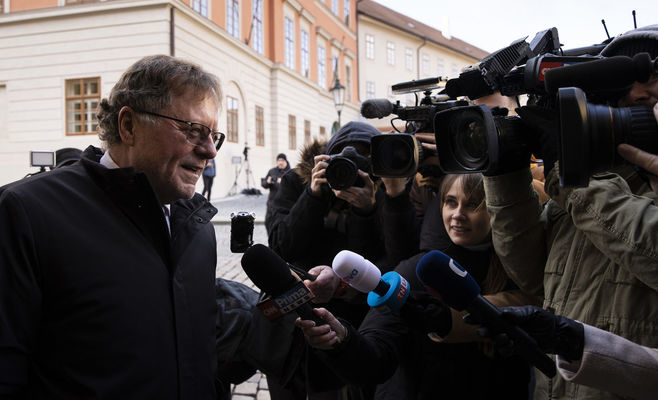
At a press conference following Monday's cabinet meeting, the minister sharply criticized the journalists' work, calling it manipulative and dishonest — an assessment echoed by Prime Minister Babiš. Reporters note that instead of addressing the substance of the case, officials have shifted to attacking the media, while it remains unclear just what "conspiracy" the minister was referring to when he defended his advisor back in March.
It is also noted that the Czech Supreme Audit Office has taken an interest in the subsidy programmes run by the Ministry of Labour and Social Affairs.
Source: seznamzpravy.cz