Science & Space By

Could Ocean Tides Hide a Trace of Einstein's Gravitational Waves?
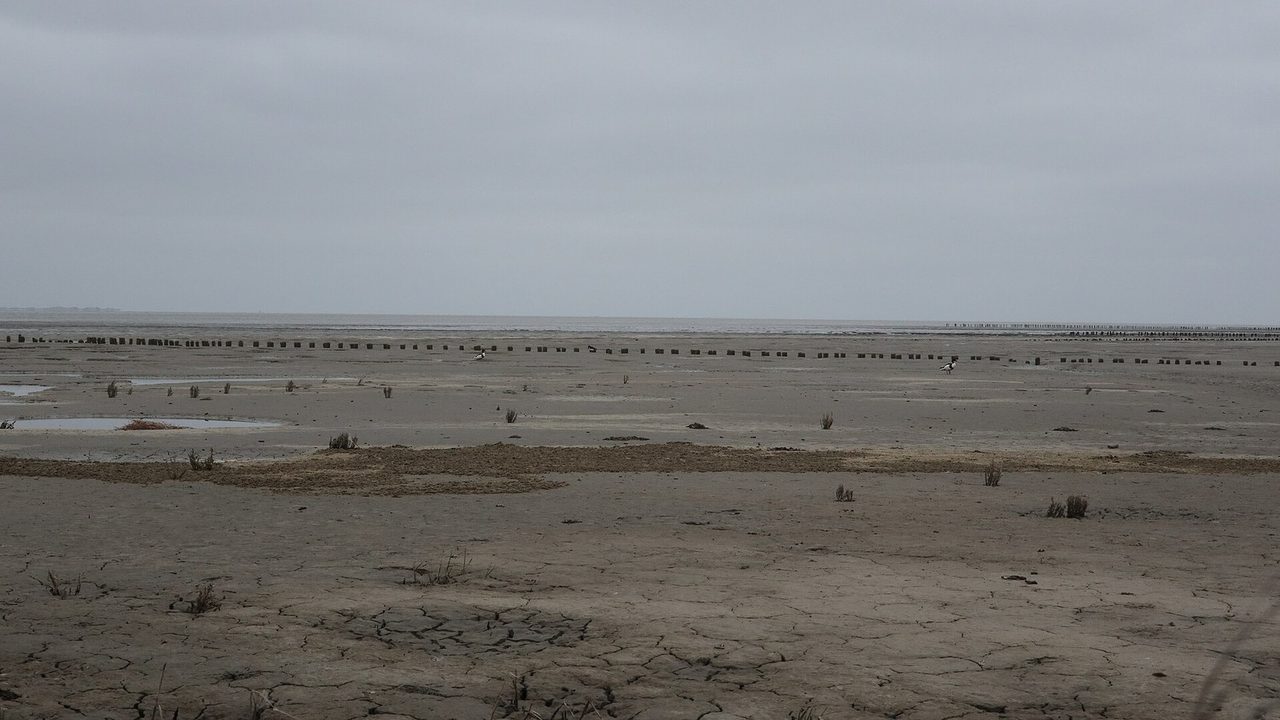
A mathematician in Berlin has combined Isaac Newton's explanation of the tides with Albert Einstein's gravitational waves, creating a model that could offer a new way to test how well scientists understand gravity, Universe Today reported. The author is careful to say he has not found a new effect. His work shows how one might be searched for.

The study comes from Muhittin Cenk Eser of the Department of Mathematics and Computer Science at Freie Universität Berlin.

What is the idea behind the study?

Newton published his major work on motion and gravity in 1687, and his theory accurately describes how the Sun and Moon move Earth's tides. For more than three hundred years, it stood as the last word on gravity, until Einstein introduced general relativity.

General relativity gives a fuller picture, including gravitational waves, which are ripples in spacetime produced by events such as mergers of massive objects. Universe Today said thousands of gravitational-wave events have been detected so far, mostly from mergers of black holes or neutron stars. Smaller gravitational interactions, including those among Earth, the Moon and the Sun, can also produce them.

Eser extended the classical model of lunar tides to include what is known as the cross polarization of gravitational waves, one of the key ways such waves can deform spacetime as they pass through.

What problem does it address?

A major difficulty is telling a possible extra signal apart from other sources of error. Measurement errors, the choice of reference frame and uncertainty in calculating the positions of the Sun and Moon can all mimic or hide a faint effect.

By identifying which influences have to be accounted for, Eser shows how a signal could be isolated and its possible physical causes identified. According to the report, the study provides a quantitative basis for future work on tidal patterns that differ from what Newtonian gravity predicts.

What the author says

In a university press release, Eser said Newton explains the tides extremely well, while Einstein shows that gravity is dynamic and that changes in spacetime can travel as waves. His work, he said, brings the two views together and asks what traces might appear in high-precision measurements.

He also stressed the limits of the work. He said the study does not claim a new gravitational effect and instead shows how to look for one in a targeted way. He described the Earth-Moon system as especially interesting for this purpose because its tidal effects can already be described and measured very precisely.

Why it matters

For general readers, the study does not change anything about tides or daily life. Its importance is in method: it sketches how a long-studied, well-measured system could serve as a testing ground for the relationship between Newton's and Einstein's descriptions of gravity.

The result is a theoretical framework, not an observation. Whether any deviation from Newtonian tides can actually be measured would depend on future high-precision studies built on this basis.

Around Prague, based on reporting by Universe Today

Cover photo: Goran_tek-en / Wikimedia Commons, CC BY-SA 4.0, cropped
Share: Telegram WhatsApp

More science news

98-Million-Year-Old Amber Mantis Wore Leaf-Like Disguise on Its Abdomen
A praying mantis preserved in amber for 98 million years is the earliest clear fossil evidence of mantises imitating plant leaves, according to ScienceAlert. Scientists say the insect carried leaf-lik
Giant Black Holes Ruled Out as Dark Matter by Big Bang Afterglow
Physicists have struck another suspect from the list of possible explanations for dark matter. According to Universe Today, a new study in Physical Review Letters concludes that stupendously large bla
Physicists Calculate How Far Time Could Run Backward: One Femtosecond
A new mathematical study asks how far time could effectively be made to run backward in a quantum system, and the answer is almost nothing. According to ScienceAlert, physicists Yakir Aharonov of Tel
Leonid Meteor Shower Peaks Nov. 17, but Expect Just 15 an Hour
The Leonid meteor shower, famous for storms that once rained tens of thousands of meteors an hour, is heading for a lean year. Space.com reported that this year's display is expected to be weak, with
Distant Galaxy Group Is Low on Star-Making Gas, Astronomers Find
Astronomers have measured how much of the raw material for new stars remains in a dense, distant group of galaxies, and the answer is not much. According to Universe Today, galaxies in the group, know
Radio Pulses Every Eight Minutes Traced to a Dead Star Orbiting a Sun-Like One
Astronomers have tracked a mysterious repeating radio signal to a pairing of a white dwarf, the remnant of a dead star, and a living star much like the sun, Space.com reported. The system, called GPM

Related news

A praying mantis preserved in amber for 98 million years is the earliest clear fossil evidence of mantises imitating plant leaves, according to ScienceAlert. Scientists say the insect carried leaf-like structures on its abdomen that resembl
Physicists have struck another suspect from the list of possible explanations for dark matter. According to Universe Today, a new study in Physical Review Letters concludes that stupendously large black holes, known as SLABs, cannot account
A new mathematical study asks how far time could effectively be made to run backward in a quantum system, and the answer is almost nothing. According to ScienceAlert, physicists Yakir Aharonov of Tel Aviv University and Avshalom C. Elitzur
The Leonid meteor shower, famous for storms that once rained tens of thousands of meteors an hour, is heading for a lean year. Space.com reported that this year's display is expected to be weak, with long stretches when not a single Leonid
Astronomers have measured how much of the raw material for new stars remains in a dense, distant group of galaxies, and the answer is not much. According to Universe Today, galaxies in the group, known as COSMOS-Gr30, hold only about 20% to
Astronomers have tracked a mysterious repeating radio signal to a pairing of a white dwarf, the remnant of a dead star, and a living star much like the sun, Space.com reported. The system, called GPM J071507−114153, sits about 5,000 light-y
The Leonid meteor shower peaks on Nov. 17 at about 3:00 Universal Time, and the Moon is cooperating this year, according to Universe Today. Forecasters expect only a modest show of roughly 20 meteors per hour, not the dramatic storm the sho
Earth’s own atmosphere may have helped turn the May 2024 solar storm into one of the most powerful in decades, according to a study in Science Advances. Satellite measurements showed that roughly 85% of the charged particles fueling the dis
Magma that is heated beyond the point where its crystals would normally stay stable can go for more than eight hours without forming new crystals, according to a University of Manchester-led study. In the same experiments, magma that had no
Earth has a temporary new companion. Astronomers have confirmed that a tiny asteroid called 2026 QQ8 was pulled into orbit around the planet in April, and it is expected to stay until January 2027, Live Science reported. The object is about
SpaceX is preparing its most ambitious test yet of Starship, its giant new rocket, and the company's own plans could leave NASA with a problem, NPR reported. As SpaceX shifts resources to Starship, it has said it will stop flying the smalle
The European Space Agency's Euclid space telescope released its first major batch of data on Thursday, Nov. 12, capturing light from more than a billion objects across a huge stretch of sky, Space.com reported. The release, called DR1-Found