Scientists: Even without a drop in rainfall, droughts in Europe will keep worsening due to climate change
USD 21,22
Popular
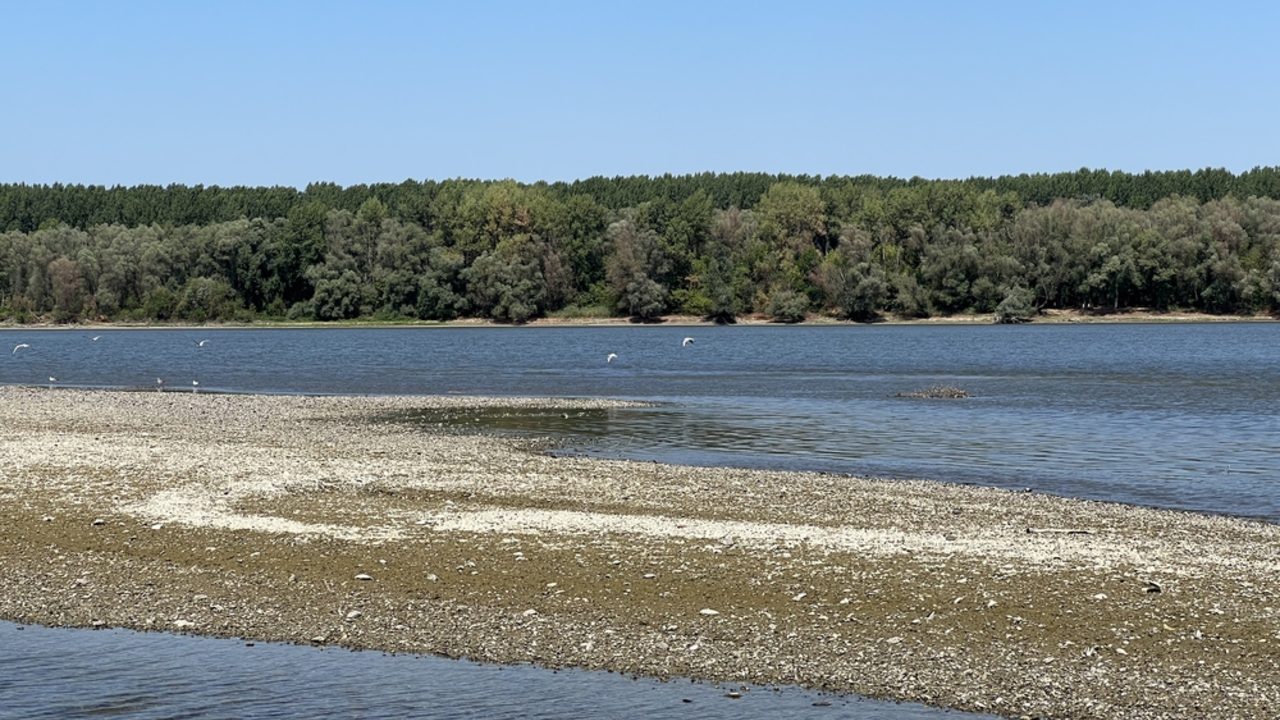
The international scientific initiative World Weather Attribution (WWA) has published an analysis showing that droughts in Europe are intensifying less because of a lack of rainfall and more because of rising temperatures and increased evaporation of moisture from the soil. This issue is especially relevant for Czechia, since the country sits on a European watershed and almost all the water on its territory flows onward elsewhere — meaning the republic depends specifically on precipitation that falls directly on its own land.
As hydrologist Rakovec explained, the same amount of rainfall today no longer guarantees the same volume of water in the soil and rivers as it did a few decades ago. As an example, the study cites the average flow of the Elbe River at Děčín — according to hydrological modelling, the April-to-June flow this year was the lowest recorded since 1950. A similar pattern for the March-to-June period is confirmed by observations from the Czech Hydrometeorological Institute (ČHMÚ) and by data from the Elbe River Basin Authority (Povodí Labe).
According to the expert, low water levels in rivers limit vessel draught and cargo capacity, while also putting extra strain on river ecosystems — water heats up faster and its dissolved oxygen content drops. Czechia does have a certain advantage thanks to its built reservoir infrastructure, above all the Vltava Cascade, which helps maintain flow and improves the reliability of water supply, but the reserves held in these reservoirs are not unlimited.
“At the same time, we need to restore wetlands and river floodplains, improve water absorption into the soil, and manage the landscape more carefully,” Rakovec added. According to him, moister soil and healthy vegetation support evaporative cooling and can locally soften the effects of heatwaves.
According to the analysis, agricultural drought caused by a lack of soil moisture is currently about five times more likely in Western Europe than it would have been in a pre-industrial climate — one that was 1.4 degrees Celsius cooler, i.e. without human influence. In Eastern Europe, where a precipitation deficit has persisted for six months already, a similar drought has become up to eleven times more likely. The main driver here is the heat itself rather than the shortage of rain as such.
A precipitation deficit comparable to the current one would, decades ago, have caused only a moderate drought — but today, due to far more intense evaporation, it results in much more serious consequences. For instance, France is reporting its worst corn harvest in 50 years, while Romania has lost more than a million hectares of crops since 2019 due to recurring droughts.
WWA is an international scientific initiative that studies the influence of climate change on specific extreme weather events. Its participants include, among others, Princeton University in the US and the Red Cross Red Crescent Climate Centre. Czech scientists join the organisation’s work by collaborating on individual studies.
According to ČHMÚ, Czechia is set to face another heatwave in the coming days: meteorologists forecast tropical heat of around 30 degrees from Tuesday, with temperatures approaching 40 degrees Celsius by Thursday. The previous major heatwave hit the country at the end of June — on Sunday, 28 June, a new all-time temperature record was set when 41.9 degrees Celsius was recorded in Doksany in the Litoměřice region.
Source: ekolist.cz