Scientists Find Evidence That Galactic Rotation Preserves a Memory of the Early Universe
USD 21,00
Popular
Researchers at Xiamen University in China have gathered compelling evidence that the rotation of present-day galaxies still bears the imprint of gravitational processes that took place in the earliest moments of the Universe's existence. The findings come from a team led by Hao-Ran Yu, who published the results of a large-scale data analysis.
What Tidal Torque Theory Says
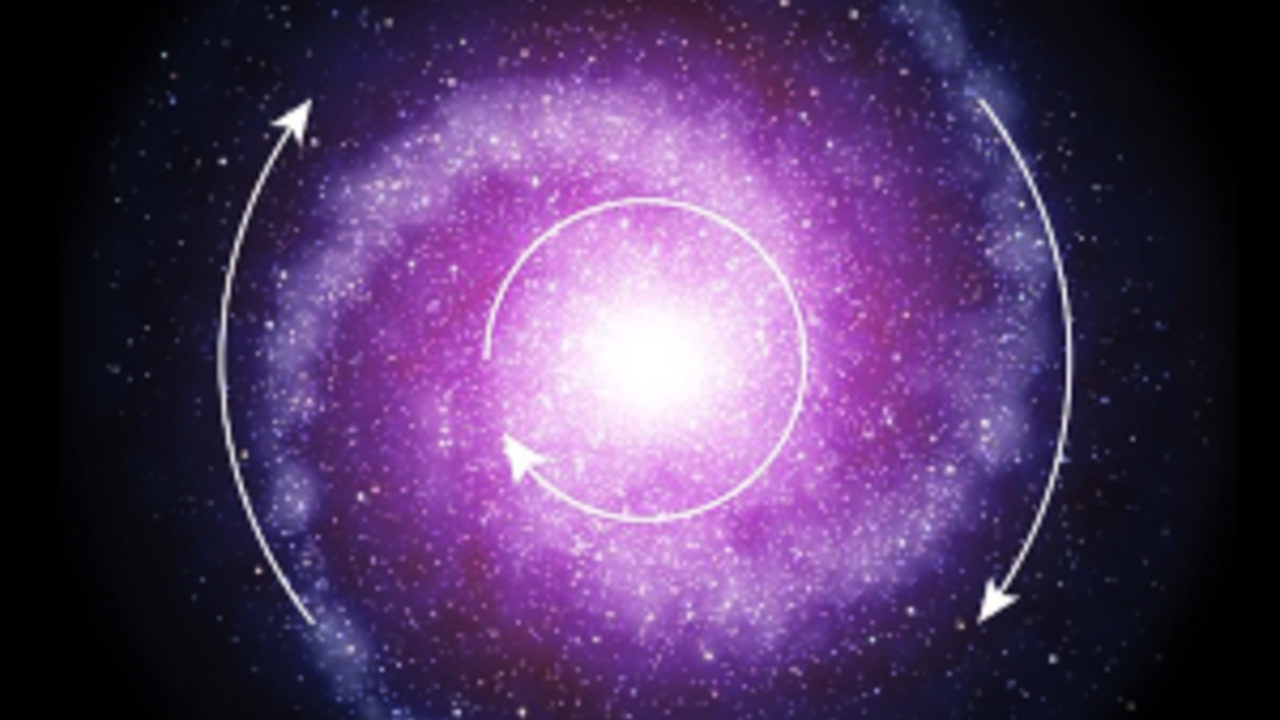
Spiral and elliptical galaxies rotate majestically across the cosmos, yet the origin of that rotation has long puzzled astronomers. One of the leading explanations — tidal torque theory — suggests that galactic rotation was set in motion long before the galaxies themselves formed, back in the Universe's infancy.
According to this idea, the primordial, unevenly distributed clumps of gas and dark matter interacted with one another through gravity. If such a primordial cloud was slightly elongated, a nearby massive object could pull on its closer edge more strongly than its farther one. This uneven tug generated a torque that was later "inherited" by the galaxy that eventually formed from that cloud.
How the Theory Was Put to the Test
Hao-Ran Yu's team carried out the most rigorous test of this theory to date, drawing on data from the ELUCID project. This project reconstructs the distribution of matter in the early Universe based on the positions of galaxies observed today.
Using this reconstruction, the researchers traced the rotation of present-day galaxies all the way back to the primordial tidal gravitational forces believed to have set that spin in motion. They then compared their theoretical predictions with actual measurements of galactic rotation — data on the movement of gas and stars within galaxies, gathered from a large sample located in our cosmic neighborhood.
The Key Finding
The clearest match between predicted primordial rotation and observed motion was found in the gas within large, massive elliptical galaxies. According to the study's authors, this is the most compelling evidence to date that today's galaxies genuinely carry traces of structures that existed in the Universe's earliest epochs.
Still, the scientists caution that this doesn't mean a galaxy's rotation is fixed once and for all at the moment of its formation. Much of that initial spin can be reshaped by later galactic collisions and mergers, as well as by the chaotic growth of galactic structures over cosmic time. Even so, it appears there is a genuine link between the gravitational forces at work in the earliest Universe and the galaxies we observe today.
Source: osel.cz