Scientists record rise in dust pollution across Europe — Czechia among study contributors
USD 21,04
Popular
A new study has found that dust pollution in the air over Europe is on the rise, posing an increasing threat to air quality and public health. According to the study's authors, in southern Europe transported dust accounted for an average of 31% of the annual PM10 guideline value (particulate matter up to 10 micrometres in size) recommended by the World Health Organization, through 2021.
Residents of southern Europe experienced so-called dust episodes an average of around 46 times a year. The researchers note that while the frequency of these events has not changed significantly, their intensity has noticeably increased in some southern European regions.
The findings are based on an analysis of roughly 18,500 daily measurements of the elemental composition of atmospheric aerosols, collected at 103 monitoring stations across Europe between 2012 and 2021.
Czechia also contributed to the research. To map daily dust concentrations in European air, scientists used a machine-learning model that analyses data on the concentration of metals found in dust — aluminium, titanium, silicon, calcium and iron.
"Our long-term, high-time-resolution measurements of atmospheric aerosol elemental composition represent a unique dataset for Central and Eastern Europe, and are extremely valuable given the time, personnel and financial resources required to obtain them," said study co-author Petra Vodičková Pokorná from the Institute of Chemical Process Fundamentals of the Czech Academy of Sciences.
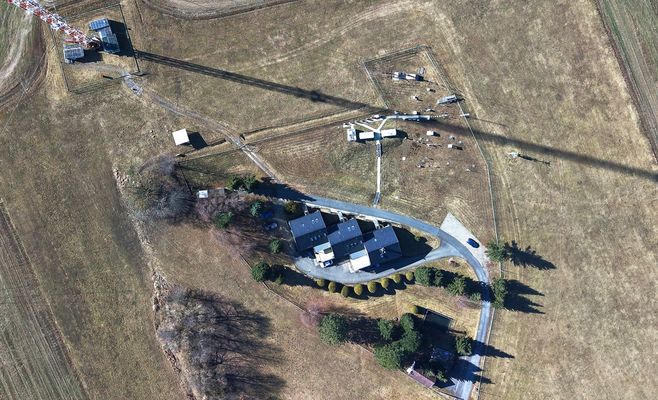
The institute's Aerosol Chemistry and Physics research group provided long-term measurement data collected by the National Atmospheric Observatory Košetice. These measurements are carried out as part of the major research infrastructure ACTRIS-CZ, coordinated by the Czech Hydrometeorological Institute (ČHMÚ). ACTRIS-CZ is in turn part of the European research infrastructure ACTRIS ERIC, which brings together leading European centres studying the atmosphere, aerosols and climate.
"Continuous, precise measurements of atmospheric aerosols are essential for understanding air quality, climate processes and their impact on human health. The observatory in Košetice holds a key position in this field, not only in Czechia but in a European context as well," added Vladimír Ždímal, scientific director of the ACTRIS-CZ infrastructure.