Spanish Ceuta Begins Setting Up Tents for Thousands of Migrants on Its Beaches
USD 21,62
Popular
- today at 06:20
- News
- Czech Republic
Jílové u Prahy: the royal town that grew on gold
- today at 05:50
- News
- Czech Republic
Easy hiking route from Obří hrad to Kašperské Hory
In the Spanish enclave of Ceuta on the North African coast, authorities have begun setting up tents for thousands of migrants who have spent weeks living on the streets and beaches due to a lack of space in the local reception centre. According to the newspaper El País, the centre can accommodate fewer than a thousand people, while more than 4,000 migrants remain without shelter.
Spain's Minister of Social Affairs and Migration, Elma Saiz, said the Spanish Red Cross is currently handing out around 4,000 meals a day to migrants in Ceuta. She noted that decisions on who receives a spot in the new tents will be made on a case-by-case basis, with priority given to women, especially mothers with children.
A makeshift settlement on the beach
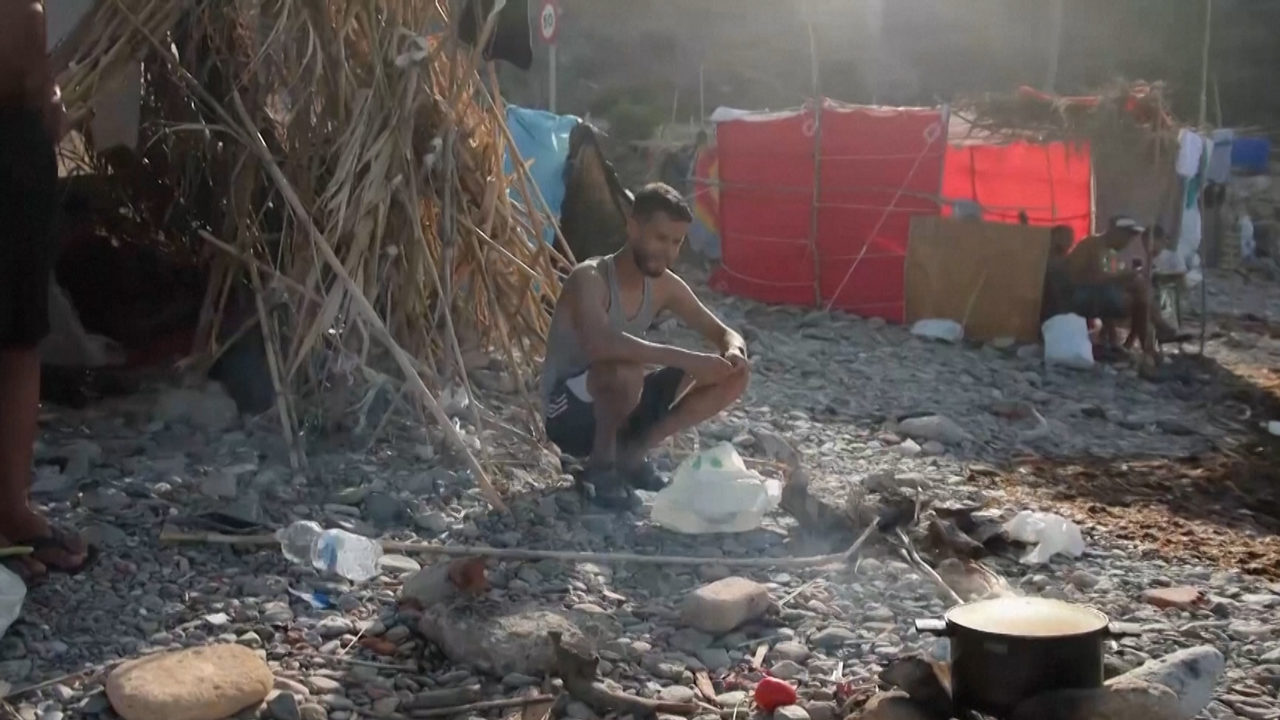
According to El Faro, hundreds of migrants have effectively "settled" on El Trampolín beach in Ceuta, sleeping on cardboard boxes and forming what amounts to an impromptu shantytown. As El País reports, one migrant from Sudan has set up a makeshift barbershop there, a Senegalese man sells second-hand clothes, tobacco and sunglasses laid out on a blanket, others play football on the sand, and someone has even built a makeshift mosque.
The problem is that the entire beach has only one public toilet, nowhere near enough for so many people. Rubbish and the remains of campfires litter the area, as migrants cook food bought from supermarkets or fish they've caught themselves.
Where the camps are being built and who is seeking asylum
According to radio station Cadena SER, temporary shelters are currently being set up in a car park, at the equestrian centre's racetrack, on the grounds of a former factory, and on an old football pitch at local barracks.
El País reports that almost all the migrants in Ceuta are men, mostly from countries south of the Sahara, though there are also arrivals from Algeria, Morocco and Tunisia. On Sunday, migrants on El Trampolín beach staged a hunger strike, demanding to be granted asylum.
Some local residents oppose the tents and the presence of migrants on the beaches. Ceuta's residents are particularly bothered by the rubbish left behind, along with fears over the spread of disease. Several tourist cruise ship stops have also been cancelled because of the influx of migrants, costing some locals an important source of income.
Read also: 8 best swimming spots near Prague: lakes, quarries and beaches within an hour's drive of the capital
Source: novinky.cz