The History of the Nové Mlýny Reservoirs Dispute: Why There Were Calls to Drain the Lower Dam Back in the 1990s
USD 21,01
Popular
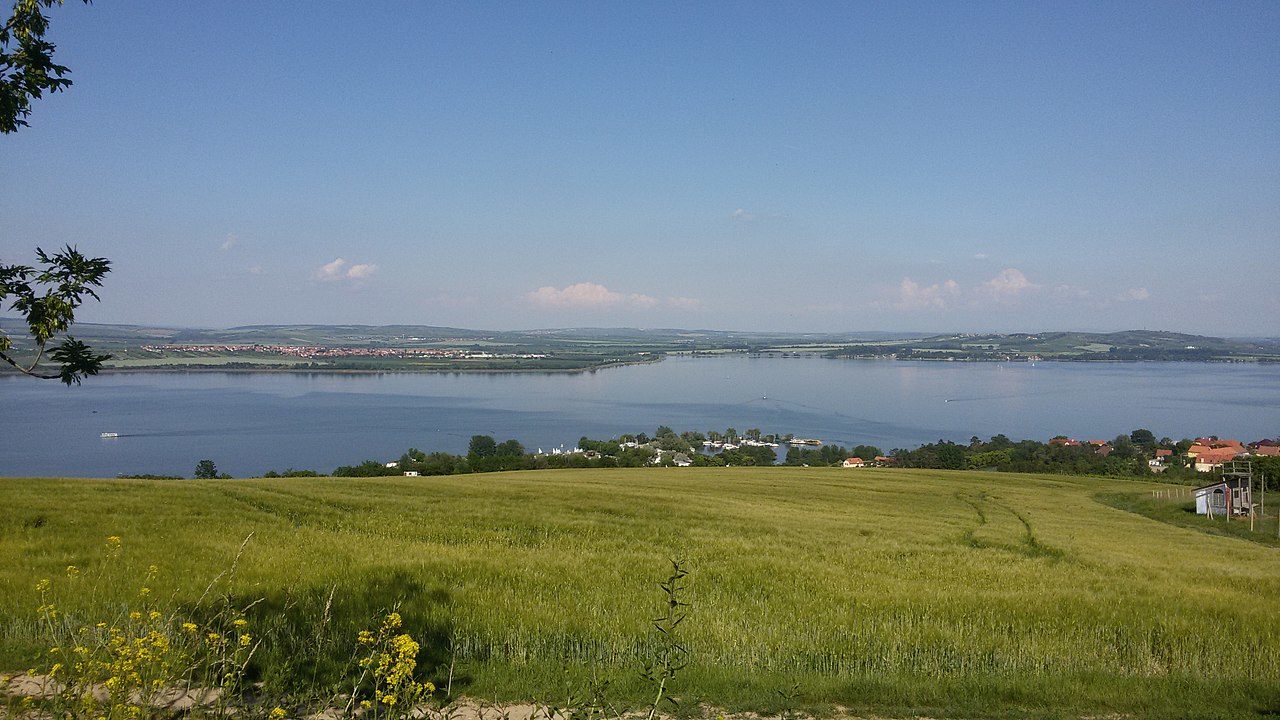
The idea of draining the lower Nové Mlýny dam beneath the Pálava Hills in South Moravia has been debated for more than 30 years. The issue was first seriously raised in 1990–1991, shortly after the fall of Czechoslovakia's socialist regime, though the roots of the conflict over the reservoirs actually stretch back to the 1980s.
Long before November 1989, experts had already warned that building a cascade of three reservoirs would destroy the unique floodplain landscape beneath Pálava — its riparian forests, wetlands, river branches and meadows. The Czechoslovak Academy of Sciences had recommended that construction of the lower reservoir begin only after the effects of the upper and middle reservoirs had been evaluated. That recommendation was ignored. A 1985 assessment confirmed that many of the environmentalists' grim predictions had come true, while the expected economic benefits turned out to be minimal. Nevertheless, the lower reservoir was completed and filled with water in 1989.
Since halting construction was impossible under socialism, conservationists launched a large-scale volunteer campaign called "Dno" (Bottom) starting in 1981. For the first two years, they mapped rare plants in the flood zone, and from 1983 they began transplanting them. According to the organisers, by 1986 they had relocated more than 85,000 summer snowflakes, 53,339 snowdrops, 2,224 spring anemone tubers and numerous Siberian iris clumps, along with water lily rhizomes. A significant portion of the plants were replanted in the Kривé jazero (Crooked Lake) nature reserve. More than 700 volunteers from the Czech Union for Nature Conservation and the Brontosaurus movement took part, and the total number of relocated plants is estimated at around 130,000.
After November 1989, a group of activists led by Mojmír Vlašín demanded the temporary draining of the third, lower Nové Mlýny reservoir. In November 1990 they gave the government a hundred days to resolve the issue, threatening to symbolically open the dam's floodgates during a protest if nothing was done.
Under Environment Minister Bedřich Moldan, who held the post until 24 January 1991 (and was later removed over never-substantiated allegations of collaboration with the StB secret police), the ministry commissioned a study of possible options — ranging from preserving the entire complex to partially or fully draining the middle or lower reservoir, or even all three at once.
A demonstration dubbed "Akce Šponta" was scheduled for 24 February 1991. Two days earlier, on 22 February, the new Environment Minister Ivan Dejmal ordered that water begin to be released from the lower Nové Mlýny reservoir. By the time roughly five thousand people had gathered on the dam, the water level was indeed already dropping. However, this was not a complete drainage — only an attempt to lower the water to the minimum level achievable with the drainage equipment available at the time, with no plans to touch the middle reservoir.
The lower reservoir was never fully drained. In February 1993, the Ministry of the Environment approved a plan to lower water levels in both the middle and lower reservoirs, which at least partially preserved conditions for nesting and wintering waterfowl.
An important detail: the ministry's 1993 decision and the further lowering of water levels in July 1996 both took place before the main authority over water management was transferred from the Ministry of the Environment to the Ministry of Agriculture — a change that occurred on 1 November 1996 under Minister František Benda of the ODS party. That handover later affected subsequent disputes over how the reservoirs should be operated, and today the environmental agency is clearly losing ground in those debates.
Originally, the main reason behind the push to drain the lower reservoir in the early 1990s was to restore the unique phenomenon of the floodplain forest. Back then, no one anticipated that 35 years later new arguments would be added to the mix: severe eutrophication, sediment accumulation, warming water, shrinking water levels due to climate change, the spread of blue-green algae, and mass fish die-offs in the Dyje River below the dam caused by recurring oxygen depletion.
That is precisely why the current debate over converting the lower reservoir into a dry polder looks increasingly well-founded. As for irrigation — the original main purpose behind building the entire three-dam complex — two more reservoirs remain further upstream.
Read also: Extension of temporary protection in Czechia for Ukrainians
Source: ekolist.cz