Tokyo lets officials wear shorts to work — and the move has split public opinion
USD 21,04
Popular
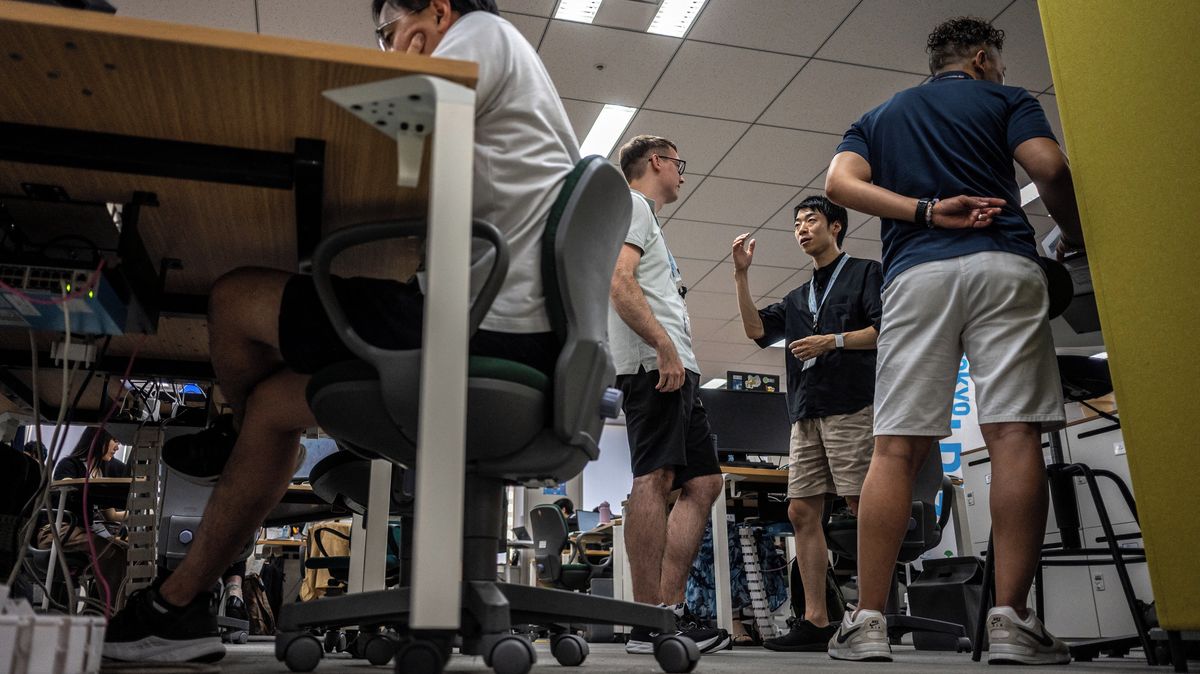
Tokyo authorities have relaxed the dress code for civil servants for the first time in decades, allowing them to come to the office in shorts and, in some cases, polo shirts, T-shirts and sneakers. The news was reported by the Japanese outlet The Japan Times.
The change is part of the Cool Biz initiative, which Japan launched back in 2005 to cut energy consumption during the hot months — that was when employees were first allowed to work without jackets and ties. This year, the Tokyo metropolitan government decided to go further and added shorts to the list of permitted office attire.
Noboru Watanabe, a 50-year-old official who spent thirty years commuting to work in a strict shirt, jacket and tie, admitted that he initially felt embarrassed showing up at the office with bare legs. "It felt awkward. But once I put on shorts, I realized how comfortable it was," he told The Japan Times. Another civil servant, Takuya Ozawa, recalled that walking home in long trousers during 40-degree heat used to be sheer torment: "In shorts, you feel good and cool."
Officials say the decision reflects the record-breaking heat of recent years: Japan's meteorological agency has even coined a new term — "brutally hot days" — for days when temperatures exceed 40 degrees Celsius. Tokyo Governor Yuriko Koike announced the relaxed dress code back in the spring, citing rising electricity consumption and increasingly frequent heat waves. "We support comfortable clothing that helps people cope with high temperatures, including polo shirts, T-shirts, sneakers, and, depending on the nature of the job, shorts as well," she said in April.
The change, however, has sparked a heated debate on social media and in the press. Critics point out that men are being given ever more freedom in how they dress, while women are still expected to wear tights and long skirts. Atsuko Tamada, a professor at Chubu University and commentator, told The New York Times that society continues to demand women spend time and money on hair removal and pedicures, while men are now allowed to wear shorts and sandals with no equivalent standards applied to them.
A new word has even appeared in Japanese — sune-hara — describing the awkward feeling of seeing men's bare legs in the office. Sachie Koike, a 52-year-old realtor, told The Japan Times she doesn't mind when men take off their ties or jackets in summer, but shorts are a step too far: "For me, shorts are associated with leisure. Besides, I don't think hairy legs look tidy in the workplace."
Meanwhile, Watanabe's 23-year-old colleague Rui Sazuki admits that the sight of bare male legs can bother some women, though it doesn't bother her personally: "I've seen my father's legs, so it doesn't faze me." Some support the reform without reservation — Takayuki Deguchi, a 30-year-old marketing agency employee, called the option to wear shorts in the heat "a very flexible approach," even though his own company still maintains a strict dress code.
According to The New York Times, clothing manufacturers were quick to respond to the rule change: some stores are already offering lightweight summer business wear in neutral colors. Yuji Hamana, a representative of the major Japanese clothing chain Yofuku no Aoyama, said the company carefully tested how pieces from the new collection looked on a seated person: "We paid special attention to the length, so that not too much skin would be visible."
Source: seznamzpravy.cz