Why jeans have that tiny pocket: it wasn't originally for coins, but for pocket watches
USD 21,23
Popular
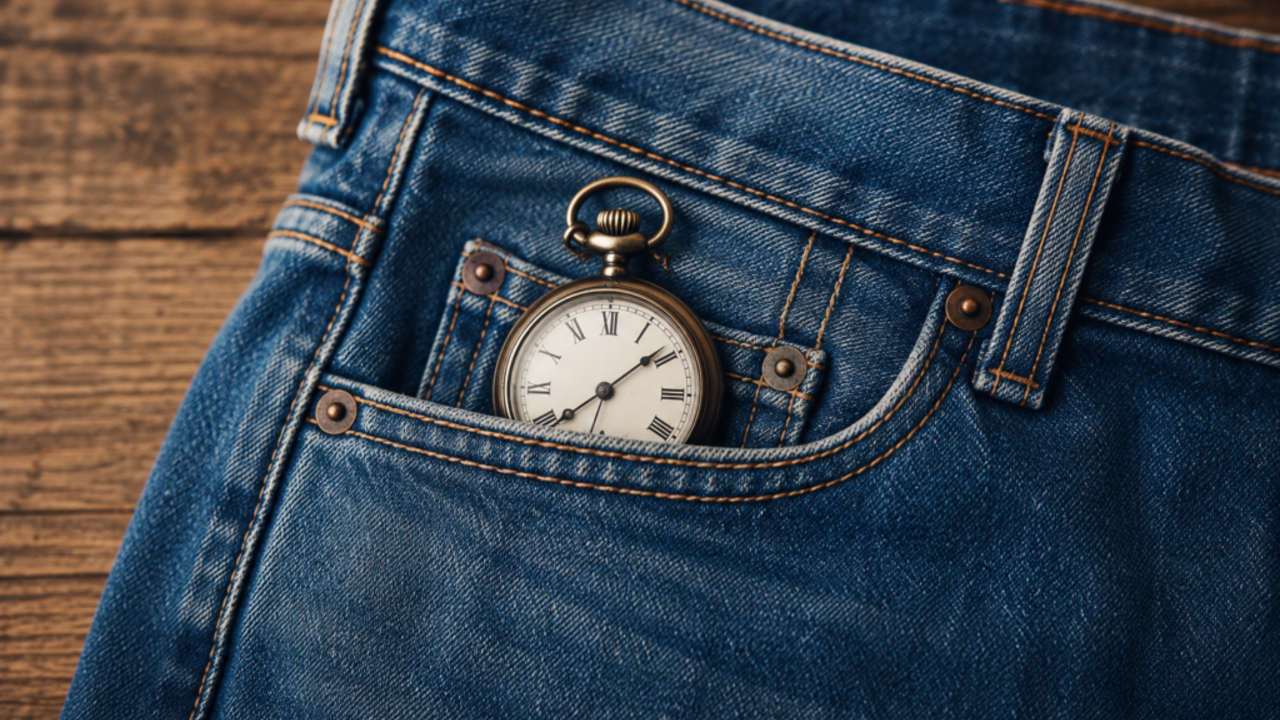
The tiny pocket above the right front pocket of jeans — barely big enough to fit a thumb — appears on almost every pair of classic jeans. Generations of wearers have puzzled over its purpose, repurposing it for loose change, a lighter, or earbuds, but it was originally designed to hold a pocket watch — an essential accessory for 19th-century men.
When Levi Strauss & Co. launched the first riveted jeans in 1873 for miners, cowboys and railroad workers, a fifth, smaller pocket was added to the four main ones. At the time, it was simply called the "watch pocket."
In the second half of the 19th century, pocket watches were a standard part of a man's wardrobe — worn on a chain, with a fairly fragile glass face. The narrow, deep little pocket protected the watch from knocks while working in mines, on ranches, or on horseback.
As American fashion historian Daniel Delis Hill explains, workwear was designed above all for functionality: every seam and every pocket served a practical purpose. That's why the pocket was made narrow and deep — to keep the watch securely in place even during heavy labor.
From the early 20th century, pocket watches began to be replaced by wristwatches, and it seemed the little pocket had lost its purpose. Even so, jeans manufacturers kept it — it became one of the recognizable hallmarks of the classic design.
Over time, people found their own uses for the pocket: stashing coins, keys, lighters, tickets, and later USB drives. Legends sprang up claiming the pocket was meant for gold nuggets, spare rivets, or even revolver cartridges, but historical sources support none of these theories.
Levi Strauss itself has repeatedly stated that, from the very beginning, it was indeed intended as a pocket for pocket watches. British fashion historian Shaun Cole notes that details of workwear often survive long after their original function has disappeared.
Today, this tiny pocket is one of the most enduring elements of modern clothing. Although pocket watches have long fallen out of use, manufacturers keep the detail alive out of respect for history and to preserve the recognizable look of jeans.
This element, now more than 150 years old, is a reminder of the era of the American gold rush, railroad construction, and cowboys. As American fashion historian Deirdre Clemente puts it, clothing is a chronicle of everyday life, and this unassuming little pocket tells the story of technological change and shifting human habits better than many history textbooks.
Source: epochaplus.cz