Why women are sometimes hostile to other women: the phenomenon of internalized misogyny
USD 20,98
Popular
Hidden hostility or distrust toward women shows up everywhere — at work, behind the wheel, within families. Experts discussed this phenomenon, known as internalized misogyny, in a new episode of a podcast on women's issues from the Czech outlet Seznam Zprávy.
Sometimes these attitudes are barely noticeable — like the automatic assumption that a car driving too slowly and cautiously must be driven by a woman. But at other times, hostility toward women is voiced openly: Czech Television presenter Marcela Augustová, for instance, claimed about a year ago that "if a woman is capable and persistent, she'll always make her way to the top."
What is internalized misogyny
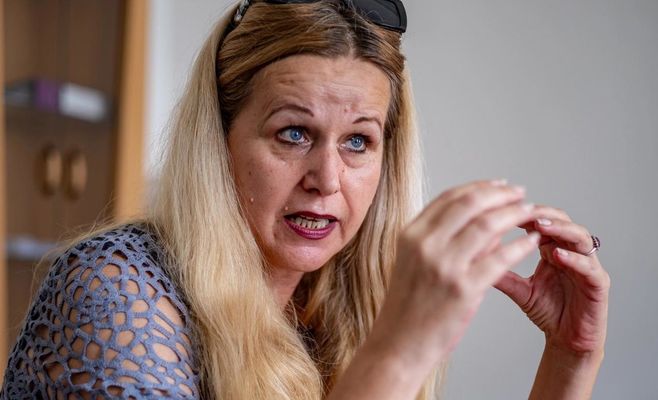
According to lawyer Markéta Brabcová, author of the Instagram project Sklony k feminismu, the term refers to hostile attitudes toward women that women themselves often absorb and pass on — sometimes without even realizing it. Some of these attitudes are directed at other women, while others turn inward, through self-objectification, self-sexualization, or constant self-doubt.
Sociologist Nina Andrš Fárová of the Czech Academy of Sciences notes that such behavior is shaped by institutions dominated by men. These environments often appear neutral, but in reality they favor men.
A benefit that backfires on women themselves
Experts acknowledge that conforming to patriarchal norms can sometimes be a workable strategy for women, even bringing certain advantages — such as recognition for being a caring mother or partner, a role that conservative segments of society consider "natural" for women.
However, Markéta Brabcová argues that this kind of benefit is "short-sighted": in the long run, such behavior only reinforces negative stereotypes about women as a group.
Can this be countered?
Internalized misogyny knows no borders — it appears just as much in the Czech Republic as in the United States, and these attitudes shift from generation to generation at a painfully slow pace.
On a personal level, experts say, the key is first to recognize the problem. Brabcová herself tries not to compare women to one another or to herself, replacing such thoughts with ideas of support and solidarity. Still, Nina Andrš Fárová stresses that the issue is structural in nature: "We grow up within a certain system — and while we're not entirely its puppets, it shapes us every day, and breaking free from it is extremely difficult."
Systemic and legislative changes are also possible — for example, a fairer division of parental leave between parents. But experts believe any such reforms will run up against entrenched social stereotypes, which means change is needed simultaneously on every level: in politics, in schools, in families, and within individuals themselves.
Source: seznamzpravy.cz