10 unusual buildings by architect Martin Rajniš worth seeing in Czechia
USD 21,01
Popular
Czech architect Martin Rajniš, one of the founders of the Czech Chamber of Architects, is renowned for structures that blend modern architecture with nature — his lookout towers, timber constructions and other original creations can be found all across Czechia.
Rajniš was born on 16 May 1944 and helped establish several architecture studios, including the Hut architektury workshop. He is best known to the general public as the designer of the new post office building at the summit of Sněžka. In 2014, the architect received the Global Award for Sustainable Architecture from the French Locus Foundation, honoring his outstanding contribution to sustainable design.
Among Rajniš's most famous works are the Máminka, Stříbrná Twiggy and Doubravka XIV lookout towers, the Máj House — also known as the "House of Fun" — the Czech post office on Sněžka, the observation tower at Závist, the transbordér cable ferry near Hamrštejn, the Bára tower, the Gulliver airship, the lookout tower near Strupčice, and the Jára Cimrman lighthouse.
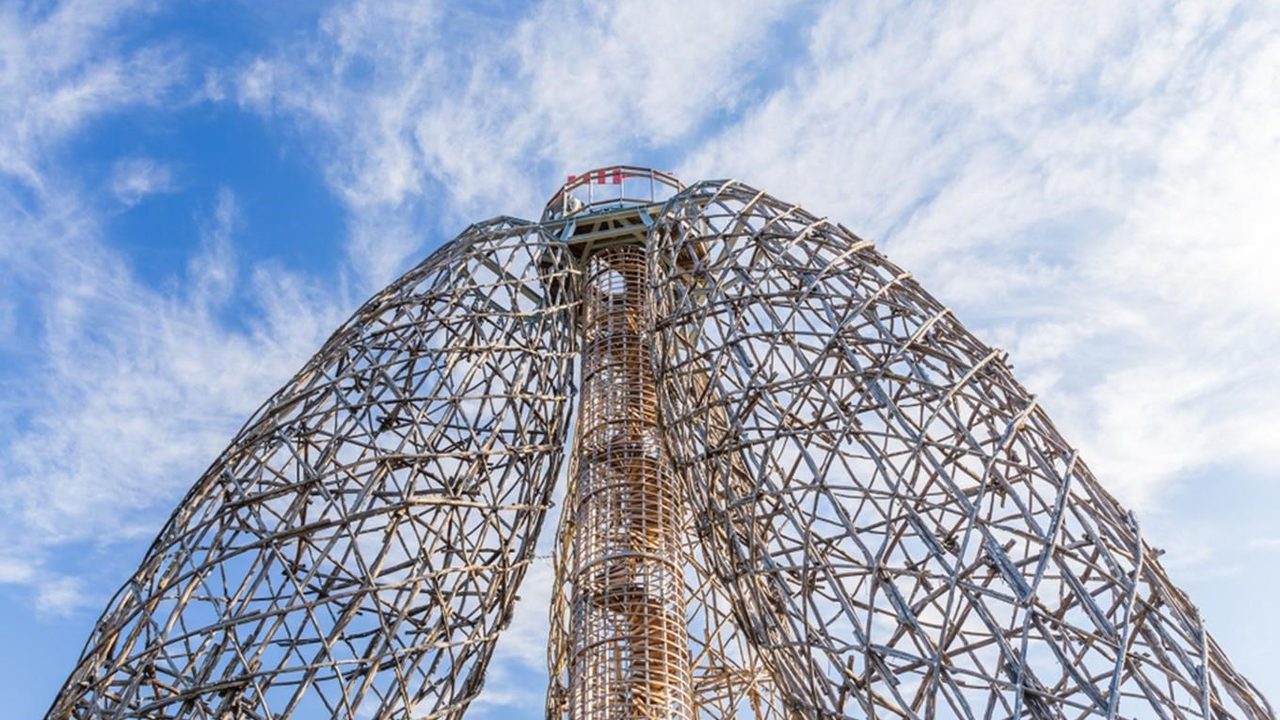
The Doubravka XIV lookout tower in Prague's Prague 14 district is a unique 23.5-metre structure built from bent acacia wood, with 98 steps leading up to the viewing platform.
The Czech post office on Sněžka, nicknamed "Anežka," was assembled like a giant wooden building set from roughly 20,000 individual pieces and stands atop the highest peak in Czechia.
The Gulliver airship sits on the roof of the DOX Centre for Contemporary Art in Prague's Holešovice district, serving as a venue for talks on contemporary art and literature.
The transbordér is a self-service cable ferry that carries visitors across the Nisa River. According to its description, it is the only structure of its kind in Czechia.
Rajniš's lookout tower near the village of Strupčice offers views over the Ore Mountains, along with the lignite quarries and reclaimed land surrounding them.
The Máminka tower takes the form of a spatial truss built from pine logs arranged into a triangular pyramid.
Meanwhile, Rajniš's lookout tower on Hradiště hill stands on the site of the former Celtic settlement of Závist — meaning a climb to the top also brings you face to face with ancient history.
Read also: Prague's best viewpoints: top 12 views for 2026
Source: kudyznudy.cz