Prague Public Transport: Tickets, Lítačka App, Metro, Trams
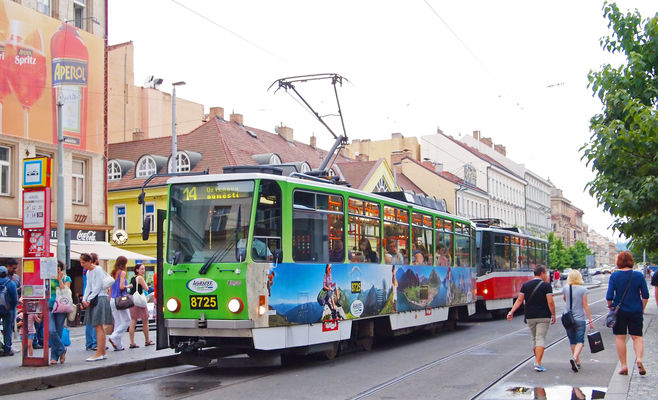
Prague's public transport is among the most convenient and punctual in Europe: metro, trams, buses, ferries and even the funicular all run on a single PID ticket. Figuring out the zones, fares and app is easier than it sounds. This guide will walk you through everything — from buying your first ticket to catching a night ride home.
All of Prague's transport is unified under the PID (Pražská integrovaná doprava) system — one ticket covers the metro, trams, buses, and even the city ferry. You can transfer as many times as you like while your ticket is valid. Here's everything a newcomer needs to know to travel the city confidently from day one.
Metro: Three Lines, A, B and C
The Prague metro is the fastest way to cross the city, with just three lines: A (green), B (yellow) and C (red). They intersect in the center at three hub stations — Muzeum, Můstek and Florenc — which are convenient for transfers. The metro runs roughly from 5 a.m. to midnight, with trains every 2–3 minutes during rush hour, so you barely need to check a timetable. Just look for the terminus station name on the platform sign — it tells you the direction of travel.
Trams: A Network That Gets You Everywhere
Trams in Prague aren't a tourist novelty — they're the city's real workhorse, with a dense network reaching areas the metro doesn't cover. Daytime routes are numbered roughly from 1 to 26, and "backbone" lines like 9, 17 and 22 run especially frequently. Every stop has a sign with the timetable and route map, and newer trams have digital displays and voice announcements for stops. Tip: you can board through any door, and it's easiest to buy your ticket in advance through the app.
Buses: Reaching the Suburbs and Outskirts
Buses fill in where there are no tracks — mainly in residential outer districts and the suburbs. In the historic center, they're almost absent due to the narrow streets. Most city buses have a contactless payment terminal right at the door, so you can tap your card as you board. Check the zone number at the stop: some suburban routes go beyond Prague's borders, in which case you'll need a ticket covering more zones.
Night Transport: Getting Around After Midnight
Once the metro closes, night trams (routes 91–99) and night buses take over, running until about 4:30 a.m., typically every 30 minutes. The key night transfer hub is the Lazarská stop in the center, where nearly all night trams converge. Regular PID tickets are valid at night too — no surcharge needed. Check the app before you set off, since intervals at night are long, and it's not worth sprinting for a departing tram.
PID Tickets and Fares: 30 Minutes or 90 Minutes
For single trips, there are two basic tickets: a 30-minute short-term ticket for a quick direct ride without transfers, and a 90-minute ticket for longer journeys across the city with transfers. There are also 24-hour and 72-hour tickets, which are a good deal for tourists doing a lot of traveling. Prices depend on how you buy: cheapest through the app, more expensive on paper or via SMS. Always check current fares on the official pid.cz website, as they change from time to time.
The PID Lítačka App: The Best-Value Option
The official PID Lítačka app (for Android and iOS) is currently the cheapest and most convenient way to buy tickets — the same fares cost noticeably less than paper or SMS tickets. You can also plan routes, buy long-term passes (monthly, quarterly, annual), and pay by card, Google Pay or Apple Pay. Tickets activate on your phone instantly — no need to validate anything. It's worth downloading the app and setting up an account on your very first day. Details at pidlitacka.cz.
Other Ways to Buy a Ticket: Machines, Card, SMS
If you don't have the app handy, there are still plenty of options. Yellow touchscreen machines stand at every metro station, with an English-language menu, accepting coins, banknotes and contactless cards. Trams and many buses have an onboard terminal — just tap your bank card as you board and you're covered. You can also send an SMS to 90206 (works with Czech SIM cards), though this is the priciest option, and the ticket arrives with a minute or two delay — so send it before you reach the metro entrance.
Validation and Fines: Don't Forget the Yellow Punch Machine
A paper ticket must be validated once — in the yellow punching machine at the metro entrance (near the escalator) or right as you board a tram or bus. That's when the timer starts. Tickets bought through the app or an onboard terminal are valid immediately and don't need validating. Plainclothes inspectors check tickets without warning, and the fine for riding without a valid ticket is steep — around 1,500 CZK on the spot. Always keep a valid ticket ready for the entire journey.
Zones: Prague and the Suburbs
The city and its surroundings are divided into fare zones. Almost the entire tourist and residential center falls within Prague zones P, 0 and B — a standard city ticket covers all travel within these limits. The suburbs in the Central Bohemian Region are numbered in rings radiating out from Prague (zone 1, 2, and so on). If you're heading out of town — say, to Karlštejn or across the airport's border zone — you'll need a ticket covering more zones. When buying through the app, zones are selected automatically based on your route.
The Ferry — A Surprising Part of the System
Few newcomers realize that city ferries (routes marked with the letter P) cross the Vltava as part of the same PID system — a regular ticket covers them too, with free transfers. Lines P1 and P2 run year-round, while the others operate seasonally, roughly from April to October. It's not just transport but a pleasant mini river cruise, at no extra cost. A great option if you live near the water or just want a change from your usual commute.
Tram 22: A Route with a View of the Whole City
If you want to combine your commute with sightseeing, hop on tram 22. Its route runs through Malá Strana and climbs up to Prague Castle, passing postcard-perfect views along the way, which makes it a favorite among tourists and locals alike. For the price of a regular ticket, you get a scenic ride without paying extra for a sightseeing bus. Travel outside peak hours if you want a window seat. Keep in mind that because the route is so popular, trams can get crowded — keep an eye on your belongings.
From the Airport to the City: Bus 119 and Airport Express
Prague's Václav Havel Airport isn't directly connected to the metro, but getting into town is easy. City bus 119 runs to Nádraží Veleslavín, the terminus of metro line A, just a couple of stops from the center; the ride is covered by a standard PID ticket. An alternative is the Airport Express (AE), which goes straight to Praha hlavní nádraží (the main train station) in about 35 minutes, but requires a separate ticket. If you're traveling with a large suitcase, keep in mind that oversized luggage sometimes needs its own ticket — check the carrier's website for the rules.
Bottom line: Prague's transport system is more logical than it looks at first glance. Download the PID Lítačka app, get familiar with the two basic tickets (30 and 90 minutes), remember the yellow punch machine for paper tickets — and the whole city will be just one ride away. Always check current prices and schedules on the official pid.cz and pidlitacka.cz websites, since fares get updated regularly — and with a valid ticket in your pocket, you'll be able to travel around Prague just like a local.
Photo: Tiia Monto — Wikimedia Commons (CC BY-SA 4.0)
Comments (0)
Please be polite. Spam and insults will be removed.